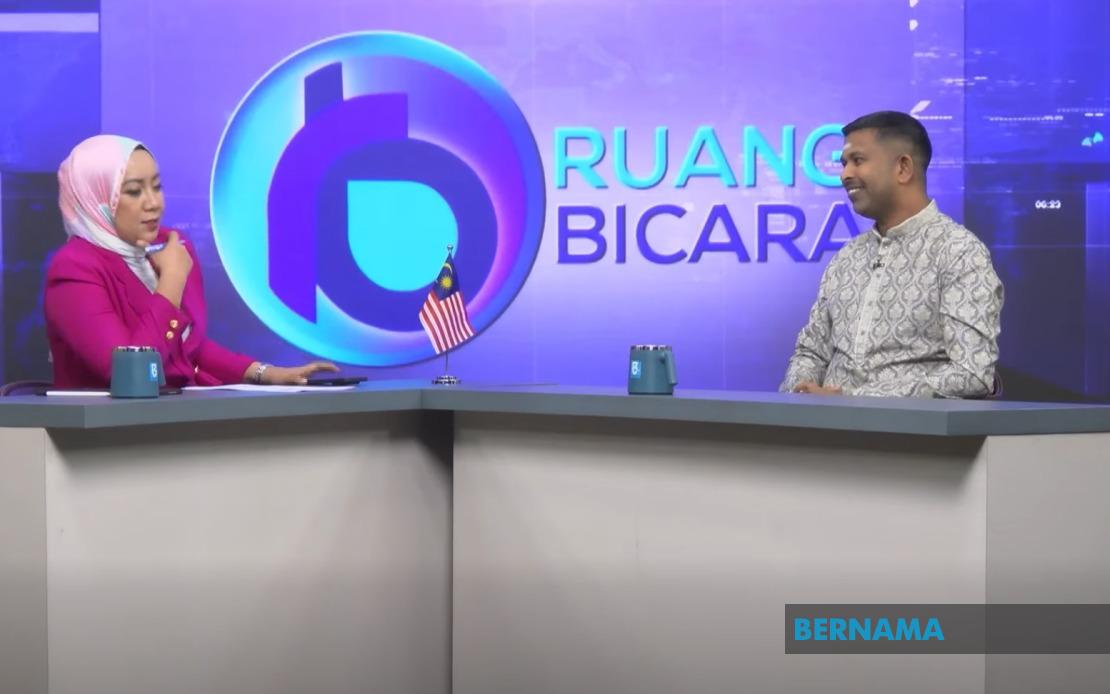
Revitalizing the Malay language as a symbol of national identity and institutional authority requires coordinated effort across government, educational institutions, the private sector and the general public, according to Prof Dr Ramalinggam Rajamanickam, a constitutional law scholar at Multimedia University and member of the Dewan Bahasa dan Pustaka Board of Governors. Speaking on a national television programme examining the language's role in shaping national character, Ramalinggam underscored that every Malaysian citizen bears responsibility for preserving the dignity and vitality of their national tongue, particularly as the country navigates rapid technological and social change.
The constitutional foundations underpinning the Malay language's status are robust. Article 152 of the Federal Constitution explicitly designates Malay as the national language, while the National Language Act 1963/67 provides legislative teeth by mandating its use in official government transactions and proceedings. Yet according to Ramalinggam, these legal safeguards alone are insufficient to guarantee the language's continued influence and relevance. Rather, maintaining these protections requires sustained commitment from institutions tasked with implementation and oversight, suggesting that government ministries must actively police adherence to language standards in official communications and formal settings.
The contemporary challenge confronting the Malay language extends beyond mere usage statistics, which Ramalinggam characterizes as generally adequate. Instead, the pressing concern involves preserving linguistic quality and coherence in an environment increasingly characterized by code-switching, hybrid linguistic forms and the casual mixing of Malay with English and other languages colloquially known as "bahasa rojak". While such linguistic blending is unremarkable in informal, conversational contexts—particularly among younger Malaysians navigating multilingual digital spaces—Ramalinggam draws a firm distinction between casual social media communication and formal institutional language. He maintains that proper Malay usage, underpinned by grammatical precision and structured sentence construction, remains non-negotiable in official documentation, legal proceedings, academic writing and formal government communications.
Higher education institutions occupy a pivotal position in this linguistic ecosystem. Universities must assume responsibility for ensuring that Malay functions authentically as a language of scholarship and intellectual discourse, capable of expressing complex scientific and technical concepts with the same precision and nuance as English or other international languages. This responsibility becomes increasingly critical as Malaysia seeks to develop indigenous research capacity and position itself as a knowledge economy. Yet Ramalinggam cautions against a false choice between linguistic nationalism and pragmatism. Academic institutions must cultivate proficiency in English as an international scholarly medium while simultaneously strengthening Malay's role in domestic knowledge production and dissemination.
The emergence of artificial intelligence and sophisticated digital technologies presents both opportunity and urgency. Rather than passively awaiting technological platforms to incorporate Malay language capabilities, Malaysia should proactively invest in empowering the language to drive and shape technological development. This forward-looking approach requires systematic collaboration among government agencies, research institutions, language specialists and technology developers to ensure that Malay evolves as a language capable of expressing contemporary concepts in science, economics, and artificial intelligence. Without deliberate intervention, the risk exists that technological systems will perpetuate English-language dominance and marginalize Malay in spheres of innovation and knowledge creation.
Historically, Malay possessed considerable prestige and utility as a regional lingua franca, facilitating commerce, diplomacy and cultural exchange across maritime Southeast Asia. This legacy, combined with growing international academic interest—evidenced by Malay studies programs in countries including China, Japan and India—suggests untapped potential for the language's expansion beyond national boundaries. Ramalinggam argues that Malaysia should capitalize on this latent international demand by positioning Malay as a language of intellectual substance and technological sophistication, rather than allowing it to become relegated to domestic ceremonial use while English and other languages monopolize knowledge production.
Advancing the Malay language's prominence need not entail diminishing other languages or adopting a zero-sum approach to linguistic hierarchy. Ramalinggam explicitly rejects linguistic purism or xenophobic language nationalism, instead advocating for genuine multilingualism in which Malaysians command multiple languages while maintaining unwavering commitment to their national language's primacy as a marker of political identity and institutional authority. This balanced perspective acknowledges Malaysia's multicultural character and the practical reality that English, Chinese languages and other tongues serve important functions in the country's commercial, cultural and educational life.
Implementing this comprehensive national agenda demands institutional coordination and sustained resource commitment. The government must enforce compliance with language standards in official contexts while creating incentive structures encouraging private sector participation in language development initiatives. Academic institutions require support to develop new Malay-language scholarly materials, digital resources and terminology in emerging fields. Language researchers and specialists need platforms to collaborate on modernizing Malay vocabulary and expression to match contemporary needs. Civil society organizations can mobilize popular support for linguistic preservation and pride in national language.
The underlying proposition advanced by Ramalinggam reflects a broader conviction that language policy constitutes an essential dimension of nation-building and cultural sovereignty. In an era of globalization where English increasingly functions as the default medium for international communication, regional integration and transnational commerce, the deliberate strengthening of the Malay language represents an assertion of Malaysian distinctiveness and institutional autonomy. For a multi-ethnic nation-state where the national language serves as a unifying symbol transcending communal divisions, ensuring its vitality and relevance becomes not merely a cultural matter but a strategic imperative affecting social cohesion and national resilience.

