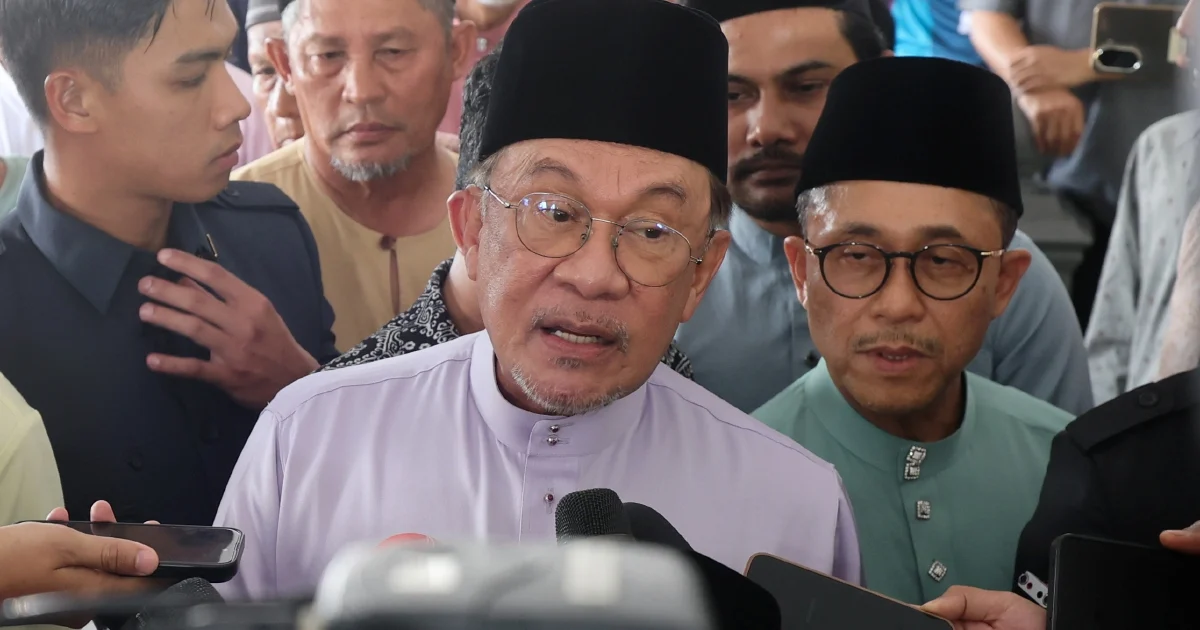
Prime Minister Datuk Seri Anwar Ibrahim has offered reassurance to Malaysia's non-Muslim communities that the government's agenda to elevate the Syariah court system will remain within constitutional boundaries and will not encroach on their established religious liberties. Speaking from Putrajaya, the Premier sought to address concerns that have periodically surfaced when discussions turn to expanding the scope or authority of Islamic judicial mechanisms in a multi-faith nation. His statement reflects the delicate balance the administration must maintain between honouring the constitutional position of Islam in the federation and protecting the secular legal framework that safeguards religious pluralism.
The Malaysian Constitution grants Islam a special constitutional status whilst simultaneously enshrining the right of citizens professing other religions to freely exercise their faith in accordance with state law. This dual framework has been a cornerstone of Malaysia's social contract since independence, though it remains periodically contested as one community or another seeks clarification on the boundaries of its application. The Prime Minister's public assurance is therefore significant as it signals government intention to proceed with legal reforms without fundamentally altering this foundational balance. For Malaysia's Christian, Hindu, Buddhist, and other non-Muslim populations—collectively representing more than a third of the nation's inhabitants—clarity on these boundaries carries considerable practical importance.
Efforts to strengthen Syariah courts have included discussions around expanding their jurisdiction, improving their infrastructure, enhancing judicial training, and streamlining case processing. Proponents argue that a more robust Islamic court system better serves Muslim communities and reduces backlogs in civil matters involving family law, inheritance, and related domains. However, such initiatives inevitably generate scrutiny from observers concerned that incremental expansion of any institution can eventually shift power dynamics or create jurisdictional ambiguities. The Prime Minister's comments appear designed to preempt such anxieties by emphasizing that institutional strengthening and jurisdictional enhancement are distinct propositions.
Malaysia's experience with religious and civil law intersection reveals a complex matrix of decisions that have shaped the nation's plural society. The Syariah courts operate in parallel with civil courts, each with defined spheres of authority. Civil courts generally handle criminal matters involving non-Muslims and most commercial disputes, whilst Syariah courts address Islamic family law, inheritance, and religious matters. Complications occasionally arise at the margins—for instance, when disputes involve mixed-faith families or when determining which system holds primary authority. The government's efforts to clarify and strengthen Syariah institutions may include better definition of jurisdictional boundaries, which could arguably provide greater legal certainty for all parties.
From a Southeast Asian perspective, Malaysia's approach reflects broader regional patterns where Islamic law exists within secular constitutional frameworks. Indonesia, Brunei, and other neighbouring nations navigate comparable challenges, though each has chosen different institutional arrangements. Malaysia's model—maintaining dual legal systems with constitutional primacy residing with the monarch and federal parliament rather than religious authorities—distinguishes it from some alternatives. The Prime Minister's affirmation suggests the government intends to preserve this structural arrangement even as it invests in improving Syariah institutions' capacity and efficiency.
For Malaysia's diverse business and professional communities, clarity on this matter carries practical implications. Foreign investors, multinational corporations, and international professional bodies occasionally express concern about legal certainty and the predictability of judicial outcomes. Assurances that religious courts' expansion will not impinge on secular law's domain provide comfort to those whose interests fall primarily within civil law jurisdiction. Similarly, domestic non-Muslim entrepreneurs and professionals benefit from knowing that their commercial and contractual dealings will continue to be governed by established civil law principles.
The Prime Minister's statement also reflects evolving political dynamics within Malaysian governance. Multiple constituencies hold stakes in this debate. Some Islamic civil society organizations advocate for expanded religious authority, viewing institutional strengthening as fulfilling constitutional commitments. Simultaneously, secular and pluralist constituencies, including significant portions of the non-Muslim population, regard jurisdictional expansion with suspicion. The government's messaging strategy—coupling institutional strengthening announcements with explicit reassurances about non-Muslim rights—attempts to satisfy both camps, though success depends on subsequent policy implementation and judicial behavior.
Historical precedent matters in evaluating such assurances. Previous governments have made comparable statements that appeared sincere but were subsequently subject to varying interpretations. Syariah court interpretations have occasionally expanded in ways that surprised observers, particularly regarding fatwa-making authority and its relation to civil law. Some high-profile cases have illustrated tensions between religious and civil authority, occasionally generating public controversy. The current administration's emphasis on maintaining the status quo regarding non-Muslim rights should thus be understood against this backdrop of accumulated experience.
The practical implementation of this principle will emerge through specific policy decisions, legislative amendments, and judicial appointments. When particular reforms are proposed—whether relating to Syariah court funding, personnel training, technological infrastructure, or procedural rules—the substance of those proposals will test whether the government's current assurances translate into institutional practice. Critics and supporters alike will scrutinize these developments for evidence that the constitutional balance is being maintained or altered.
Moving forward, the government faces ongoing communication challenges as it pursues Islamic institutional development whilst maintaining non-Muslim confidence. Public statements from the Prime Minister and other senior figures will require consistency with departmental actions, court decisions, and legislative proposals. For Malaysia's non-Muslim communities to feel genuinely assured, transparency about specific reforms and visible institutional constraints that prevent jurisdictional creep will prove essential. The Prime Minister's Putrajaya statement establishes a baseline position, but his administration's subsequent actions will ultimately determine whether this reassurance translates into sustained confidence across Malaysia's diverse religious landscape.

