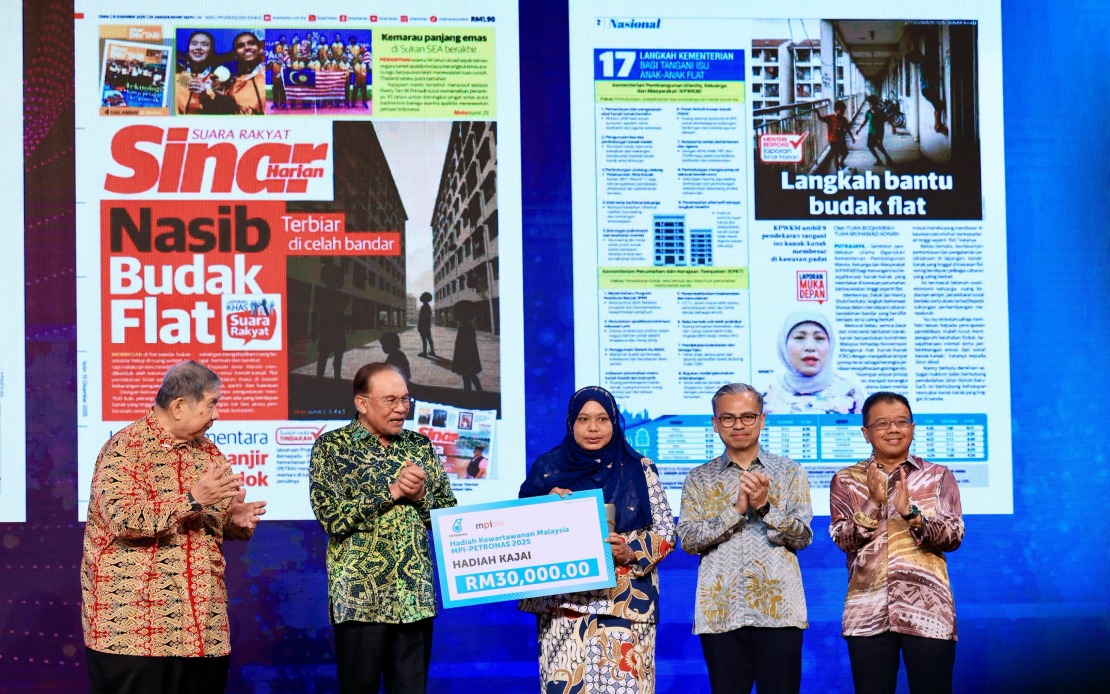
Communications Minister Datuk Seri Fahmi Fadzil has stressed that the media's commitment to ethical standards, editorial independence, and responsible reporting forms the bedrock of a functioning democracy and an informed citizenry. Speaking following the Malaysian Journalists' Night (MWM) 2026 event, which took place in Kuala Lumpur on July 18, Fahmi acknowledged the mounting pressures facing the profession in an era of unprecedented information flow and the persistent threat of deliberate misinformation campaigns.
The challenge confronting Malaysia's media landscape reflects a broader regional and global phenomenon. As digital platforms proliferate and traditional gatekeeping mechanisms erode, the distinction between verified reporting and unsubstantiated claims has become increasingly blurred in the public consciousness. Fahmi's remarks directly address this tension, positioning journalistic integrity not as an optional virtue but as an essential civic function that underpins democratic governance.
The minister attended the prestigious gathering alongside Prime Minister Datuk Seri Anwar Ibrahim, an indication of the government's deliberate engagement with the media industry on matters of national importance. The event drew approximately 1,000 participants from across the media sector, including senior editors and working journalists, alongside government officials, representatives from private corporations, and academic institutions. This broad-based attendance underscores the recognition that media health is not the concern of newsrooms alone but demands coordinated commitment from state and non-state actors.
Central to the evening's proceedings was the presentation of the MPI-PETRONAS Malaysian Journalism Awards 2025, which honours outstanding journalistic work and recognises individuals and organisations that exemplify professional excellence. These awards serve a symbolic function beyond mere recognition: they establish and reinforce standards of quality within the profession, providing benchmarks against which journalists can calibrate their own output and editorial decisions. In a competitive media environment where digital disruption has squeezed newsroom budgets and commercial sustainability, such institutional affirmation of excellence becomes particularly valuable.
The Malaysian Journalists' Night, organised annually by the Malaysian Press Institute (MPI), has evolved into a significant gathering that bridges the traditional divide between journalists and other stakeholders in the information ecosystem. By convening media practitioners alongside government representatives, business leaders, and educators, the event facilitates dialogue and relationship-building that extends beyond routine source-reporter interactions. These connections, though sometimes fraught, are essential to ensuring that all parties understand their respective roles and mutual dependencies.
Fahmi's appeal to media practitioners to maintain their commitment to integrity and truthful reporting operates at multiple levels. On the surface, it is a straightforward call for professional standards. Beneath this, however, lies an acknowledgement that misinformation and disinformation represent genuine threats to social cohesion and democratic decision-making in Malaysia. The minister's framing suggests that ethical journalism is not merely a professional concern but a patriotic duty, essential to the nation's stability and progress.
For Malaysian journalists, such statements from high-ranking government officials carry significance. They suggest official recognition that a free and independent press contributes positively to national development, a message that can help reinforce editorial autonomy and protect journalists from pressure or self-censorship. However, they also carry implicit expectations: journalists must demonstrate that they deserve such latitude through consistent adherence to professional norms and public service orientation.
The emphasis on combating misinformation is particularly pertinent for Southeast Asia, where rapid smartphone penetration, social media adoption, and digital literacy disparities have created fertile ground for false narratives. Malaysia has witnessed several instances in recent years where viral misinformation has inflamed communal tensions, hindered public health responses, or distorted political discourse. Professional journalism, with its verification protocols, editorial oversight, and accountability mechanisms, remains the most reliable counterweight to such phenomena.
The gathering also reflected Malaysia's position within a broader democratic framework that increasingly values media engagement with government and civil society. Unlike contexts where government and press exist in perpetual antagonism, Malaysia's model emphasises collaboration while theoretically preserving editorial independence. Whether this balance is consistently maintained across all outlets and circumstances remains contested, but the symbolic commitment to dialogue is noteworthy.
For readers and citizens, Fahmi's remarks carry an implicit call to support and value journalism that adheres to professional standards. In an environment where misinformation spreads rapidly and news consumption is increasingly fragmented, the capacity to distinguish between rigorous reporting and unfounded claims becomes a critical democratic skill. Media literacy and trust in established journalistic institutions therefore emerge as complementary concerns.
The minister's recognition of journalists' dedication also acknowledges the professional challenges inherent in contemporary newswork. Many Malaysian journalists operate with limited resources, face pressure from commercial imperatives to prioritise sensationalism, and navigate complex terrain where reporting on sensitive issues carries reputational or professional risk. Explicit government acknowledgement of their contributions, even in general terms, provides some measure of validation for work that often goes unappreciated by the public.
Looking forward, the imperative to maintain ethical, independent media will only intensify. Technological change, political polarisation, and competition for audience attention will continue to test journalistic standards. Events like the Malaysian Journalists' Night and associated awards serve as occasions to reaffirm professional values and recommit to the democratic mission that underpins responsible journalism. For Malaysia and Southeast Asia more broadly, such institutional efforts remain crucial to sustaining democratic health in an increasingly complex information environment.

