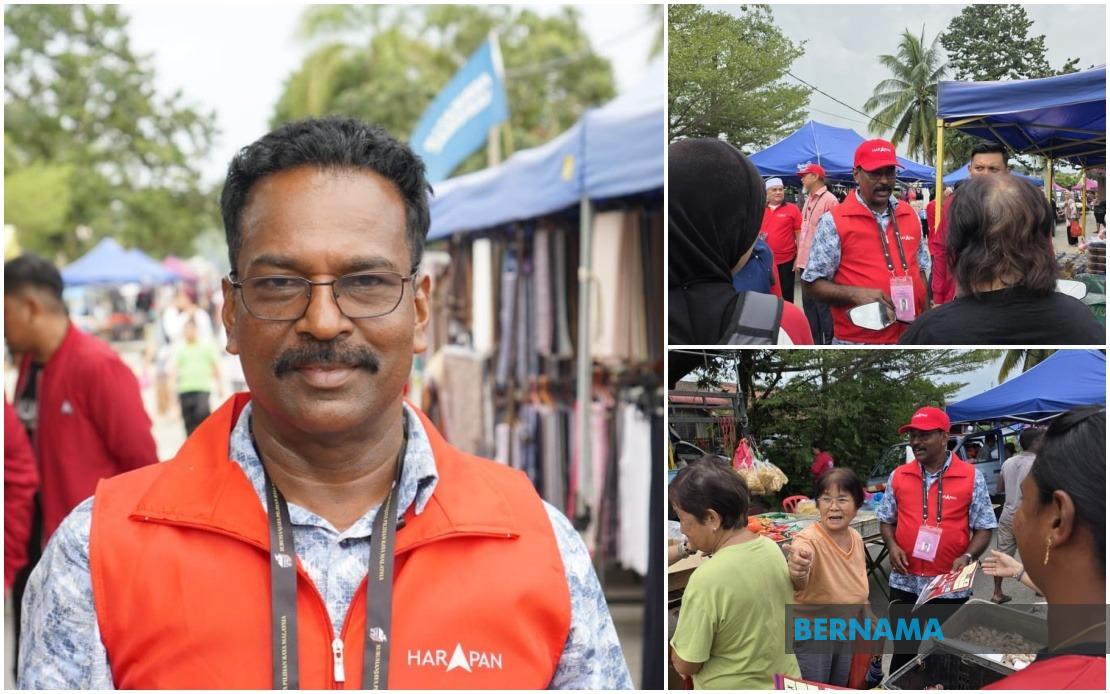
C. Subramani, the Pakatan Harapan candidate for Bukit Kepong, is entering the 16th Johor state election with considerable optimism about overturning expectations in a constituency that has traditionally leaned towards other coalitions. The Pagoh native and PKR chief believes recent conversations with voters throughout the campaign have provided genuine momentum, suggesting that local appetite for change may outweigh entrenched political patterns that have defined the seat in recent elections.
Subramani's confidence stems partly from his systematic ground engagement over the campaign period, which has taken him beyond typical campaign stops and into the communities most distant from mainstream political attention. His visits to Orang Asli settlements in particular have shaped his understanding of the constituency's most pressing needs, moving beyond surface-level campaign messaging to identify concrete infrastructure deficits and socioeconomic disparities that residents face. This grassroots approach, he argues, has revealed genuine frustration with the status quo and openness to alternatives among voters who have previously felt overlooked by their representatives.
The candidate's primary strategic argument rests on institutional coordination between state and federal governments. Subramani contends that a misaligned administration creates friction and delays in addressing local issues, particularly those requiring intervention from federal agencies or ministerial decisions. Should both state and federal authorities operate within the same political framework, he suggests, residents would experience faster resolution of matters spanning education, water management, and drainage systems—problems that currently languish in bureaucratic gaps between levels of government.
Education ranks prominently among Subramani's identified priorities, reflecting broader Southeast Asian concerns about school infrastructure and accessibility in rural constituencies. Alongside this, he has highlighted irrigation and drainage challenges affecting agricultural productivity and residential areas prone to flooding, issues especially relevant to Johor's agricultural heritage and vulnerability to seasonal weather patterns. These are not merely campaign promises but represent categories of persistent complaint documented during his constituency visits.
Beyond immediate infrastructure concerns, Subramani has proposed transforming the Bukit Kepong Gallery into a regional historical tourism destination, a project intended to generate economic activity and employment within the community while preserving local heritage. Such initiatives align with broader Malaysian tourism diversification efforts and reflect understanding that constituency development extends beyond essential services into economic opportunity creation. For a community that has traditionally relied on agriculture and small-scale commerce, tourism development could offer sustainable alternatives and supplementary income streams.
The candidate has also prioritised addressing quality-of-life deficits that affect daily safety and accessibility. Poor street lighting remains a recurring complaint in less developed areas of the constituency, creating both safety concerns and limiting evening economic activity. Narrow bridges that constrain traffic flow and agricultural transport represent infrastructure constraints inherited from earlier development patterns. These may appear minor compared to major policy initiatives, yet their resolution directly impacts constituent satisfaction and daily functionality.
Housing affordability for B40 households constitutes another pillar of his platform, addressing a demographic segment whose needs frequently receive attention during campaigns but inconsistent follow-through afterwards. The shortage of affordable residential options in Johor has created barriers for lower-income families seeking stable housing, a problem particularly acute in constituencies where rapid development has driven speculation and pricing beyond reach of ordinary workers.
Subramani's path to victory requires overturning the 2022 result, when Datuk Dr Sahruddin Jamal of Perikatan Nasional-Bersatu retained Bukit Kepong with a majority of just 710 votes. That narrow margin suggests significant electoral volatility and genuine contestability within the constituency, providing realistic foundation for his optimism. However, the three-way contest between Pakatan Harapan, Barisan Nasional, and Perikatan Nasional means victory cannot be assumed even with voter dissatisfaction toward current representation. The opposition vote could fragment, or consolidate behind a single alternative if strategic voting patterns emerge.
Subramani's prior candidacy in Buloh Kasap during the 2022 state election provides experience with Johor's electoral mechanics and voter preferences, though that earlier contest and the current one involve different constituencies with distinct demographic profiles and political histories. His present focus on Bukit Kepong reflects either strategic repositioning or his party's assessment of where PH faces competitive opportunities in the state's 56 seats.
With approximately 2.7 million voters across Johor and 172 candidates competing for representation, the state election reflects broader Malaysian political realignment. Johor has traditionally served as Barisan Nasional's stronghold, yet successive elections have demonstrated shifting voter preferences and diminished comfort with conventional political arrangements. Bukit Kepong, with its narrow 2022 margin, exemplifies constituencies where no result should be taken as predetermined and where local candidate quality and messaging genuinely matters.
Subramani's emphasis on aligned governance between state and federal administrations indirectly acknowledges a challenge afflicting Malaysian constituencies during periods of divided government. Rural areas particularly suffer when state and federal authorities prioritise factional or coalition interests over constituent needs, creating service delivery inefficiencies that urban areas better positioned to advocate often avoid. His platform implicitly critiques this pattern and suggests that electoral change offers remedy through institutional alignment.
For Malaysian and Southeast Asian observers, the Bukit Kepong contest illustrates how even in traditionally secure opposition strongholds, electoral dynamics remain fluid when incumbent representatives deliver incrementally. The constituency represents thousands of similar seats across the region where demographic change, infrastructure frustration, and political realignment create genuine competitive openness despite historical patterns.

