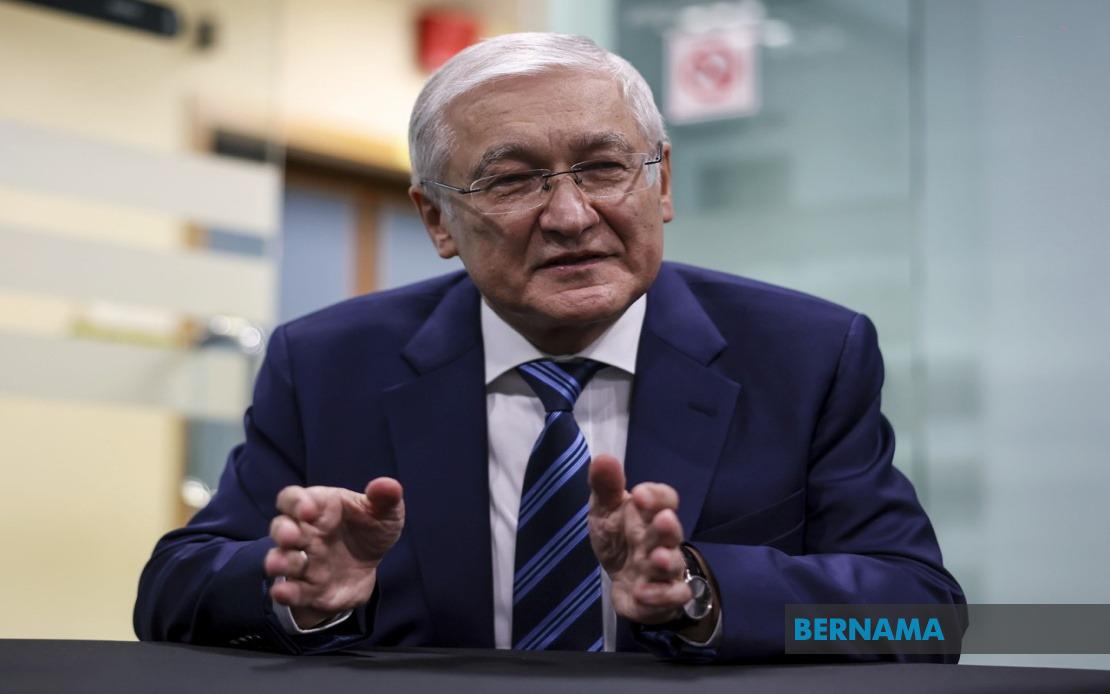
Malaysia's relationship with Russia is undergoing a significant transformation, driven largely by the personal diplomatic initiative of King Sultan Ibrahim. Russian Ambassador to Malaysia Naiyl Latypov recently highlighted how His Majesty's royal engagement has bridged geographical distances between the two nations and catalysed a shift in bilateral dynamics. The ambassador emphasised that this warmth and personal attention represent something unprecedented in the decades-long relationship between Kuala Lumpur and Moscow, signalling a deliberate recalibration of how Malaysia approaches one of Europe's most influential powers at a critical juncture in regional and global affairs.
The turning point came in August last year when Sultan Ibrahim made history as the first Malaysian monarch to undertake a state visit to Russia since diplomatic ties were established in 1967. This visit was followed by a return engagement in January, during which the King toured the prestigious Hermitage Museum in St Petersburg alongside President Vladimir Putin. Such high-profile personal interactions between heads of state carry disproportionate weight in international relations, often signalling serious intent and opening doors that conventional diplomatic channels cannot readily access. For Malaysia, a nation carefully balancing multiple strategic partnerships in an increasingly complex geopolitical landscape, this royal investment in the Russia relationship carries particular significance.
The momentum accelerated further when Sultan Ibrahim attended Russia's Victory Day celebrations in May, an event deeply embedded in Russian national consciousness and historical memory. During this visit, His Majesty engaged in substantive talks with President Putin, yielding concrete agreements that Ambassador Latypov described as providing fresh impetus to bilateral development. The significance of the King's attendance at Victory Day—a commemoration of extraordinary national importance to Russia—cannot be overstated. It demonstrated Malaysia's willingness to honour Russian historical narratives and participate meaningfully in events that matter fundamentally to Moscow's sense of national identity and international standing.
Most strikingly, Sultan Ibrahim extended an invitation to President Putin to undertake a reciprocal state visit to Malaysia in 2027, deliberately timed to coincide with the 60th anniversary of formal diplomatic relations. This invitation projects Malaysia's intentions well into the future and signals confidence in the trajectory of the bilateral relationship. Should Putin accept and travel to Kuala Lumpur, it would represent a remarkable diplomatic achievement for Malaysia, bringing one of the world's most consequential leaders to Southeast Asia at a moment when the region's geopolitical significance continues to grow. The planned anniversary visit thus carries implications extending far beyond bilateral pleasantries, potentially reshaping perceptions of Malaysia's international positioning.
Energy security emerged as a tangible outcome of this diplomatic warming. Following the Prime Minister's attendance at the ASEAN-Russia Commemorative Summit in Kazan in early June, Russia committed to guaranteeing long-term supplies of petroleum, oil and gas to Malaysia. For a nation dependent on stable energy supplies to fuel economic growth and development, such assurances from a major global energy producer hold immense practical value. President Putin noted during bilateral discussions that trade between the two countries had grown by 12.9 per cent the previous year, a respectable expansion that reflects growing commercial interconnectedness alongside political engagement.
The visa facilitation initiative announced by Russia in June further demonstrates movement toward normalising and deepening people-to-people engagement. Russia's plan to abolish visa requirements for Malaysian citizens would significantly reduce bureaucratic friction and encourage greater mobility between the countries. Such measures, often overlooked in discussions of high-level diplomacy, frequently prove consequential for building sustained bilateral relationships by enabling easier travel, business interactions, and cultural exchanges. For Malaysia's tourism and business communities, visa-free or streamlined entry to Russia presents concrete opportunities for commercial expansion.
Current trade flows between Malaysia and Russia total approximately RM8.72 billion, positioning Russia as Malaysia's ninth-largest trading partner among European nations. Malaysia's export portfolio to Russia centres on electrical and electronic products, machinery, equipment and components, along with processed food items—reflecting Malaysia's established manufacturing and agribusiness strengths. Conversely, Malaysia imports primarily petroleum products, minerals, and chemical-based goods from Russia, a trade structure that underscores the complementarity of the two economies and the mutual benefits of deepened engagement. However, experts suggest this relationship has considerable untapped potential that extends beyond current commercial parameters.
Prof Dr Azmi Hassan, a geostrategist at the Nusantara Academy for Strategic Research, provides important analytical perspective on the strategic dimensions of Sultan Ibrahim's diplomatic approach. He contends that royal diplomacy carries inherent prestige and credibility that transcends conventional diplomatic channels, creating windows of opportunity otherwise inaccessible through standard bureaucratic processes. Hassan emphasises that the King's initial August visit yielded tangible security benefits through energy supply assurances, demonstrating that royal engagement produces substantive outcomes beyond ceremonial value. The academic underscores that royal diplomacy plays a particularly critical role in strengthening the working relationship between Malaysia's Prime Minister and Russia's President, suggesting that monarchical involvement legitimises and elevates high-level political dialogue.
Looking toward the anticipated 2027 Putin visit, Hassan advocates for Malaysia to adopt an ambitious strategic vision transcending traditional trade discussions. He argues that Malaysia should prioritise acquiring advanced science and technology from Russia, noting that Russian technological capabilities often rival Western offerings while remaining available at more competitive pricing. This perspective reframes the Russia relationship as a potential vector for technological advancement and industrial capability enhancement—objectives aligned with Malaysia's long-term development aspirations. By positioning Russia as an alternative source of sophisticated technology accessible at favourable terms, Malaysia could diversify its technological partnerships and reduce dependency on traditional Western suppliers.
The diplomatic relationship between Malaysia and Russia carries added significance in the Southeast Asian context, where balancing relationships with major powers remains perpetually challenging. Malaysia's approach demonstrates how strategic use of royal diplomacy can facilitate engagement with consequential international actors without triggering the zero-sum calculations that sometimes accompany conventional state-to-state negotiations. For a nation navigating great power competition in its immediate neighbourhood and across the Indo-Pacific, maintaining diverse and productive partnerships with actors like Russia enhances strategic flexibility and reduces vulnerability to external pressures.
The trajectory from 1967, when formal diplomatic relations were established alongside a trade agreement, to the present represents nearly six decades of incremental relationship-building. Yet the acceleration evident in Sultan Ibrahim's tenure suggests that previous decades, while constructive, operated within relatively constrained parameters. The King's willingness to personally invest diplomatic capital in the Russia relationship represents a recalibration of Malaysia's international priorities, suggesting recognition that deepening Russia engagement serves legitimate national interests in energy security, technological advancement, and maintaining strategic autonomy.
As Malaysia approaches the 60th anniversary milestone, the foundations laid by Sultan Ibrahim's royal diplomacy position the nation to extract maximum benefit from renewed engagement with Russia. The pending Putin state visit in 2027 offers a concrete opportunity to translate personal rapport between leaders into institutional mechanisms supporting long-term cooperation across multiple domains. Whether Malaysia successfully leverages this diplomatic opening to advance its technological aspirations, cement energy security arrangements, or enhance its strategic positioning in regional and global affairs will depend substantially on how comprehensively policymakers prepare and what ambitious objectives they place on the agenda. The royal groundwork has been established; the challenge now lies in building enduring structures of cooperation that serve Malaysian interests for decades to come.

