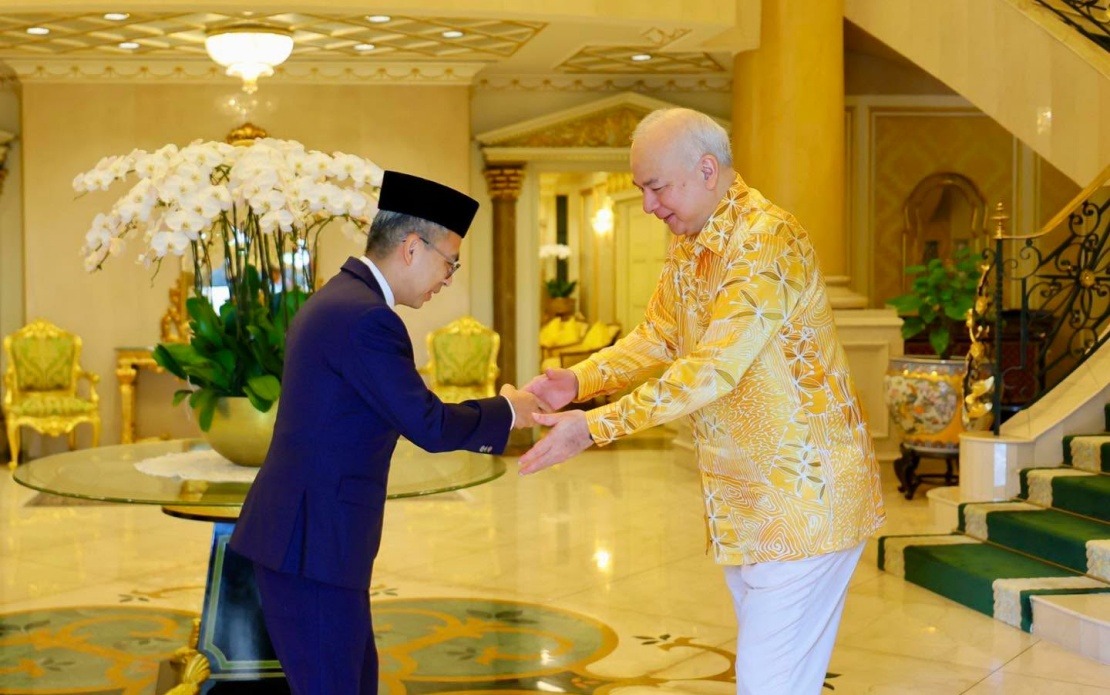
Communications Minister Datuk Fahmi Fadzil has informed Sultan Nazrin Shah, the Sultan of Perak, about the government's strategic push to bolster communication infrastructure development and broaden service accessibility throughout the state. The briefing took place during a formal audience, reflecting the administration's commitment to keeping regional rulers informed on national development priorities affecting their territories.
The discussion centred on Malaysia's ongoing efforts to modernise its digital backbone in Perak, a state that has historically faced challenges in achieving uniform broadband penetration across urban and rural areas. Infrastructure expansion remains critical for economic development, particularly as businesses increasingly depend on reliable connectivity for operations and growth. The initiative underscores the government's recognition that communication infrastructure forms the foundation for broader socioeconomic advancement across all regions.
Beyond physical infrastructure expansion, Fahmi highlighted the significance of online safety as an emerging concern requiring immediate attention. This pivot towards digital security reflects growing awareness among policymakers of the dangers accompanying rapid internet adoption, including cybercrime, data breaches, and exploitation of vulnerable users. The inclusion of online safety in discussions with the sultanate demonstrates the government's intent to address not merely connectivity metrics but also the quality and security of digital services available to Perak residents.
The audience itself carries symbolic weight within Malaysia's constitutional framework. Regular briefings between federal ministers and state rulers ensure transparency and maintain the collaborative relationship essential for implementing national policies at the regional level. By personally delivering updates to the Sultan, Fahmi demonstrated respect for the institution of the monarchy and its role in state governance, a practice that reinforces national unity.
Perak's communication infrastructure challenges require sustained investment. The state spans diverse terrain from developed urban centres like Ipoh to remote agricultural and mining communities where service gaps persist. Upgrading infrastructure to serve such varied geography demands careful resource allocation and coordination between federal authorities, state governments, and private telecommunications providers. The government's commitment signals recognition that leaving these gaps unaddressed would exclude significant populations from digital opportunities.
Online safety initiatives are particularly pertinent in Malaysia's context, where digital literacy varies widely across demographic groups. Rural and elderly populations often lack awareness of cybersecurity threats, making them vulnerable to scams and malicious activity. By prioritising online safety discussions at the highest levels, the government acknowledges that infrastructure alone insufficient; users require education and protection frameworks to benefit safely from digital services. This approach aligns with broader Southeast Asian concerns about digital inclusion and protection.
The briefing also reflects the government's broader digital economy ambitions. Perak, home to significant agricultural and manufacturing sectors, stands to gain considerably from improved connectivity. Enhanced communication infrastructure enables these industries to integrate with digital supply chains, access e-commerce markets, and adopt productivity-enhancing technologies. For farmers and small manufacturers, reliable internet access represents a pathway to expanded markets and improved competitiveness.
Fahmi's public acknowledgment of the audience, particularly his remarks wishing the Sultan and royal family continued health and blessings, follows diplomatic protocol while signalling the importance attributed to the consultation. Such courtesies strengthen institutional relationships and demonstrate ministerial awareness of the symbolic dimensions of governance in Malaysia's constitutional monarchy system.
The timing of this briefing reflects the government's continued focus on infrastructure as a strategic priority. As digital transformation accelerates globally and regionally, Malaysia must ensure no state falls behind in connectivity capabilities. Perak's position as a major economic contributor—through tin mining, agriculture, and manufacturing—makes its digital advancement particularly consequential for national productivity and competitiveness.
Looking forward, the government faces the ongoing challenge of translating these briefings into concrete implementation. Infrastructure projects require sustained funding, technical expertise, and coordination across multiple stakeholders. The communication to the Sultan suggests that federal authorities view state-level engagement as essential for project success, recognising that cooperation with state institutions facilitates smoother implementation of large-scale initiatives.
The emphasis on online safety deserves particular attention given Malaysia's experience with digital fraud and scams affecting vulnerable populations. Comprehensive online safety strategies must encompass regulatory frameworks, user education, business accountability, and international cooperation to address cross-border cybercrime. By elevating this issue during a formal briefing with the Sultan, the government signals its commitment to protecting citizens' digital interests alongside expanding connectivity.
Ultimately, the briefing represents a microcosm of how Malaysia's federal system operates in practice. Central government agencies communicate their initiatives through formal channels with state authorities, seeking alignment and cooperation for national objectives. For Perak residents, the focus on infrastructure and online safety promises tangible benefits through improved digital access and enhanced protection against evolving cyber threats.
%22%2F%3E%3C%2Fpattern%3E%3C%2Fdefs%3E%3Crect%20width%3D%22100%25%22%20height%3D%22100%25%22%20fill%3D%22url(%23ph48y62g)%22%2F%3E%3Crect%20width%3D%22100%25%22%20height%3D%22100%25%22%20fill%3D%22url(%23ph48y62p)%22%2F%3E%3Ctext%20x%3D%2250%25%22%20y%3D%2250%25%22%20text-anchor%3D%22middle%22%20dominant-baseline%3D%22central%22%20fill%3D%22rgba(255%2C255%2C255%2C0.95)%22%20font-family%3D%22Georgia%2C%20'Times%20New%20Roman'%2C%20serif%22%20font-weight%3D%22700%22%20font-size%3D%22320%22%20letter-spacing%3D%22-0.02em%22%3EPKR%3C%2Ftext%3E%3C%2Fsvg%3E)
%22%2F%3E%3C%2Fpattern%3E%3C%2Fdefs%3E%3Crect%20width%3D%22100%25%22%20height%3D%22100%25%22%20fill%3D%22url(%23ph50dweg)%22%2F%3E%3Crect%20width%3D%22100%25%22%20height%3D%22100%25%22%20fill%3D%22url(%23ph50dwep)%22%2F%3E%3Ctext%20x%3D%2250%25%22%20y%3D%2250%25%22%20text-anchor%3D%22middle%22%20dominant-baseline%3D%22central%22%20fill%3D%22rgba(255%2C255%2C255%2C0.95)%22%20font-family%3D%22Georgia%2C%20'Times%20New%20Roman'%2C%20serif%22%20font-weight%3D%22700%22%20font-size%3D%22320%22%20letter-spacing%3D%22-0.02em%22%3EUS%3C%2Ftext%3E%3C%2Fsvg%3E)