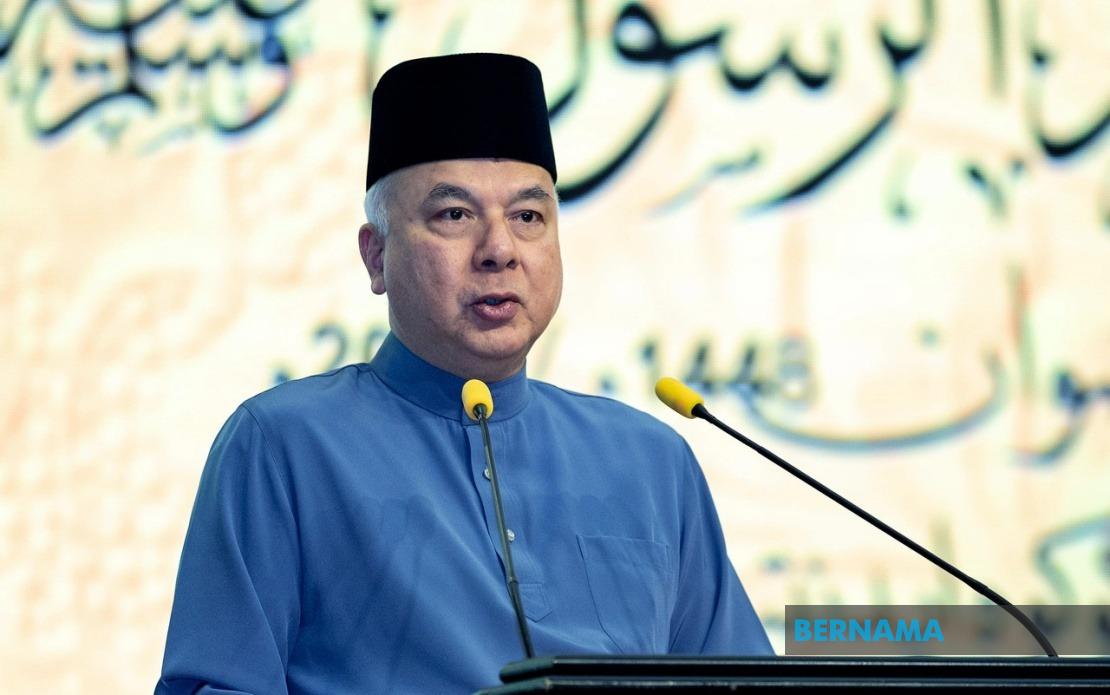
Sultan Nazrin Shah, the Sultan of Perak, delivered a sobering assessment of contemporary Muslim cohesion during the Perak-level Maulidur Rasul celebration in Ipoh on August 25, asserting that the unity of the Muslim community faces mounting strain from multiple directions. The monarch identified political disagreements, divergent interpretations of Islamic thought, ethnic divisions, and personal agendas as key factors fragmenting the solidarity that should define the global Islamic community, or ummah.
The pursuit of power, status, material wealth, and temporal comfort has become increasingly consequential in undermining the spiritual bonds that historically fortified Muslim societies, according to Sultan Nazrin's analysis. These competing priorities, he suggested, are gradually eroding the foundational Islamic principle of brotherhood that transcends sectarian, national, and socioeconomic boundaries. The Sultan's remarks carry particular significance given Perak's diverse Muslim population and the state's historical role as a testing ground for interfaith and intracommunal harmony in Malaysia.
Addressing the assembled dignitaries, including Raja Permaisuri of Perak Tuanku Zara Salim, Perak Raja Muda Raja Jaafar Raja Muda Musa, and Raja Di Hilir Raja Iskandar Dzurkarnain Sultan Idris Shah, Sultan Nazrin emphasised that Muslim leadership structures—encompassing political officeholders, religious scholars, and institutional organisations—must exercise restraint in their competitive impulses. He advocated for minimising unnecessary theological disputes and reducing the intensity of political rivalries, redirecting collective energy toward initiatives that could genuinely elevate the standing and material progress of Muslims worldwide.
Despite the sobering diagnosis, Sultan Nazrin acknowledged encouraging developments within Muslim communities across Malaysia. He drew particular attention to the emergence of individuals and organisations dedicating themselves to elevating Islamic education awareness and promoting sophisticated applications of Islamic principles in contemporary economic life. These constructive endeavours, he noted, deserve recognition and active support from those in positions of influence and authority.
Among the specific domains the Sultan highlighted as worthy of expansion and intensified implementation are Islamic economics and Islamic finance, which represent attempts to align modern financial systems with Shariah principles. The halal industry, which has grown into a significant regional economic sector, exemplifies how Islamic values can translate into competitive commercial advantage. Waqf—the endowment of assets for religious and charitable purposes—represents a centuries-old mechanism for wealth redistribution aligned with Islamic social ethics. Digital dakwah, or religious outreach through digital platforms, demonstrates how technology can propagate Islamic teaching to increasingly dispersed and digitally-native audiences.
Family institution strengthening represents perhaps the most fundamental of the initiatives Sultan Nazrin endorsed, recognising that robust family structures serve as the foundational bulwark against social fragmentation and moral drift. The Sultan's implicit message is that Muslim progress need not—indeed, should not—require abandoning core spiritual principles or sacrificing social cohesion for the sake of economic advancement or political positioning.
A particularly acute challenge Sultan Nazrin identified is the mounting pressure exerted by global cultural forces on Muslim identity and practice. The proliferation of social media platforms, the dominance of Western popular culture, the entertainment industry's pervasive reach, and the normalisation of secular modern lifestyles in Muslim-majority societies create an environment in which traditional Islamic values can easily appear antiquated or incompatible with contemporary aspirations. This cultural pressure is especially pronounced among younger Muslims whose formative years have coincided with unprecedented technological interconnectedness and exposure to diverse worldviews.
The Sultan's framing of this challenge was notably sophisticated, avoiding simplistic condemnation of modernisation itself. Rather, he argued that Muslims must develop intelligent methodologies and carefully calibrated strategies to permit genuine progress and legitimate modernisation without allowing these inevitable forces to corrode the foundational principles and self-confidence that constitute Islamic identity. This reflects an understanding that blanket rejection of modernity is both impractical and potentially counterproductive in contemporary Malaysia, a nation that combines Islamic governance structures with advanced economic development.
The articulation of this balancing act—achieving modernisation without identity erosion—has become a central preoccupation for Islamic scholars and Muslim-majority governments throughout Southeast Asia. Sultan Nazrin's intervention suggests that Malaysian religious and political leadership recognises the necessity of moving beyond defensive posturing toward Islam to develop robust intellectual and practical frameworks demonstrating that Islamic principles and modern progress represent compatible rather than contradictory goals. This perspective carries implications extending beyond Perak to shape national discourse about Islam's role in Malaysia's continued development and international standing.
The attendance of Perak Menteri Besar Datuk Seri Saarani Mohamad and his wife Datin Seri Aezer Zubin at the ceremony underscored the alignment between state-level religious and political leadership on these questions. Such coordination suggests that Sultan Nazrin's message reflects a broader consensus among Perak's power structures regarding the urgency of addressing Muslim fragmentation and the necessity of channelling communal energies toward constructive objectives that benefit both the Islamic community and Malaysian society comprehensively.
Sultan Nazrin's address ultimately constitutes a call for strategic prioritisation and ethical leadership within Muslim communities. By distinguishing between necessary competition and destructive rivalry, and by identifying specific sectors where Islamic principles can generate tangible benefits, the Sultan provided a framework for Muslim leaders and organisations to navigate contemporary challenges without abandoning fundamental commitments. His message suggests that Muslim unity need not imply uniformity, but rather represents a commitment to transcending parochial interests in service of collective advancement and the preservation of Islamic identity amid transformative global forces reshaping societies across Southeast Asia and beyond.

