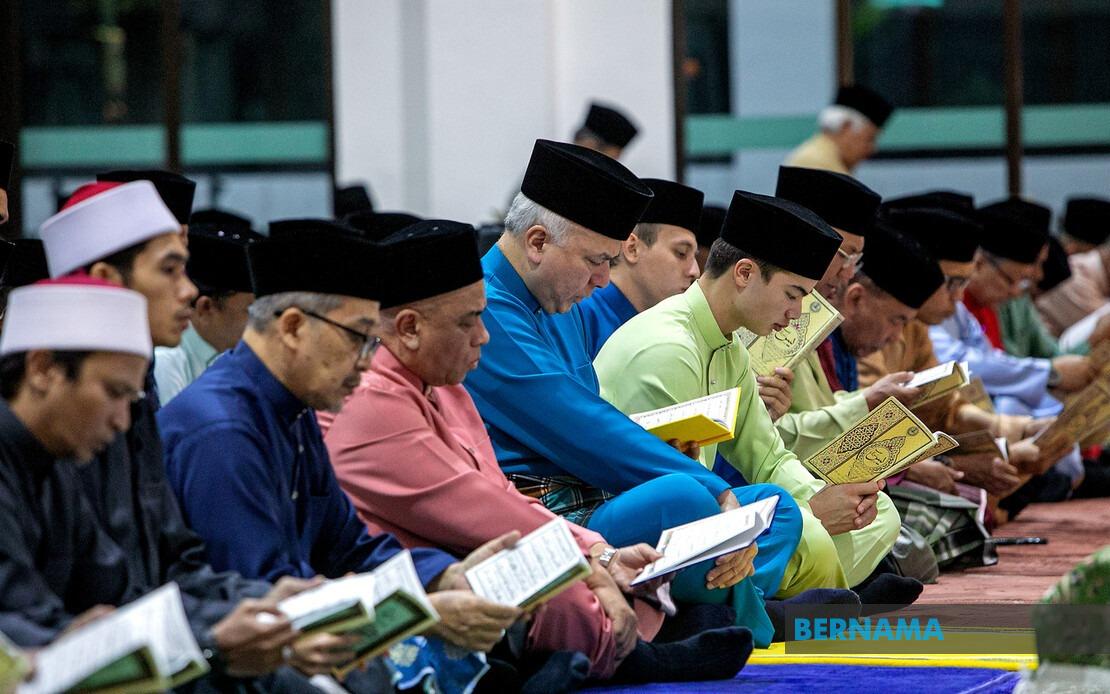
Sultan Nazrin Shah, the Sultan of Perak, participated in the state-level National Day observance on August 30 by attending a series of religious ceremonies at Masjid Imam As Syafie in Ipoh. The occasion brought together prominent state officials and approximately 1,000 congregants for Yasin recitation, tahlil, and doa selamat—traditional Islamic prayers of supplication and remembrance. The event underscored how Malaysia's National Day celebrations often incorporate spiritual dimensions, particularly in states where the rulers maintain active roles in religious and cultural affairs.
The mosque itself became the centrepiece of the evening's proceedings, as Sultan Nazrin performed the official inauguration of the facility. Completed in the previous year at a construction cost of RM8.7 million, the building represents a significant infrastructure investment for the northern state. With a capacity to accommodate approximately 1,600 worshippers simultaneously, Masjid Imam As Syafie is positioned as a major religious and community facility. The architectural and financial scale of the project reflects broader trends in Malaysia where state and federal governments have prioritized the expansion of mosque facilities to meet growing congregational needs and establish modern Islamic institutions.
In performing the ceremonial opening, Sultan Nazrin symbolically unveiled a plaque by drawing back its covering—a gesture laden with constitutional and traditional significance in Malaysian protocol. As the constitutional head of Perak, the Sultan's participation in inaugurating public religious buildings reinforces the established framework in which royal houses serve as custodians of Islam in their respective states. This ceremonial role carries particular weight in Perak, one of Malaysia's historically significant sultanates with deep-rooted Islamic traditions and administrative structures.
Among those attending the gathering was Menteri Besar Datuk Seri Saarani Mohamad, Perak's chief minister, whose presence alongside the Sultan demonstrated political alignment at the state executive level. The attendance of Tan Sri Mohd Annuar Zaini, president of the Majlis Agama Islam dan Adat Melayu Perak (MAIPk), further highlighted the collaborative approach among royal, executive, and religious institutional authorities. This tripartite presence—ruler, government, and religious council—illustrates how Malaysia's governance incorporates multiple layers of authority in religious and community affairs.
The evening's spiritual programme proceeded with Sultan Nazrin participating in the doa selamat immediately after the official inauguration, positioning him not merely as a ceremonial figurehead but as an active participant in the congregation's devotional activities. He subsequently joined the Yasin recitation and tahlil, both integral components of traditional Malay-Muslim religious observance. These practices carry particular resonance during national occasions, as they connect civic celebrations to spiritual remembrance and collective prayer for the nation's wellbeing.
Following the earlier religious observances, Sultan Nazrin remained at the mosque to join the congregational Isyak prayer—the night prayer in Islam—with the wider gathering of worshippers. This extended participation, rather than departing after the ceremonial duties, reinforced a message of genuine religious engagement beyond mere protocol. Masjid As Syafie Imam II Muhammad Luqmaan Mohd Helmi led the recitations throughout the evening, bringing professional religious leadership to complement the royal and executive presence.
For Malaysian readers, particularly those in the Klang Valley and other urban centres, the inauguration represents broader patterns of mosque development across the nation. State governments continue investing in modern Islamic facilities that serve both spiritual and social functions, from educational programmes to community gatherings. Perak's RM8.7 million investment in a 1,600-capacity mosque reflects confidence in religious infrastructure as a public good, despite competing budgetary pressures in state finances.
The integration of National Day celebrations with religious observances also resonates with Malaysia's constitutional framework, which recognises Islam as the federation's official religion whilst protecting freedom of worship. By marking the national occasion through Islamic prayer and spiritual reflection, the event subtly reinforced this constitutional identity. Such ceremonies help embed national consciousness within religious practice, making patriotism and faith mutually reinforcing concepts in the public sphere.
From a Southeast Asian perspective, Perak's state-level National Day observance demonstrates how individual Malaysian states maintain distinctive approaches to celebrating national identity. Unlike federal-level celebrations often focused on parades and secular pageantry, state governments frequently emphasise religious and cultural dimensions reflecting their particular demographics and traditions. This decentralised approach to national commemoration allows diverse communities across the federation to participate in ways culturally and spiritually meaningful to them.
The RM8.7 million expenditure on Masjid Imam As Syafie also warrants scrutiny regarding public resource allocation priorities. As Malaysian states navigate post-pandemic fiscal constraints, significant investments in religious infrastructure reveal policy preferences and priorities. The decision to construct a large-capacity mosque suggests Perak authorities anticipated growing congregational numbers and viewed the facility as a long-term community asset meriting substantial public investment.
Looking forward, the newly inaugurated mosque may serve additional functions beyond worship, potentially hosting educational programmes, interfaith dialogues, or community development initiatives—increasingly common roles for modern mosque facilities throughout Malaysia. The scale and design of contemporary mosques often reflect broader aspirations to position Islamic institutions as central to community life rather than confined to worship alone.
Sultan Nazrin's visible participation in the National Day observance also carries political implications within Perak's governance context. The Menteri Besar's appearance alongside the Sultan during religious ceremonies reinforces state institutional harmony, sending reassuring signals to constituents about coordinated leadership. In Malaysian federalism, such displays of unity between royal and executive authorities carry symbolic weight in maintaining public confidence and perceived legitimacy of governance.
Ultimately, the August 30 gathering at Masjid Imam As Syafie encapsulates how Malaysia's constitutional monarchy, administrative structures, and religious institutions intersect in practice. National Day celebrations become occasions not merely for patriotic expression but for reinforcing the interconnections between state identity, Islamic faith, and communal belonging that characterise Malaysian public life.

