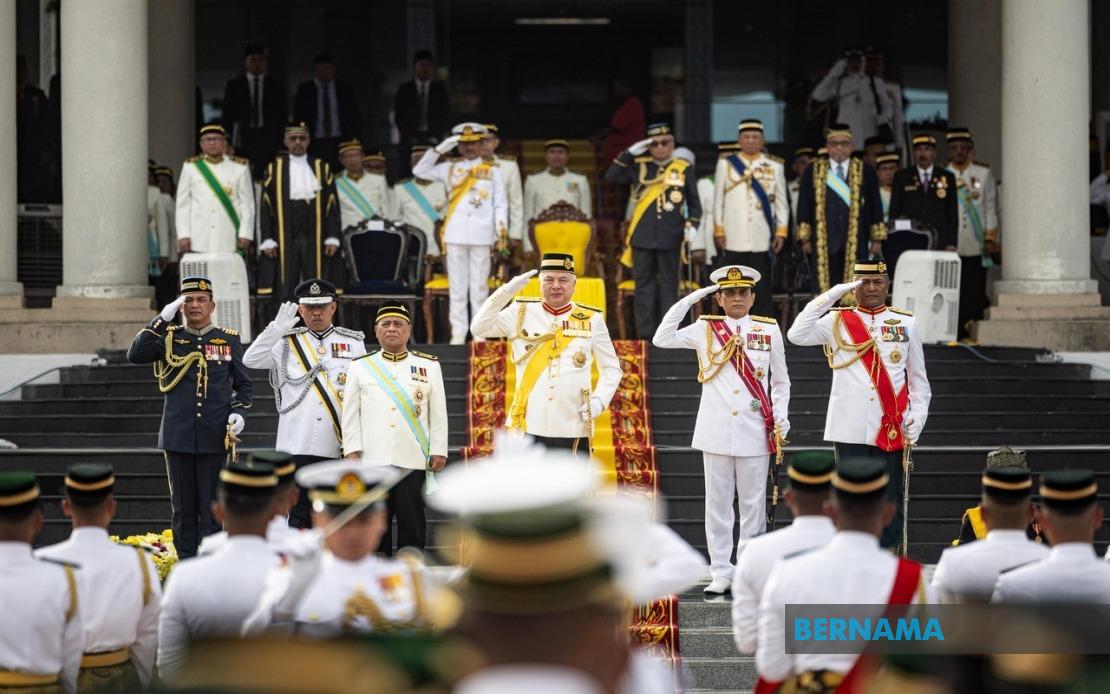
Sultan Nazrin Shah graced the Perak Darul Ridzuan Warriors' Day 2026 celebration on July 31, reinforcing the state's recognition of military sacrifice and service. The event at Dataran Bangunan Perak Darul Ridzuan brought together senior royalty, state leadership and uniformed personnel in a formal ceremony that underscored the monarchy's continued ceremonial importance within Malaysia's defence and security apparatus.
The Sultan's entourage reflected the significance of the occasion, with Raja Muda of Perak Raja Jaafar Raja Muda Musa and Raja Di Hilir of Perak Raja Iskandar Dzurkarnain Sultan Idris Shah both in attendance. Upon arrival at 9.05 am, Sultan Nazrin was received by a delegation that included Menteri Besar Datuk Seri Saarani Mohamad, Western Fleet Commander Vice-Admiral Datuk Baharudin Wan Md Nor, Perak Police Chief Datuk Mohd Alwi Zainal Abidin and Second Malaysian Infantry Brigade Commander Brigadier-General Datuk Mohd Rosli Abu Bakar, highlighting the multifaceted nature of the state's security establishment.
The formal proceedings commenced with a traditional guard of honour inspection, establishing protocol befitting a royal occasion. This was followed by a substantial ceremonial parade featuring active security force members, military veterans and retired police officers—a symbolic gathering that bridged past and present service. Such parades serve an important civic function in Malaysia, providing public recognition to those who have devoted years to national defence and maintaining domestic order.
The ceremony's cultural and spiritual dimensions were represented through prayers and a poetry recital, elements that reflect Malaysia's integration of Islamic values within state institutions. These components transform the occasion from a purely military observance into a broader national commemoration that resonates with the values enshrined in the Malaysian constitution and the Federal Religious Council's guidance on interfaith and civil ceremonies.
Following the formal parade, Sultan Nazrin attended a luncheon where entertainment was provided through a traditional pantomime performance. This lighter segment of the programme allowed space for informal interaction among attending dignitaries and participating military units, fostering cohesion within the defence establishment and demonstrating the crown's accessibility to those in uniform.
The centrepiece of Sultan Nazrin's involvement came with his official opening of Masjid An-Nur Gua Permai, constructed within the Syed Putra Camp. The mosque represents a significant infrastructural investment, with construction costs reaching RM5.5 million and completion achieved in December 2025. This facility accommodates up to 500 worshippers, making it adequately proportioned for the camp's personnel and dependents while allowing space for communal gatherings.
The mosque's establishment carries strategic importance beyond its religious function. Military camps across Malaysia have increasingly recognised the spiritual welfare of personnel as integral to overall morale and unit cohesion. Masjid An-Nur Gua Permai will serve not only as a prayer facility but as a venue for religious education programmes, lectures and community engagement activities that strengthen the bonds between military units and the broader Perak community.
Raja Iskandar Dzurkarnain's presence at the mosque opening ceremony reinforced royal involvement in military infrastructure development, a pattern consistent with constitutional monarchy principles in Southeast Asia. Additionally, Deputy Army Chief Lieutenant-General Datuk Mohamad Suria Mohamad Saad attended, indicating high-level military institutional support for the project and its symbolic value within the armed forces hierarchy.
The timing of this ceremony—during mid-year—suggests deliberate scheduling to coincide with a period when military units typically conduct major commemorative activities. Warriors' Day observances across Malaysian states serve to maintain public consciousness of defence contributions while providing institutional platforms for honouring service and sacrifice, particularly important as Malaysia navigates evolving security challenges in the region.
For Perak specifically, the ceremony demonstrated the state's commitment to maintaining defence infrastructure and recognising the presence of military establishments like Syed Putra Camp as integral components of regional security. The RM5.5 million investment in the mosque reflects state and federal recognition that personnel welfare—including spiritual provision—constitutes a legitimate defence expenditure with tangible impacts on operational effectiveness.
The presence of both police and military personnel at the celebration underscores the integrated approach Malaysian security agencies adopt in domestic peacekeeping and community relations. This coordination is particularly relevant in Perak, which encompasses both urban centres and rural areas requiring comprehensive security presence and demonstrates how state-level ceremonies create platforms for cross-agency collaboration.
Looking forward, the new mosque will likely become a focal point for Syed Putra Camp's community engagement activities, hosting not only military personnel but potentially civilian visitors and religious scholars conducting educational programmes. Such facilities contribute to public understanding of military life and humanise the armed forces through demonstration of institutional values extending beyond operational mandates.
Sultan Nazrin's direct involvement in opening this facility sends a clear signal of royal endorsement for defence infrastructure investment and military personnel welfare initiatives, establishing expectations that such projects will continue receiving prioritised funding and institutional support throughout his reign.

