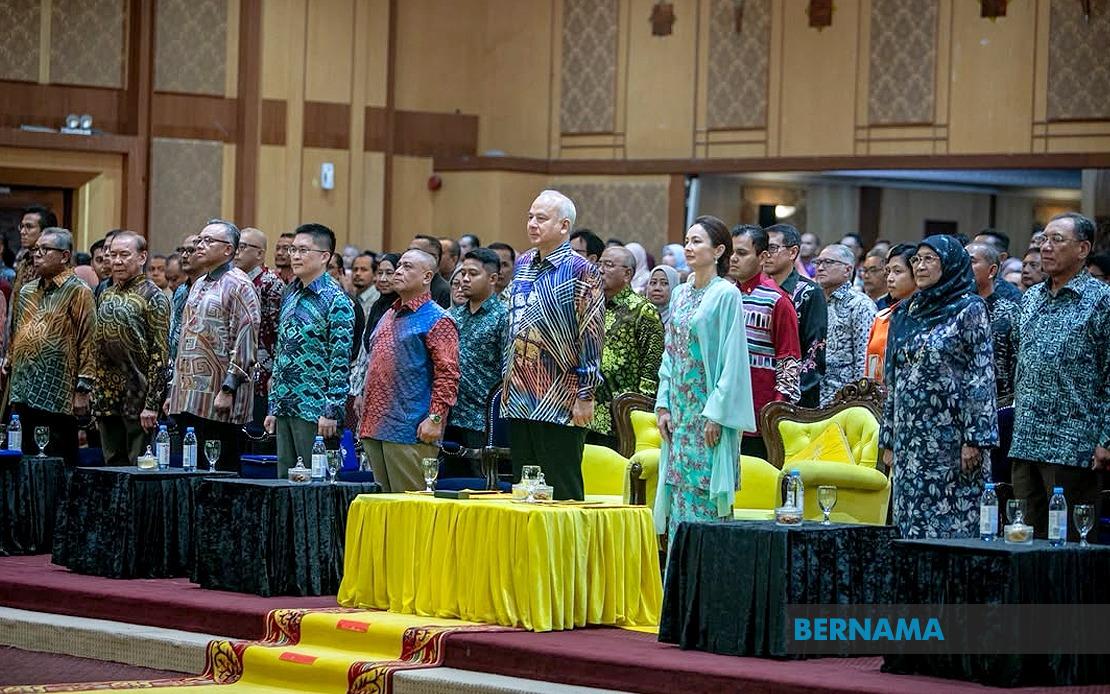
Sultan Nazrin Shah, the Sultan of Perak, attended the launching of Perak's Merdeka Month celebration in Ipoh on August 15, endorsing a comprehensive initiative designed to cultivate patriotic values and national loyalty among the state's younger population. The event, held at Bangunan Perak Darul Ridzuan, underscored the royal household's commitment to fostering a sense of civic responsibility during Malaysia's independence commemoration season. The presence of Raja Permaisuri Tuanku Zara Salim alongside state leadership highlighted the significance accorded to programmes aimed at shaping the next generation's understanding of national identity and historical consciousness.
The scale of the initiative proved remarkable, with Perak Education Department director Zulkafli Mohamed Mokhtar highlighting the exceptional response from schools across the state. More than 214,000 student entries were submitted for the various competitions and activities, encompassing 83.6 per cent of all primary and secondary school pupils in Perak. This figure represents not merely administrative success but reflects genuine grassroots enthusiasm for the programme's underlying message of patriotism and self-discovery. The breadth of participation suggests that schools throughout the state, spanning urban centres like Ipoh and rural districts alike, have embraced the initiative as a meaningful educational endeavour rather than a perfunctory compliance exercise.
Year-on-year growth in the programme demonstrates its increasing cultural resonance within Perak's education system. A 15 per cent increase in participation compared to the previous year indicates that the initiative has transcended initial novelty status to establish itself as a fixture in the educational calendar. Zulkafli's remarks suggested that the programme has successfully positioned itself as an important platform for identifying and nurturing emerging talents, while simultaneously building student confidence and unlocking latent potential in diverse fields. This dual purpose—celebrating independence whilst discovering individual capability—reflects a pedagogical approach that treats patriotic education not as abstract civics instruction but as a means of personal development.
The curriculum and values alignment recognised by education officials highlights a broader strategic objective within Malaysian education. The programme's design resonates with the Malaysia Education Plan 2026-2035, which emphasises the development of holistic learners capable of academic excellence whilst maintaining strong ethical foundations. Officials characterised the initiative as fostering a generation that is not only intellectually capable but also morally grounded, critically thinking, patriotic in outlook, and deeply conversant with national heritage. These attributes represent the educational establishment's aspirational vision for Malaysian citizens who can navigate contemporary challenges whilst remaining anchored to cultural values and historical understanding.
The competitive elements of the programme spanned multiple disciplines, reflecting recognition that patriotism and talent expression operate across varied domains. The Kinta Utara District Education Office received recognition and a RM20,000 cash award for best overall achievement, signalling institutional-level excellence in mobilising students and coordinating participation. The language competitions—encompassing both Malay and English public speaking—demonstrated the programme's commitment to linguistic proficiency alongside national values. Upper secondary participants competed at considerable intellectual rigor, with winners like Ifwat Arrafi Mohd Amin of SMK Tun Abd Razak, Bagan Datuk, securing prestigious recognition before the Sultan himself.
The artistic and creative dimensions of the competition mirrored the intellectual components, with caricature drawing, essay writing, poetry composition and poster design providing alternative pathways for expression. These creative outlets acknowledge that students communicate patriotic sentiment through varied mediums, and that national sentiment resonates through cultural and artistic production as readily as through formal oratory. The prominence assigned to these categories—meriting royal presentation of prizes across primary, lower and upper secondary levels—underscores official recognition that creative endeavour constitutes legitimate expression of national consciousness.
Coral speaking and choral recitation competitions introduced a communal dimension often absent from individual achievement frameworks. These collective performances reinforce shared national identity and underscore interdependence within the student body. The inclusion of such group activities suggests educational philosophy recognising that patriotism and civic responsibility develop through collaborative experience, not solely through individual competitive success. Tuanku Zara's participation in presenting prizes for certain categories ensured female representation within the recognition framework, signalling inclusive approaches to talent identification.
The royal tour of exhibitions displaying student artwork and caricature drawings provided symbolic validation of creative expression. This informal engagement, occurring after formal proceedings, conveyed that the Sultan and Raja Permaisuri valued not merely the competition outcomes but the creative process itself. The willingness of the royal household to engage directly with student work reflects broader trends within Malaysian institutional culture toward personalised, accessible leadership rather than purely ceremonial authority.
For Malaysian readers, the Perak initiative offers insights into education policy implementation at state level and the mechanisms through which national values translate into grassroots programming. The programme demonstrates that independence commemoration, rather than remaining confined to flag-raising ceremonies and patriotic speeches, can be embedded within substantive educational activities. The participation statistics suggest receptiveness among Perak schools to such initiatives, potentially offering models applicable across other states. Menteri Besar Datuk Seri Saarani Mohamad's attendance alongside Deputy Education Minister Wong Kah Woh indicated cross-partisan and inter-ministerial commitment to the programme's success.
The event ultimately reflects the Malaysian educational establishment's conviction that national identity formation remains integral to formal schooling. Rather than treating patriotism as extraneous to core curriculum, Perak's approach embeds it within competitive frameworks that motivate student participation and recognise achievement. The scale of engagement, the diversity of disciplines, and the consistent year-on-year growth suggest this integration strategy resonates effectively with the student population. As Malaysia navigates its seventh decade of independence, programmes of this character demonstrate ongoing institutional commitment to ensuring that younger generations understand and actively participate in national narratives.

