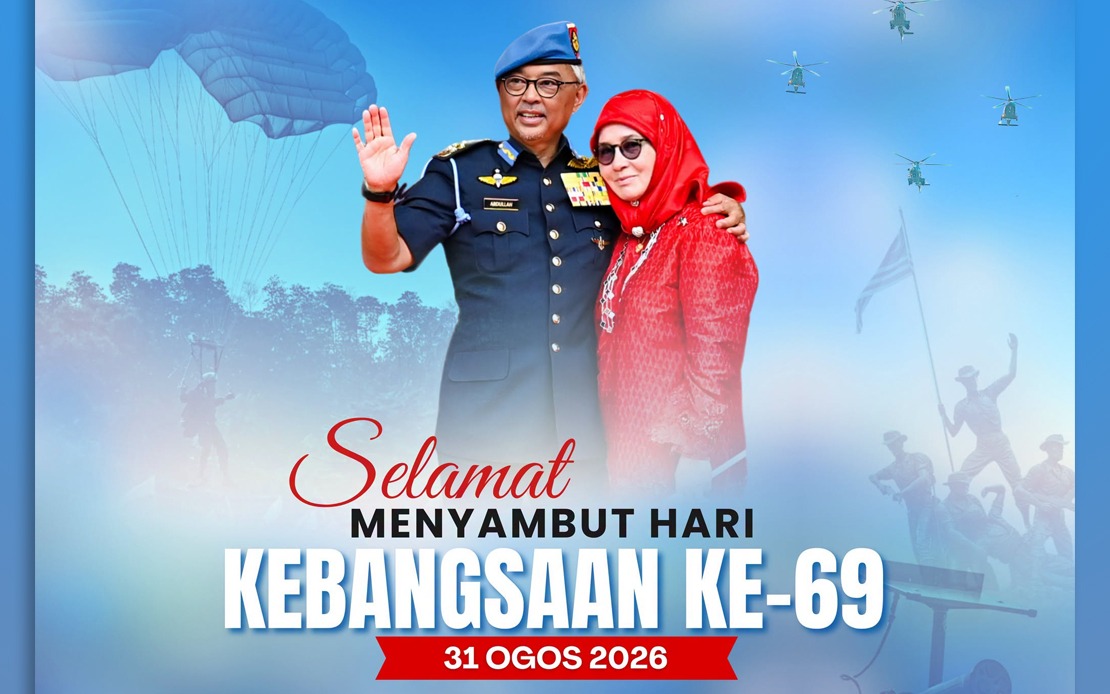
Malaysia's 69th National Day prompted a reflective message from Pahang's royal household, with Sultan Al-Sultan Abdullah Ri'ayatuddin Al-Mustafa Billah Shah and Tengku Ampuan Tunku Azizah Aminah Maimunah Iskandariah extending greetings to all residents of the state. The royal couple took the occasion to acknowledge nearly seven decades of independence and the pivotal role that collective effort has played in maintaining the nation's trajectory since Merdeka.
In their message shared through official channels, the Sultan and Tengku Ampuan expressed profound gratitude for the blessings that have sustained Malaysia through its post-independence journey. They specifically highlighted the enduring peace, economic stability, and communal harmony that have characterized the nation's development, framing these achievements as direct consequences of the people's commitment to national ideals and mutual coexistence.
The royal message carried particular emphasis on the concept of stewardship, positioning national independence and sovereignty as sacred trusts requiring continuous collective guardianship. This framing reflects a deeper philosophical stance that independence is not merely a historical milestone but an ongoing responsibility that each generation must actively preserve and defend. The Sultan and Tengku Ampuan stressed that without such vigilance and commitment, the foundations built over nearly seven decades could face erosion.
Central to their address was the invocation of Rukun Negara, Malaysia's five principles of national unity. By encouraging all Pahang residents to embed these principles into their daily conduct, the royal household positioned civic behaviour as interconnected with national resilience. The emphasis on translating abstract constitutional principles into lived practice underscores a recognition that constitutional frameworks remain theoretical without active participation from citizens across all strata of society.
The message further elevated the role of tolerance and mutual respect as cornerstones of Malaysia's stability architecture. In a nation comprising multiple ethnic, religious, and cultural communities, the Sultan and Tengku Ampuan acknowledged that these twin values function not merely as aspirational ideals but as operational necessities for coexistence. This framing suggests an understanding that Malaysia's competitive advantage as a multiethnic democracy depends fundamentally on citizens' willingness to navigate difference constructively.
Patriotism emerged as another critical theme in the royal address. Rather than invoking narrow nationalism, the Sultan and Tengku Ampuan conceptualized patriotism as active participation in safeguarding the country's collective interests and heritage. This inclusive formulation allows patriotism to encompass diverse expressions and backgrounds, positioning it as a unifying rather than divisive force. The emphasis on fostering patriotic spirit among the general population reflects awareness that national cohesion requires more than top-down governance.
The royal couple also directed attention toward younger Malaysians, specifically urging them to develop deeper appreciation for the country's historical struggles and the sacrifices that preceded independence. This intergenerational messaging addresses a persistent concern in developing democracies where younger cohorts, lacking direct memory of pre-independence hardships, may insufficiently value established institutions and compromises. By explicitly encouraging youth engagement with national history, the Sultan and Tengku Ampuan sought to transmit historical consciousness across generational divides.
Preservation of cultural and heritage assets constituted another dimension of the royal message. By calling on the younger generation to actively participate in safeguarding Malaysia's diverse cultural expressions and social heritage, the monarchy positioned youth not as passive inheritors but as active custodians. This approach recognizes that cultural vitality requires ongoing engagement rather than ossified preservation, and that heritage remains meaningful only insofar as successive generations find contemporary relevance within it.
The spiritual dimension woven throughout the message reflected the Sultan and Tengku Ampuan's role as custodians of Islamic values within Malaysia's constitutional monarchy framework. Their invocation of divine blessings and protection transformed the secular milestone of national independence into a religiously framed narrative, reflecting how Malaysian monarchs bridge constitutional secularism and Islamic statecraft. This rhetorical strategy resonates particularly within Pahang, where the Sultan functions simultaneously as temporal and spiritual authority.
For Malaysian observers navigating complex contemporary challenges ranging from political polarization to economic pressures, the royal message offered a stabilizing counterpoint emphasizing continuity and collective responsibility. The Sultan and Tengku Ampuan's consistent emphasis on harmony, unity, and shared stewardship provided a reminder that despite disagreements on specific policies or governance approaches, foundational commitments to national survival and prosperity remain widely shared. The message's repetition of established principles rather than introduction of novel policy directions suggested a monarchical preference for reinforcing consensus around time-tested values during a period of broader social fragmentation.

