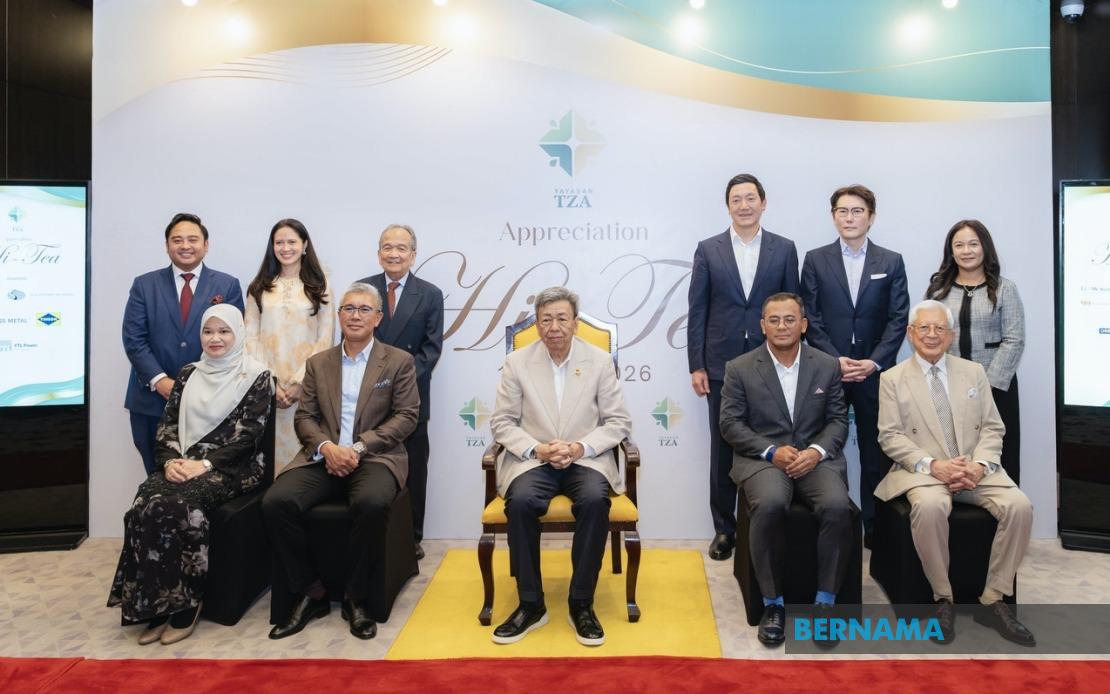
Sultan Sharafuddin Idris Shah, the Sultan of Selangor, attended an appreciation ceremony for Yayasan TZA on June 18, underscoring the royal house's continued backing for social and educational initiatives in the state. The event brought together government officials and corporate donors, highlighting the growing collaboration between the monarchy, state leadership, and private sector in addressing educational gaps among disadvantaged communities in Selangor.
The Sultan's presence at the hi-tea ceremony, which took place in Kuala Lumpur, reflected the significance Selangor places on foundation work targeting underserved populations. His arrival at 3.50 pm was followed by formal welcomes from YTZA chairman Tan Sri Arshad Raja Tun Uda and advisor Tengku Datuk Seri Zafrul Abdul Aziz. The attendance of Selangor Menteri Besar Datuk Seri Amirudin Shari and Education Minister Fadhlina Sidek demonstrated the event's importance at both state and federal levels, signalling coordinated governmental support for the foundation's mandate.
Tengku Zafrul outlined YTZA's philosophy during his address, emphasising that the foundation's programmes transcend immediate relief to build sustainable community empowerment. His remarks stressed a comprehensive approach spanning educational assistance, environmental sustainability, grassroots outreach, and cultural engagement with marginalised communities. This framing reflects a sophisticated understanding of social development, moving beyond charity toward systemic change—a principle increasingly embraced by Malaysian philanthropic organisations seeking deeper societal impact.
Central to YTZA's educational strategy is the ACE SPM programme, which targets students preparing for the Sijil Pelajaran Malaysia examination, Malaysia's crucial secondary school leaving qualification. By concentrating on B40 households—the bottom 40 percent income bracket—the programme addresses a critical vulnerability in Malaysia's education system where socioeconomic disparities directly correlate with academic outcomes. Selangor, as the country's most populous state and economic hub, faces particular pressure to ensure that economic prosperity translates into equitable educational opportunity for all residents.
The 2025 results demonstrated measurable progress in programme reach and effectiveness. ACE SPM directly mentored 467 students across 10 schools in Selangor, providing academic support precisely when students face maximum examination pressure. Beyond traditional classroom intervention, YTZA's digital initiatives extended educational access to more than 4,000 students, recognising that technology offers cost-effective pathways to reach dispersed populations. This hybrid approach—combining in-person coaching with scalable digital resources—addresses Malaysia's geographic and socioeconomic diversity.
Tengku Zafrul's commitment to expand ACE SPM further acknowledged that current reach remains insufficient against the scale of need. With Selangor's student population exceeding 800,000 across secondary schools, reaching fewer than 5,000 students represents a penetration rate highlighting the urgency of scaling successful models. The foundation's stated intention to extend the programme signals confidence in its methodology whilst recognising that meaningful impact requires sustained investment and broader partnership networks.
Corporate support materialized tangibly during the ceremony, with both Kuok Brothers Sdn Bhd and YTL Power International Berhad presenting substantial contributions. The RM1 million donation from Kuok Brothers and RM300,000 from YTL Power represented corporate commitment to education-focused social responsibility. These commitments occur amid growing expectations that Malaysian corporations contribute meaningfully to national development priorities beyond statutory requirements. For multinational and large local companies, education initiatives provide politically acceptable platforms demonstrating social consciousness whilst building brand equity among stakeholders.
The foundation simultaneously launched Larian KITA@Klang, a community fun run scheduled for October 10, 2025, coinciding with the Sultan of Selangor's Silver Jubilee celebration. This marks the fourth iteration of the Larian KITA series, positioning running events as vehicles for community cohesion and celebration. By integrating sporting participation with cultural immersion and local culinary promotion, the event reflects contemporary approaches to social engagement that blend health promotion with community tourism and cultural preservation—a model increasingly adopted across Southeast Asia.
The timing of Larian KITA@Klang within the Silver Jubilee festivities demonstrates strategic alignment between YTZA's programming and state-level commemoration. Such synchronisation amplifies both the foundation's visibility and the celebratory significance of the milestone year, creating cascading benefits for participating communities and participating sponsors. For Klang specifically, leveraging a sultanate celebration to highlight local attractions and community strengths represents thoughtful urban branding that extends beyond ceremonial pomp.
YTZA's appeal for acknowledgement of sponsors, donors, partners, and volunteers underscores recognition that foundation effectiveness depends on ecosystem participation. The specificity of thanking multiple stakeholder categories suggests institutional maturity in understanding that sustainable social impact requires coordinated contributions from sectors often operating independently. This ecosystem thinking aligns Malaysia with global best practices in philanthropic governance whilst acknowledging local contexts where personal relationships and institutional trust significantly influence participation patterns.
For Malaysian policymakers and educators, YTZA's model offers insights into addressing persistent achievement gaps in secondary education. The combination of targeted academic support, digital accessibility, and community engagement addresses multiple barriers simultaneously—financial constraints limiting private tuition access, geographic isolation from quality educators, and motivational challenges affecting disadvantaged cohorts. Replicating and scaling such approaches across Malaysia's thirteen states remains central to achieving equitable educational outcomes and breaking intergenerational poverty cycles.
The Sultan's patronage of YTZA activities reinforces the Malaysian monarchy's traditional role as custodian of national welfare and social cohesion. Royal involvement in foundation events enhances institutional credibility and signals state endorsement, factors particularly significant in Malaysia's constitutional monarchy framework. For YTZA specifically, such patronage elevates the foundation's standing within civil society, facilitating donor recruitment and government cooperation whilst strengthening claims to represent broader national interests beyond sectional constituencies.
Looking forward, YTZA's trajectory suggests the foundation will remain central to Selangor's approach to educational equity. Expanding ACE SPM to additional schools and student cohorts, whilst maintaining digital programme accessibility, positions the foundation to demonstrably narrow achievement disparities. Success in these objectives would validate educational intervention models that Malaysian policymakers might adapt nationally, potentially contributing to Malaysia's broader human capital development agenda and supporting Vision 2050 aspirations for inclusive prosperity.