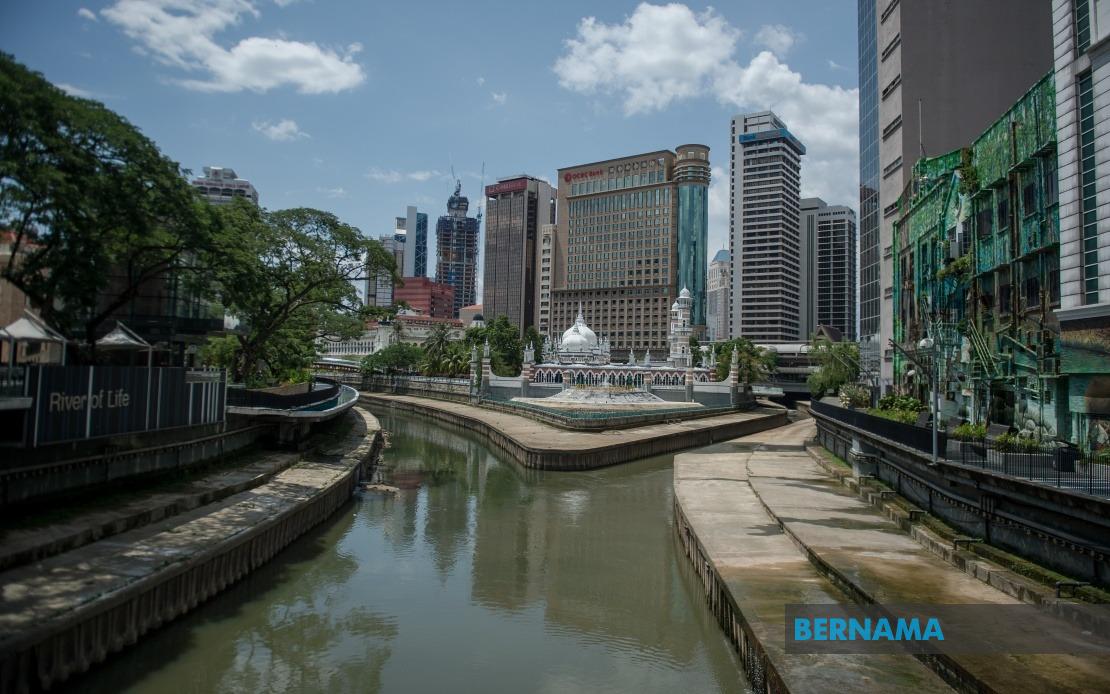
Selangor's critical Sungai Klang waterway has undergone a dramatic transformation in its ability to manage water volumes, with capacity expanding to 22 per cent following sustained dredging and physical improvement work. The achievement represents a substantial leap from the river's previous capacity of less than five per cent, marking meaningful progress in tackling one of the region's persistent flood vulnerabilities. Landasan Lumayan Sdn Bhd managing director Syaiful Azmen Nordin announced the advancement during a media conference at the Sultan Salahuddin Abdul Aziz Shah Building in Shah Alam, emphasizing the tangible benefits already visible across vulnerable communities along the waterway.
The transformation stems from an ambitious 56-kilometre river widening and deepening initiative that has now reached 68 per cent completion. Since the programme's inception in 2017, contractors have extracted approximately 1.2 million cubic metres of accumulated sediment and silt from the riverbed and surrounding areas. This aggressive dredging approach has physically enlarged the river channel's cross-section, directly increasing the volume of water the waterway can safely accommodate before spilling over into adjacent communities and critical infrastructure. The work has been concentrated in particularly vulnerable locations, with Taman Sri Muda highlighted as a area that has benefited substantially from these interventions.
The relationship between sediment accumulation and flooding risk cannot be overstated in tropical river management. Over decades, Sungai Klang had become choked with debris, garbage, and naturally-occurring silt deposits that progressively reduced its effective depth and width. This degradation meant even moderate rainfall events could overwhelm the river's conveyance capacity, triggering the severe inundations that devastated Selangor in 2021. By systematically removing these obstructions and enlarging the channel, authorities have restored much of the river's original flood-carrying capability. Syaiful Azmen's comments clarified an important distinction: recent flooding incidents in the region have not resulted from Sungai Klang itself overflowing, but rather from inadequate internal drainage systems that fail to cope with concentrated rainfall, a separate but equally important infrastructure challenge.
The current 22 per cent capacity figure represents an interim milestone along a longer development trajectory. Project planners envision ultimately achieving 40 per cent capacity upon full completion of the dredging and widening works, scheduled for the final quarter of 2026. This progression indicates that the programme is roughly halfway through its intended capacity gains. A parallel federal government initiative will subsequently tackle the Shah Alam to Mid Valley stretch, suggesting a coordinated regional approach to Sungai Klang management across municipal boundaries.
Beyond physical dredging, a complementary waste management campaign has transformed the river's ecological condition and flow dynamics. Since 2017, over 98,000 tonnes of accumulated rubbish have been manually extracted from the waterway through continuous cleaning operations funded to the tune of RM19.6 million. This parallel effort has produced measurable improvements in water quality, with the river's classification improving from Class 5 to Class 3 and 4 status. The waste-reduction programme has also achieved substantial behavioural change among riparian communities, with annual garbage contributions declining from 16,000 tonnes to between 5,000 and 6,000 tonnes—a decline exceeding 60 per cent.
These figures illuminate the environmental dimension of flood management that often receives less attention than structural engineering. Blocked waterways filled with urban detritus function more like dams than rivers, impeding water movement and creating localized flooding zones. The dual strategy of physical enlargement combined with garbage removal has effectively restored Sungai Klang's natural hydraulic function. For Malaysian policymakers and urban planners watching this initiative, the results suggest that comprehensive flood management requires sustained investment in both infrastructure and community engagement around waste disposal practices.
The programme's trajectory carries implications for other Malaysian river systems facing similar degradation. Sungai Klang's case demonstrates that substantial capacity improvements are achievable within a reasonable timeframe and cost envelope, though they demand political commitment and consistent funding across electoral cycles. The 1.2 million cubic metres of extracted material represents an enormous environmental remediation effort that would have seemed impractical two decades ago. Today's technology, equipment, and funding mechanisms make such projects feasible, provided authorities maintain focus.
For residents and businesses in flood-prone Selangor localities, the rising capacity figures represent tangible risk reduction, though not elimination. Even at the planned 40 per cent capacity, Sungai Klang would still be operating significantly below the levels necessary to handle worst-case monsoon scenarios that climatologists increasingly flag as plausible. This reality underscores why complementary measures—improved urban drainage, retention ponds, land-use planning that avoids flood-risk zones, and enhanced early warning systems—remain essential components of regional flood mitigation strategy.
The dredging programme also generates economic considerations worth noting. The massive volumes of extracted material present potential opportunities for productive reuse in construction, land reclamation, or other applications, potentially offsetting cleanup costs. The RM19.6 million investment in waste removal, while substantial, represents reasonable spending relative to the economic damages inflicted by major flooding events, which routinely trigger billions of ringgit in damages across Selangor's commercial and residential sectors.
Looking forward, the completion timeline of end-2026 for the primary dredging phase will be closely watched by urban development stakeholders who depend on reliable flood predictions for infrastructure planning. The sequential implementation of the federal government's Shah Alam to Mid Valley section will require seamless coordination to ensure that capacity gains in one section don't inadvertently create new pressure points in adjacent stretches. The lessons learned from Sungai Klang's transformation will likely inform approaches to other critical waterways facing similar challenges across Malaysia's urban heartland.

