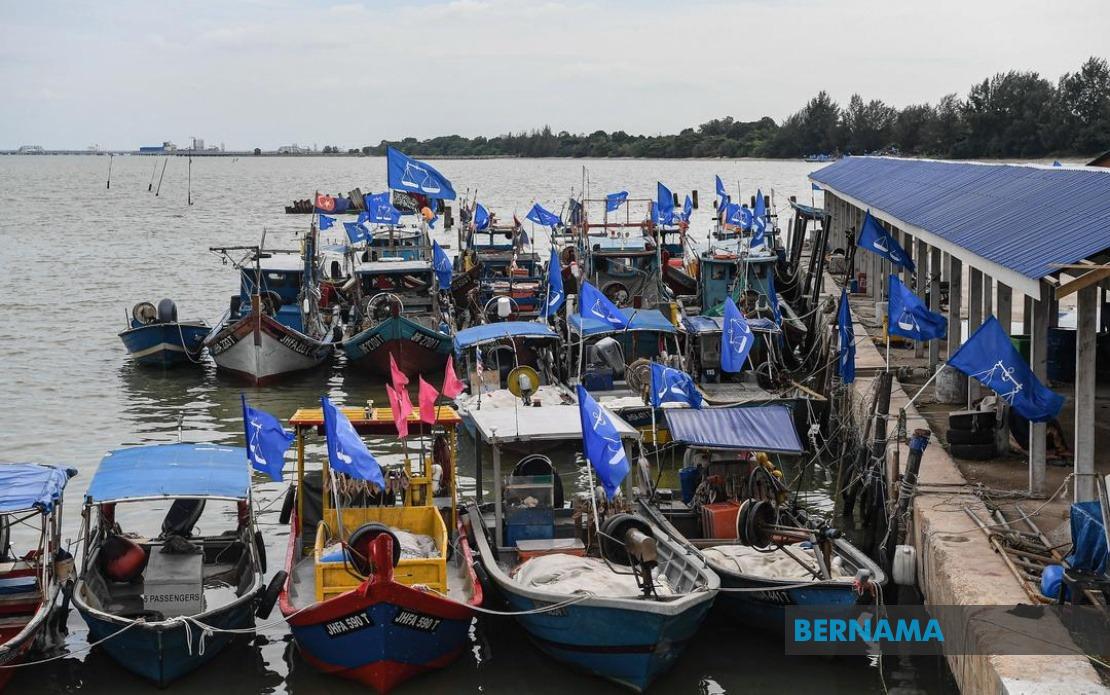
The coastal enclave of Sungai Rengit in Kota Tinggi is raising urgent calls for infrastructure reforms as traders and fishermen prepare for the Johor state election on July 11. The community, which serves as a vital service hub for the Pengerang Integrated Petroleum Complex, has endured deteriorating conditions at its temporary food court since relocating almost ten years ago to make space for a development project. The situation has become acute enough that local stakeholders are positioning infrastructure renewal as a key election issue in the Tanjung Surat constituency, where Pakatan Harapan candidate Faizul Abdul Ghani faces incumbent Barisan Nasional representative Aznan Tamin in a closely watched contest.
The decision to uproot the Medan Selera Sungai Rengit from its original location sparked friction that persists today. Authorities had proposed an alternative site, but traders consistently argue that the new location lacks the accessibility and foot traffic their businesses require. The proposed site suffers from inadequate parking and sits on a one-way road—factors that have proven commercially detrimental. Beverage trader Lai Swee Hong, who has operated her stall for three decades, explains that customers remain accustomed to the original location and are reluctant to seek out the replacement venue. This mismatch between government planning and commercial reality has become emblematic of broader governance challenges in managing development-induced displacement.
The temporary site itself has degraded significantly over the years, presenting conditions that many would consider unacceptable for a functioning commercial space. Traders operate from structures with only canopy roofs and plywood walls, leaving them vulnerable to the elements and to security threats. With no solid doors or locks, stalls remain susceptible to theft, a concern that intensified following multiple burglaries since the previous year. The physical deterioration extends beyond mere inconvenience; it represents a failure of local authorities to provide adequate maintenance or protective infrastructure for a community that generates economic activity and tax revenue for the district.
Security has emerged as a pressing grievance among the trading community. Despite police patrols and reports filed with local authorities, theft incidents continue to erode trader income. Wini Fasiha Zawawi, a food trader in her mid-thirties, has personally lost kitchen appliances to burglaries, and while individual losses may not reach thousands of ringgit, the cumulative effect strains already thin profit margins. The disconnect between security incidents being reported and meaningful preventive action being taken highlights gaps in how local governance responds to the needs of vulnerable small traders. This security vacuum has become a focal point for election demands, with traders expecting the next assemblyman to prioritise surveillance infrastructure and regular patrol presence.
Beyond the traders' concerns, Sungai Rengit's fishing community articulates its own set of priorities centred on economic sustainability. Fishermen in the area operate in an environment of rising operational costs, including fuel and maintenance expenses that cut directly into already modest incomes. The existing fuel subsidy has provided critical cushioning against cost inflation, allowing fishing families to remain viable in a sector with inherently thin margins. Veteran fisherman Sin Hock Hwee, who has worked the waters since adolescence five decades ago, emphasises that fuel assistance must not only continue but be enhanced to reflect the genuine burden fishermen face. His position reflects a wider economic anxiety among fishing communities across Southeast Asia confronting structural pressures from globalisation, fuel volatility, and climate impacts.
Younger fishermen in the community are adding their voices to demands for comprehensive support mechanisms. Hidayat Isa, a registered voter in his mid-thirties, articulates a vision where jetty facilities receive systematic upgrades and the fishing sector gains genuine representation in development planning. His appeal for the elected representative to treat Kampung Sungai Rengit as an adopted village signals a desire for sustained attention rather than intermittent campaign promises. This generational dimension matters considerably, as retaining young people in fishing communities requires demonstrable commitment to modernising infrastructure and ensuring profitability—factors that extend beyond subsidies to encompass cold storage facilities, equipment grants, and market access improvements.
The positioning of Sungai Rengit's grievances within the Tanjung Surat contest reflects broader patterns in Malaysian state elections where pocket-level concerns increasingly determine voting patterns. Both the incumbent Barisan Nasional and challenging Pakatan Harapan camps will need to articulate concrete plans addressing the accumulated infrastructure deficit. The traders' decade-long wait for resolution demonstrates how temporary arrangements often become permanent, creating a class of economically productive but politically marginalised communities. Similarly, fishermen's reliance on subsidy continuation illustrates the vulnerability of communities dependent on government support mechanisms that lack legislative certainty.
For Malaysian policymakers and Southeast Asian observers, Sungai Rengit exemplifies how development projects frequently impose costs on displacement communities without providing equivalent gains or timely alternatives. The failure to deliver promised relocation sites or even maintain temporary facilities to acceptable standards raises questions about project management and accountability in state-level governance. The traders' situation is particularly instructive: they represent a segment of the informal economy that sustains workers and residents but often lacks political leverage to secure government attention until election season arrives. This cycle perpetuates and deepens inequality within constituencies.
The fishing community's concerns intersect with Malaysia's broader maritime economy and the government's commitment to agricultural and blue economy development. Sungai Rengit fishermen operate within a sector that policymakers across the nation have identified as strategically important, yet support remains inconsistent and reactive rather than proactive. The appeal for improved jetty facilities connects to larger infrastructure conversations happening across Johor's coastal zones, where modernisation of fishing infrastructure could enhance productivity and competitiveness. A comprehensive elected representative would view fishery upgrades not merely as welfare distribution but as investment in regional economic potential.
As polling day approaches, both candidates will face expectations to deliver on infrastructure commitments rapidly. The election serves as a forcing mechanism for communities ordinarily overlooked by government machinery, though the track record of post-election follow-through remains mixed. Traders and fishermen have strategically framed their demands in practical, costed terms—improved jetty facilities, security measures, and subsidy continuation—rather than abstract policy positions. This specificity creates opportunities for meaningful engagement but also risks establishing impossible expectations if either candidate overpromises. The test of governance quality will ultimately depend on whether elected representatives view Sungai Rengit as a constituency requiring sustained attention or merely a site for pre-election engagement.

