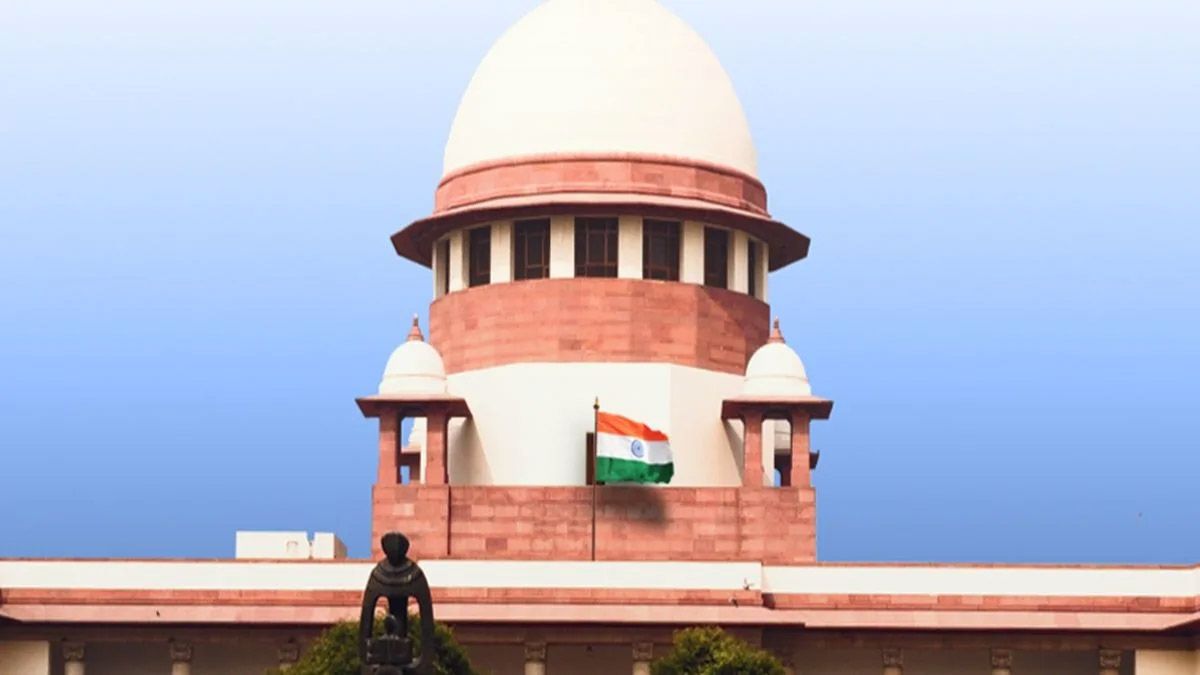
The Supreme Court of India has intervened in a contentious dispute over animal slaughter regulations in Tamil Nadu, issuing a stay on a sweeping prohibition that had banned all cow and calf slaughter across the state. A two-judge bench comprising Justices Vikram Nath and Sandeep Mehta granted the interim relief on Monday while hearing an appeal from the Tamil Nadu government, which contested the scope and legality of the Madras High Court's May 27 ruling. The court's decision to pause the lower court's order signals potential judicial conflict over the proper limits of judicial authority in regulating matters governed by existing legislation.
The Tamil Nadu government's challenge centres on what it characterises as judicial overreach by the High Court. The state administration contends that in enlarging the scope of the original petition, the High Court transformed a case about preventing cow slaughter in public spaces and unregulated locations into a sweeping prohibition affecting even authorised facilities. Justice Nath indicated during proceedings that the impugned judgment required "correction" before granting relief, suggesting the Supreme Court harbours reservations about how the High Court framed and applied its orders. This observation hints at a deeper concern that the lower court may have conflated distinct policy questions and legislative mandates.
The factual genesis of the dispute involves a public interest petition filed by K Surya Prasanth, General Secretary of the Hindu Makkal Katchi political organisation, who alleged that temporary sheds had been erected in Coimbatore for slaughtering cattle during Bakrid celebrations. The original litigation sought judicial intervention to prevent such slaughter in undesignated public spaces and to enforce compliance with regulations requiring slaughter to occur only in authorised slaughterhouses. However, the High Court's response dramatically expanded the litigation's remit, directing the state to ensure that no cow or calf be slaughtered anywhere in Tamil Nadu, regardless of location, circumstance, or religious occasion.
The High Court grounded its decision partly in constitutional interpretation, invoking Article 48 of the Indian Constitution, which contemplates state measures to prohibit the slaughter of cows, calves, and other milch and draught animals. The bench also relied upon a 1976 Government Order issued by the Tamil Nadu administration itself, which had prohibited cow and heifer slaughter in designated slaughterhouses. By treating this decades-old order as foundational law with binding force, the High Court essentially treated executive guidance as equivalent to legislative enactment, a distinction the Supreme Court appears to question.
Tamil Nadu's appeal articulates a carefully layered legal argument rooted in the existing statutory framework governing animal slaughter. The state points to the Tamil Nadu Animal Preservation Act, 1958, which establishes a regulatory regime permitting cattle slaughter under specified conditions rather than imposing absolute prohibition. This legislation contemplates that slaughter, while subject to conditions, may be lawful under defined circumstances. The state further invoked the Prevention of Cruelty to Animals Act, 1960, its associated slaughterhouse rules from 2001, urban local body legislation, and contemporary food safety regulations to demonstrate that the legal order contemplates regulation rather than blanket interdiction. Together, these statutes suggest Parliament and the state legislature envisioned a structured system of permissible slaughter, not categorical prohibition.
The religious and cultural dimensions of this case warrant careful consideration, particularly given India's diverse population and competing constitutional values. Bakrid, celebrated by Muslim communities across India including in Tamil Nadu, traditionally involves ritual slaughter of animals as part of religious observance. The High Court's blanket prohibition effectively prevents this religious practice, raising potential questions about Articles 25 and 26 of the Constitution, which guarantee freedom of religion. The Supreme Court's intervention may reflect concern that the High Court's order, while potentially motivated by animal welfare or cultural majoritarian concerns, does not adequately balance religious freedom against other constitutional objectives.
For Malaysian observers, this dispute illuminates how Indian constitutional courts grapple with tensions between judicial activism, legislative authority, and religious pluralism—issues increasingly relevant to Southeast Asia as societies become more complex and litigious. The case demonstrates how single-issue public interest petitions can metastasize into far broader judicial pronouncements, and how courts risk overstepping when they substitute their policy preferences for legislative or executive judgments. The interim stay does not resolve the underlying merits, and the Supreme Court's final determination will shape how Indian courts balance animal welfare advocacy, religious rights, and institutional separation of powers.
The practical implications of the Supreme Court's intervention extend beyond Tamil Nadu. If the top court ultimately overturns or substantially narrows the High Court's prohibition, it signals that Indian courts will not lightly convert narrow regulatory disputes into blanket bans without explicit statutory authorisation. This could embolden state governments and regulated industries to challenge expansive judicial orders as exceeding judicial competence. Conversely, if the Supreme Court ultimately upholds animal welfare protections while reformulating the legal reasoning, it may establish a new precedent for judicial activism in this domain.
The suspended High Court order, had it remained operative, would have created significant compliance challenges for Tamil Nadu's administration. Government officials, including the Chief Secretary and Additional Director General of Police (Law and Order), had been instructed to ensure strict compliance with the blanket prohibition. This would have required unprecedented surveillance and enforcement mechanisms, effectively criminalising conduct that existing statutes permit under regulated conditions. The state would have faced pressure to amend its own 1958 Animal Preservation Act or to openly defy High Court directions, neither option palatable to elected officials.
The Supreme Court's notice to the Tamil Nadu government signals that both parties will have opportunities to present comprehensive arguments on the merits. The state will likely elaborate on how its existing regulatory framework adequately protects animal welfare while preserving legislative flexibility and religious accommodation. Petitioners and interveners supporting the High Court's position will argue that judicial enforcement of constitutional animal welfare principles transcends mere regulation and justifies prohibition. The court will ultimately determine whether India's constitutional order, as interpreted through Article 48 and other provisions, mandates an absolute proscription or permits regulatory flexibility.
This dispute also reflects broader tensions within Indian society between aspirations for animal welfare protection and traditional practices rooted in religious and cultural communities. The High Court's order, while framed in constitutional language, effectively privileged animal welfare absolutism over religious accommodation and legislative judgment. The Supreme Court's willingness to stay this order, pending fuller consideration, suggests institutional recognition that such profound questions require more nuanced treatment than binary prohibition. The court's interim posture does not prejudge the ultimate outcome, but it does indicate caution about sweeping judicial mandates that lack clear statutory foundation or adequate consideration of countervailing interests and constitutional values.

