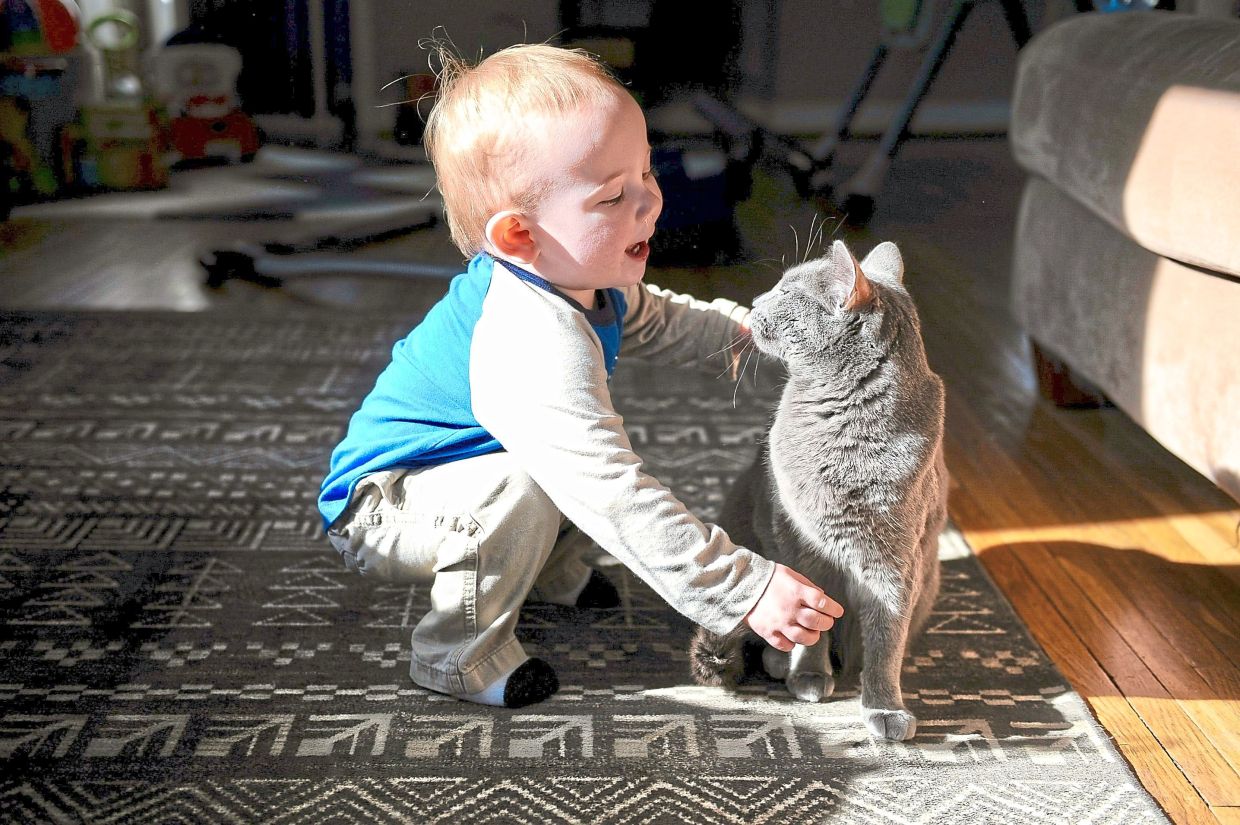
Contrary to longstanding parental fears and anecdotal reports, living with a cat does not appear to worsen asthma in children, according to new research from Sweden that tracked one of the largest cohorts ever examined on this question. The finding contradicts a widespread assumption that has led many families to give up their pets upon receiving an asthma diagnosis, and offers reassurance to parents considering cat ownership or weighing the costs of keeping their current household cats.
Asthma remains the most prevalent chronic condition affecting children globally, ranking among the leading reasons for hospitalisation in paediatric populations. The Global Asthma Network estimates that approximately 9.1 per cent of children and 11 per cent of adolescents worldwide have asthma, though prevalence varies substantially across countries, regions and socioeconomic environments. In Malaysia and across Southeast Asia, where tropical climates and high humidity create favourable conditions for dust mites and other indoor allergens, asthma rates have been steadily rising, making this research particularly relevant for regional families.
Traditional medical wisdom has identified numerous established risk factors for asthma development and severity, including air pollution exposure, parental smoking, childhood infections from viruses, obesity, and inherited allergic conditions such as eczema or hay fever. Against this backdrop, pet allergens, particularly cat dander, have long been suspected as a significant trigger. Many patients report that contact with cats precipitates asthma attacks, and this anecdotal evidence has been reinforced by clinical practice patterns in which doctors often recommend pet removal as a management strategy.
However, scientific investigation into this relationship has yielded contradictory findings. Most previous studies examining the connection between cats and asthma outcomes have been relatively small, focused on specific subgroups that may not represent the general paediatric population, and lacked the statistical power to draw definitive conclusions. This evidence gap has left parents, clinicians and policymakers without reliable guidance on whether cat ownership genuinely poses a risk to asthmatic children.
Researchers at Karolinska Institutet in Stockholm addressed this uncertainty by assembling a nationwide cohort study of unprecedented scale. Beginning in 2023, Dr Resthie R Putri and her team enrolled 30,277 Swedish children aged between four and 17 years who had received diagnoses of either asthma or airway allergies. These children, all born between 2006 and 2020, were tracked over a 24-month period extending into 2024. The research leveraged Sweden's comprehensive healthcare infrastructure, drawing data from multiple linked national registers: the Swedish National Patient Register, the Prescribed Drug Register, and the National Airway Register. This approach captured diagnoses, emergency department visits, medication prescriptions, standardised asthma control assessments, and objective lung function measurements through spirometry.
A crucial advantage of the Swedish setting was the mandatory registration of all pet cats born after 2008 in the National Cat Register, a requirement implemented in 2023. This allowed researchers to establish exposure status with greater accuracy than typical pet ownership surveys, which rely on parental recall and may contain reporting errors. Approximately 9.4 per cent of the 30,277 children in the study lived in households with registered cats in 2023, providing a substantial sample of cat-exposed children for comparison with the unexposed majority.
The results decisively showed no significant association between cat ownership and any measured aspect of asthma severity or control. When researchers examined moderate-to-severe asthma defined by prescribed medication requirements, 9.6 per cent of cat-exposed children met this threshold compared with 10.1 per cent of children without cats—a difference so small it could easily occur by chance. Asthma exacerbations or attacks occurred in 3.3 per cent of the cat-exposed group versus 3.5 per cent of non-exposed children, again showing no meaningful divergence. Among the subset of 1,428 children for whom detailed lung spirometry measurements were available, 97 lived with cats. Objective measures of lung function showed no significant differences between cat-exposed and non-exposed groups, suggesting that cats do not impair the fundamental respiratory physiology of asthmatic children.
Dr Putri offered a plausible explanation for why this large study found no cat-related harm despite persistent anecdotal reports. Cat allergens are ubiquitous in shared indoor environments including schools, public transport systems, and community buildings. Children without household cats may still develop significant allergen exposure through these secondary sources, potentially explaining why unexposed groups did not show better outcomes. This exposure levelling effect would mask any protective benefit of avoiding home cat ownership, making detection of differences between groups statistically difficult or impossible.
The study's limitations warrant consideration. The researchers lacked detailed information on which specific allergens individual children were sensitised to, meaning they could not identify whether particular children had cat allergies that might increase their asthma risk. Additionally, because the National Cat Register is relatively new, some children living with cats may have been incorrectly classified as unexposed if their households failed to register their animals or acquired cats before the 2008 birth cutoff. Such misclassification would tend to obscure genuine associations rather than create false ones, suggesting the true effect of cat ownership, if any, is minimal.
For Malaysian families and those across Southeast Asia, this research provides important context for asthma management. In tropical regions where indoor allergen concentrations are already high due to humidity and year-round dust mite proliferation, the marginal contribution of cat ownership to asthma severity appears negligible. Parents need not feel compelled to surrender beloved pets based on asthma diagnoses alone, though individual clinical circumstances should always guide medical decisions. The study demonstrates how large-scale epidemiological research can overturn persistent myths in medical practice, and underscores the importance of distinguishing between patient perceptions and objective health outcomes.

