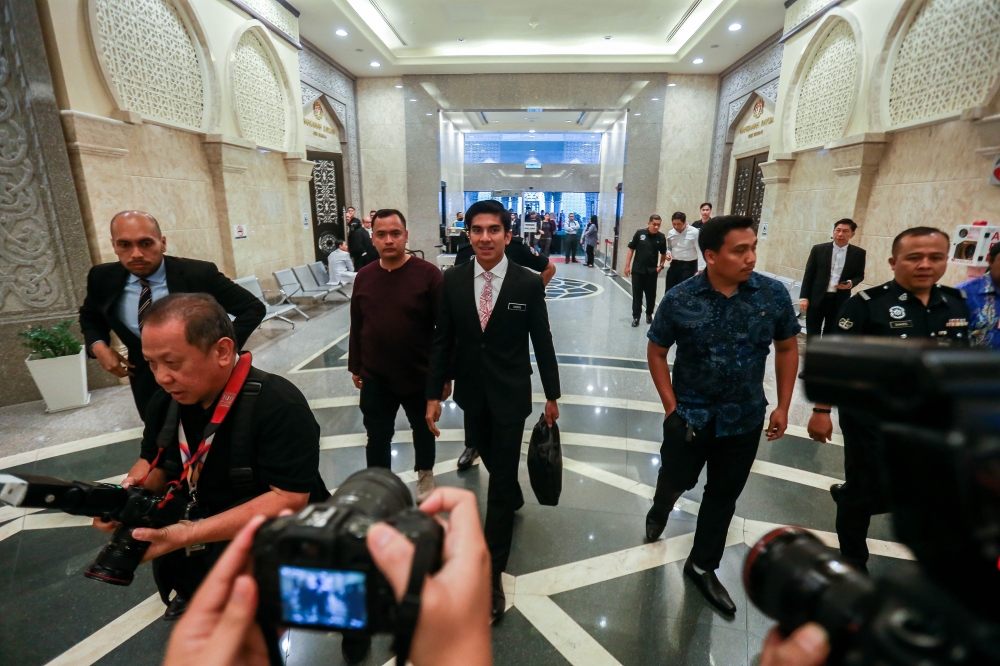
The Palace of Justice in Putrajaya became the focal point of Malaysia's political landscape on July 13 as Muar Member of Parliament Syed Siddiq Syed Abdul Rahman arrived early to await what many observers consider a watershed moment in his career. Flanked by family members and his fiancée, the Muda party president presented a composed demeanor despite the gravity of the proceedings, with supporters gathering outside the courthouse to demonstrate solidarity. The turnout underscored the broader implications of the Federal Court's decision, extending beyond the individual accused to touch upon generational political leadership and the judicial system's treatment of high-profile politicians.
Syed Saddiq's case represents one of the most closely watched legal proceedings involving a younger-generation politician in recent years. The charges against him relate to allegations of money laundering, a serious offense under Malaysian law that carries substantial penalties including imprisonment and financial sanctions. The case has drawn considerable public attention partly because of the defendant's prominence as a relatively youthful and vocal parliamentary figure, and partly because it raises questions about political accountability and the independence of Malaysia's judiciary. The outcome could establish important precedents for how financial crimes involving political figures are adjudicated at the highest level.
For Malaysian readers and observers across Southeast Asia, the significance of this ruling extends into several critical domains. The case occurs within a broader context of Malaysia's efforts to strengthen institutional integrity and combat corruption—issues that have dominated national discourse following previous high-profile scandals. A conviction would reinforce the message that no politician, regardless of party affiliation or generational background, remains insulated from legal scrutiny. Conversely, an acquittal or dismissal might prompt questions about the application of justice and the sufficiency of evidence in cases involving political personalities. Either outcome will reverberate through Malaysia's political ecosystem, potentially influencing how other parties and politicians approach financial accountability and fundraising practices.
The composition of those gathering at the Palace of Justice provided visible evidence of Syed Saddiq's continued support base. His fiancée's presence alongside family members humanized the proceedings, moving beyond the abstract legal arguments to emphasize the personal stakes involved. For younger Malaysians particularly, the case has become emblematic of how the political system treats its emerging voices—whether it protects them fairly or subjects them to disproportionate legal pressure. This generational dimension adds texture to what might otherwise be a straightforward criminal proceeding, making it relevant to broader conversations about political succession and institutional trust among younger voters.
The strategic importance of the Muar parliamentary seat further contextualizes the urgency surrounding this ruling. Should Syed Saddiq face imprisonment or significant legal sanctions, the potential triggering of a by-election would reshape the electoral map in Johor. Muar has traditionally been a competitive constituency, and any vacancy could prompt intense political maneuvering among rival parties seeking to consolidate regional influence. This electoral dimension means that the Federal Court's decision carries implications that ripple beyond the courtroom into parliamentary composition and the delicate balance of political power within Malaysia's federal system.
The case also illuminates ongoing tensions within Malaysia's Muda party, which Syed Saddiq leads. The party has positioned itself as a reform-oriented alternative to established political entities, emphasizing younger leadership and progressive policies. However, facing legal challenges while heading a nascent political organization creates operational and strategic complications. The party's ability to maintain coherence and momentum during the trial proceedings has tested its institutional maturity and demonstrated whether it can function effectively through leadership uncertainty.
From a judicial perspective, the Federal Court's handling of this matter takes on heightened significance given Malaysia's ongoing efforts to enhance the credibility and perceived impartiality of its court system. Public confidence in the judiciary remains a crucial concern for Malaysia's democratic development, and high-profile cases involving politicians inevitably become barometers through which the broader population measures judicial fairness. The way in which the court articulates its reasoning, regardless of the ultimate verdict, will likely be scrutinized extensively by legal scholars, civil society organizations, and international observers monitoring Malaysia's commitment to the rule of law.
The timing and visibility of this proceeding also intersects with Malaysia's broader anti-corruption agenda. The Malaysian Anti-Corruption Commission and other enforcement agencies have expanded their operations in recent years, pursuing cases involving politicians from multiple parties and representing different ideological perspectives. If the Federal Court ruling represents a significant judgment on financial misconduct allegations, it could influence how enforcement agencies calibrate their investigations and prosecutorial strategies moving forward, potentially affecting the political landscape for years to come.
As supporters and media assembled outside the courthouse on that July day, the proceedings embodied a critical juncture not merely for Syed Saddiq's personal and political trajectory, but for broader conversations about governance, accountability, and institutional integrity in contemporary Malaysia. The Federal Court's decision would inevitably shape perceptions about whether Malaysia's judicial system can be trusted to apply standards consistently across the political spectrum, and whether younger politicians pursuing reform agendas receive equitable treatment within existing legal frameworks. The gathering crowds reflected genuine public interest in these larger questions, extending the case's relevance well beyond courtroom technicalities into the realm of national democratic health and societal expectations of institutional fairness.

