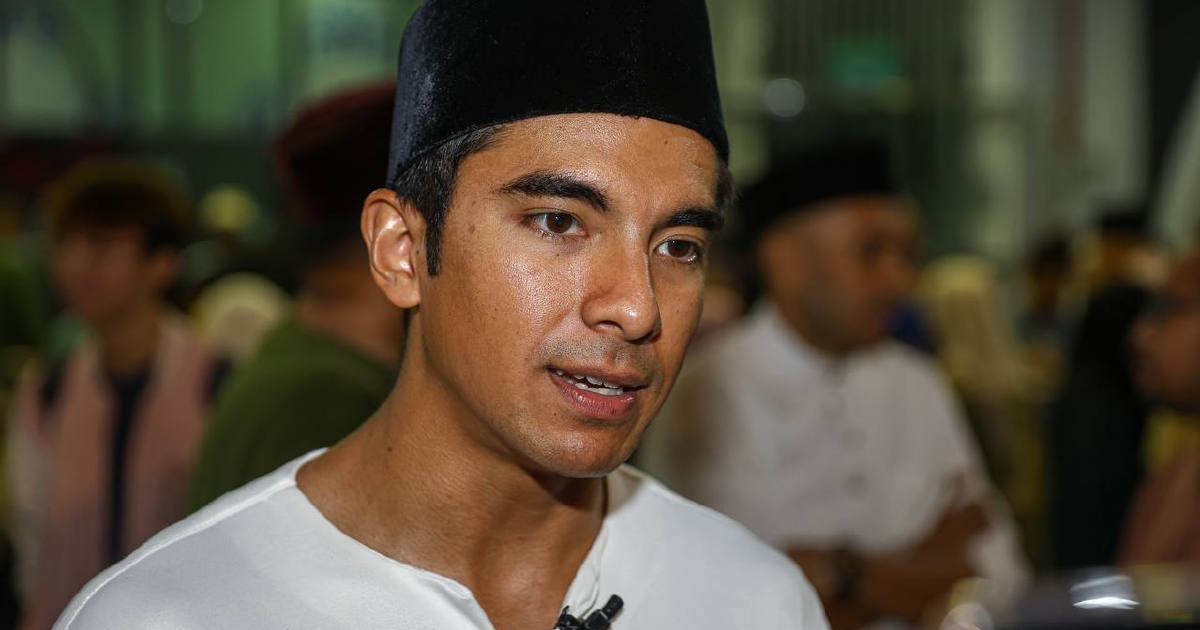
Syed Saddiq Syed Abdul Rahman, the former youth and sports minister, has adopted a contemplative stance as his case approaches a pivotal Federal Court ruling, indicating through public statements that he is leaving the outcome to God's will. This declaration comes as Malaysia's highest court prepares to deliver a decision that could have substantial implications for the politician's legal standing and future trajectory in public life.
The ex-minister's remarks reflect a shift towards philosophical acceptance, even as legal and political observers track the proceedings closely. Syed Saddiq's demeanour suggests he has exhausted his legal options within the available court system and now awaits the apex court's determination. Such pronouncements from high-profile political figures facing consequential judicial decisions often signal both an acceptance of potential adverse outcomes and an attempt to frame the verdict within a broader spiritual or moral context, appealing to supporters and the general public alike.
For Malaysian political observers, the case underscores the increasing role of the judiciary in settling disputes involving prominent politicians. Over recent years, several members of the political establishment have faced legal challenges, raising questions about accountability, the application of the law, and the relationship between political office and judicial scrutiny. Syed Saddiq's current situation exemplifies this broader pattern, where ministerial experience does not shield individuals from legal procedures or court proceedings.
The approaching ruling carries relevance beyond Syed Saddiq's personal circumstances. As a former holder of a ministerial portfolio, his case may set precedents or clarify legal principles applicable to other political figures. Federal Court decisions on matters involving public officials often attract media attention and public interest, particularly when they involve questions of governance, accountability, or the interpretation of laws governing political conduct.
Syed Saddiq's journey through the court system has been lengthy, involving multiple stages and various proceedings. The progression towards a Federal Court hearing represents the culmination of these legal processes, with the apex court's decision likely to be final and binding. This finality adds considerable weight to the impending ruling, explaining why political circles are monitoring developments closely.
The invocation of faith and divine providence in Syed Saddiq's public statements may also serve a strategic communicative purpose. By framing his situation in spiritual terms, the former minister appeals to shared Malaysian values centred on religious belief, which form a cornerstone of public life in the country. This approach can help maintain public sympathy and political support among certain constituencies, even as the legal process unfolds.
For the Malaysian political landscape, the ruling could influence how future cases involving public officials are perceived and managed. If the court's decision establishes particular interpretations of relevant laws or procedures, these may become reference points for subsequent cases. Additionally, the outcome may affect public confidence in the judicial system's consistency and fairness, factors that contribute to broader perceptions of institutional integrity in Malaysia.
The timing of major judicial decisions can also intersect with political developments. Depending on the ruling's nature and the political context at the moment of its announcement, it may trigger various reactions from different political parties, civil society organisations, and segments of the public. These reactions often extend beyond the individual case, influencing broader political discourse and alignment in Malaysia.
Syed Saddiq's political background as a former minister and his previous prominence in Malaysian youth politics mean that his case commands attention from multiple constituencies. Young people, party members affiliated with his political organisation, and citizens interested in political accountability all follow such proceedings with varying degrees of intensity. The Federal Court's decision will thus reverberate across these different segments of Malaysian society.
As the ruling approaches, the suspension of uncertainty that precedes major judicial decisions characterises the current moment. Syed Saddiq's statement about leaving matters to God acknowledges this liminal period, a time when all legal arguments have been presented and the outcome rests with the judicial system. The Federal Court's decision, when delivered, will mark a definitive conclusion to this phase of his legal proceedings and potentially open new chapters, whether in terms of his political rehabilitation, further legal action, or adjusted circumstances.
The case serves as a reminder that in Malaysia's constitutional democracy, no individual, regardless of prior ministerial status or political connections, remains entirely insulated from the legal system. The Federal Court's ruling will test and demonstrate the principle that the judiciary operates independently and applies the law uniformly to all citizens, including those who have held public office. For Syed Saddiq and the broader Malaysian political ecosystem, the coming decision represents a significant and potentially transformative moment.

