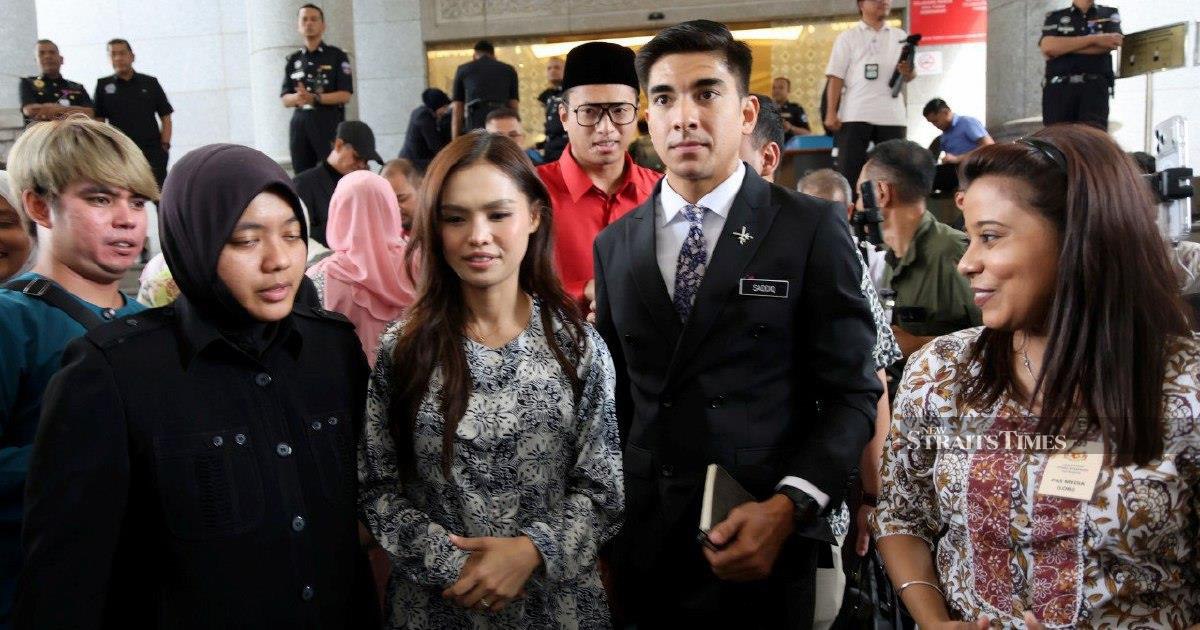
Syed Saddiq Syed Abdul Rahman, the Muar member of parliament, has signalled that a return to the helm of Muda is not a priority in the immediate term, citing his forthcoming marriage as his primary focus. The announcement comes in the wake of his recent acquittal by the courts, an outcome that technically clears the way for him to resume control of the party he co-founded. However, his public statement suggests a deliberate decision to place personal commitments ahead of party politics at this juncture.
The timing of Syed Saddiq's remarks carries significant weight in Malaysian political circles, where the youthful politician has long been viewed as a maverick willing to chart his own course. Since his dramatic fall from grace following legal troubles, observers have speculated intensely about whether he would attempt to reclaim control of Muda, the party he established to represent younger Malaysians seeking alternative political options beyond the traditional establishment.
Muda itself has experienced considerable upheaval since Syed Saddiq's departure from active leadership. The party, which promised fresh perspectives on governance and inclusive politics, has continued to operate under interim arrangements as various factions within the organisation debated the path forward. His acquittal technically removes one of the barriers that might have prevented his formal reinstatement, yet his reluctance to immediately seize this opportunity reveals something more nuanced about his current thinking.
The decision to prioritise marriage over political manoeuvring reflects a broader pattern among younger Malaysian politicians who are increasingly conscious of work-life balance and personal relationships in the public eye. Unlike previous generations of national leaders who often subsumed all personal considerations to political ambition, Syed Saddiq appears willing to demonstrate publicly that life beyond politics matters. This stance could prove either advantageous or problematic depending on how voters and party members interpret such priorities.
From a strategic perspective, Syed Saddiq's measured approach also suggests he is carefully calculating his next move rather than rushing back into party leadership during a period of potential weakness. Muda's performance in recent electoral contests has been underwhelming, and the political landscape has shifted considerably since the party's formation. A premature grab for control without a clear strategy could expose him to criticism from both supporters and opponents.
The party's broader predicament stems from the challenge of maintaining relevance in Malaysian politics without a clear charismatic figurehead or distinctive policy platform that separates it meaningfully from other opposition coalitions. While Syed Saddiq was the founder and original drawing card, his extended absence has forced Muda to develop institutional strengths beyond dependence on a single personality. Whether those foundations remain solid enough to serve as a launching pad for his potential return remains an open question.
Regional observers have taken particular interest in Muda's trajectory because the party represents one of Southeast Asia's few attempts to build explicitly youth-focused political movements outside the traditional left-right ideological spectrum. Malaysia's demographic profile, with a significant proportion of voters under 40, suggests there remains a market for such messaging. However, translating that demographic appeal into sustained electoral performance requires more than rhetorical innovation.
Syed Saddiq's decision to step back and focus on personal life also provides him with breathing room to observe how Malaysian politics evolves following recent developments at the federal level. The political environment remains fluid, with coalition configurations continuing to shift. Taking time for reflection rather than immediately rushing into a high-profile return might allow him to assess where genuine opportunities for meaningful political influence actually lie.
For Muda membership and supporters, the announcement signals that formal resolution of the leadership question will not arrive immediately. This creates space for the party to either develop stronger institutional capabilities or pursue alternative arrangements that do not depend on Syed Saddiq's return. Interestingly, some party insiders have suggested that Muda's future might be better served by developing leadership from within its current ranks rather than reverting to reliance on its founder.
The acquittal itself marks a significant personal vindication for Syed Saddiq, removing a cloud that had hung over his public standing. Whether he ultimately chooses to channel this clean bill of health into a political comeback or focuses on entirely different pursuits remains genuinely uncertain. His statement about prioritising marriage appears genuine rather than merely rhetorical positioning, suggesting that his next chapter may indeed diverge from conventional political trajectories.
From a Malaysian perspective, Syed Saddiq's situation underscores the complex intersection between personal redemption and political aspiration. Many citizens will view his prioritisation of family positively, seeing it as a refreshing departure from the all-consuming nature of Malaysian politics. Others may interpret the delay as strategic repositioning or even reluctance to face the genuine challenges involved in resurrecting a flagging political movement.

