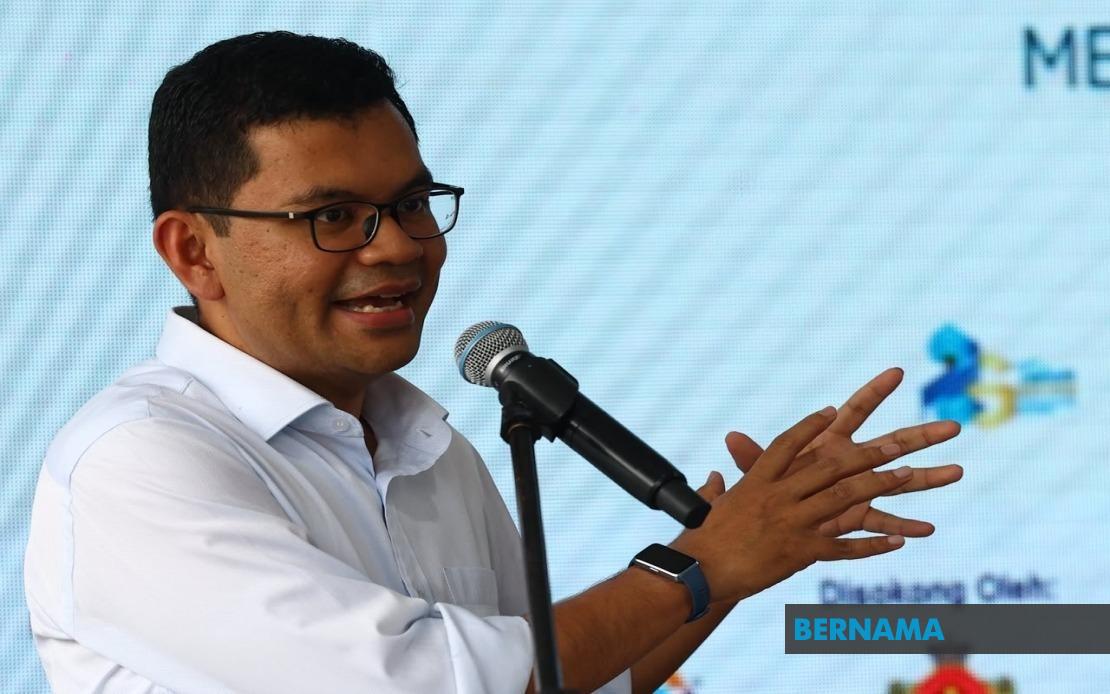
Economy Minister Akmal Nasrullah Mohd Nasir has sounded an alarm about the persistent squandering of taxpayer funds through inadequate oversight and management of government projects across Malaysia. Speaking in Alor Setar on August 6, the minister pointed to a troubling pattern: despite the nation's nearly seven decades of independence and successive changes in administration, the same operational deficiencies resurface repeatedly, undermining public confidence in how government money is deployed for infrastructure and essential services.
The minister's intervention centres on what he describes as a cultural problem rather than merely a technical or procedural one. Complacency and diffused responsibility have become entrenched in how government agencies oversee large-scale projects, he argued, allowing preventable errors and cost overruns to accumulate unchecked. This observation carries particular weight given Malaysia's substantial annual budget allocations to capital spending and the country's development ambitions, where project delays and budget blowouts represent lost opportunities for growth and improved public services.
Akmal Nasrullah's comments were prompted by his engagement with the Kedah water treatment plant project, a scheme funded entirely from public coffers. The minister has been tracking this initiative across its journey through different government departments, first under the Energy Transition and Water Transformation Ministry (PETRA) and subsequently under the Economy Ministry's purview. His follow-up examination of the project revealed that multiple concerns he had flagged during this oversight period went unaddressed, and the very problems he had warned about eventually materialised.
The minister has faced criticism from some quarters for publicly discussing shortcomings in the Kedah water treatment plant scheme, with detractors suggesting that his commentary represents overreach beyond his ministerial remit or that he is assigning blame to particular administrations. Akmal Nasrullah has rejected these objections, clarifying that his intention is neither to cast aspersions on any previous government nor to shirk broader governance responsibilities. Instead, he has framed his intervention as a necessary escalation of concerns that had been overlooked through normal administrative channels.
What distinguishes Akmal Nasrullah's position is his insistence that accountability and transparency in project management transcend narrow policy discussions. While government policies naturally evolve in response to changing circumstances and priorities, the underlying attitudes and organisational cultures that permit waste must be reformed at a deeper level. The minister argues that procedural upgrades alone, without a concurrent shift in institutional mindset, will prove insufficient to break the cycle of mismanagement.
The Kedah water treatment plant serves as a microcosm of broader governance challenges within Malaysia's public sector. Water security is a critical infrastructure issue affecting millions of Malaysians, particularly given increasing pressures from population growth and climate variability. When projects serving such essential needs experience cost escalations, completion delays, or performance deficiencies, the ripple effects extend far beyond accountancy ledgers. Citizens and consumers ultimately bear the consequences through higher utility costs, service interruptions, or infrastructure that fails to meet quality standards.
The minister's insistence that "we can no longer continue with business as usual" reflects growing public frustration with government spending inefficiencies. Malaysian taxpayers contribute substantial sums annually, and the social contract implicitly requires that these funds be deployed judiciously and with measurable results. Projects that consume public money without delivering proportionate public benefit represent a breach of this compact, eroding trust in institutions and contributing to cynicism about government competence.
Akmal Nasrullah's admission that his warnings went unheeded until problems materialised raises uncomfortable questions about decision-making hierarchies and institutional inertia within government. If a minister with portfolio responsibility cannot secure implementation of his recommendations regarding taxpayer-funded projects, what mechanisms exist to ensure that critical concerns are appropriately escalated and acted upon? The answer points to the necessity of stronger governance frameworks, clearer accountability lines, and performance metrics that matter.
The challenges evident in the Kedah water treatment plant project extend to government initiatives nationwide. Infrastructure delays are endemic across Malaysia's public sector, from highway projects to hospitals to educational facilities. Contractual disputes, inadequate supervision, scope creep, and insufficient financial controls have become familiar patterns. When multiplied across dozens or hundreds of concurrent projects, these inefficiencies aggregate into billions of ringgit in lost economic value and delayed social benefits.
For Southeast Asian observers and policymakers, Malaysia's experience offers instructive lessons. The region's sustained development depends on effective public investment in infrastructure and services. Countries facing similar governance challenges must institute robust project management disciplines, including independent oversight, transparent reporting, and genuine consequences for poor performance. Building institutional capacity to manage large projects successfully is as important as securing adequate funding.
Akmal Nasrullah's public statements appear designed to catalyse reform by elevating the issue beyond ministerial briefing rooms into broader public discourse. By naming the Kedah water treatment plant and discussing specific failures, he has created political space for accountability and corrective action. Whether his intervention succeeds in shifting institutional practices remains uncertain, but his willingness to challenge complacency in government project management represents a departure from the silence that has historically enabled persistent waste.
The minister's stance also implicitly challenges his cabinet colleagues and subordinates to examine their own portfolios with similar rigour. Systematic improvement across government project management requires distributed responsibility and peer accountability, not merely top-down directives. If Akmal Nasrullah's intervention encourages other officials to scrutinise their projects with comparable intensity and transparency, the benefits could extend well beyond the Kedah water treatment facility to reshape how Malaysia approaches public investment overall.

