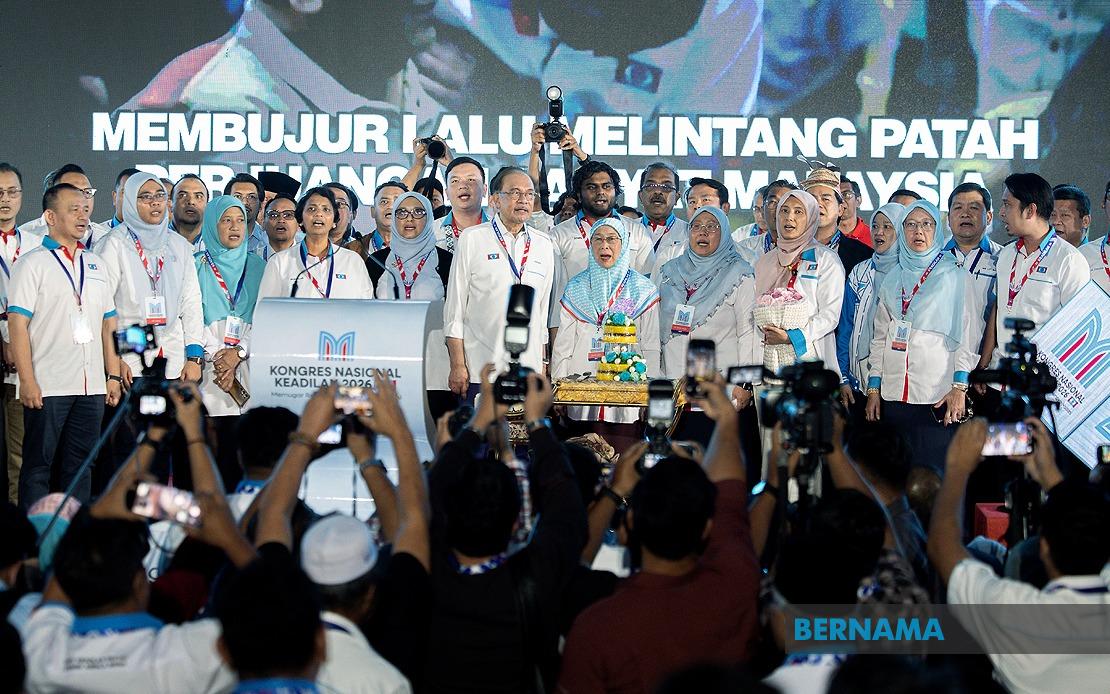
Prime Minister Datuk Seri Anwar Ibrahim has pledged to amend the Tabung Haji Act 1995 (Act 535) as part of a broader institutional overhaul aimed at reinforcing public confidence in Malaysia's governance framework. Speaking in his capacity as both Prime Minister and Finance Minister, Anwar underscored that legislative reforms targeting the hajj savings fund represent a critical plank in his administration's pledge to address systemic weaknesses and restore public trust in key institutions serving the Malaysian Muslim community.
The proposed amendment reflects mounting concerns about institutional accountability and the need to modernise regulatory frameworks governing major fiduciary bodies. Tabung Haji, which manages savings and investments for Muslim pilgrims undertaking the hajj, holds significant financial and cultural importance within Malaysia's Islamic ecosystem. Strengthening its governance architecture signals the government's intent to place institutional integrity at the centre of its reform narrative, particularly as the MADANI administration seeks to differentiate itself through emphasis on clean, principle-driven governance.
Beyond the Tabung Haji initiative, Anwar articulated a more expansive vision of institutional renewal. He stressed that the government remains committed to systematically identifying and rectifying structural deficiencies across the public sector. This approach extends to legislative reform, including the contentious Universities and University Colleges Act (AUKU) 1971. Anwar declared that AUKU must be entirely repealed without replacement by successor legislation that maintains restrictions on student expression and political participation. The stance represents a deliberate pivot toward liberalising campus environments and enabling fuller democratic participation among tertiary students.
The Prime Minister's remarks carry particular weight given ongoing debates within Malaysian higher education about academic freedom and student activism. AUKU has long been criticised by civil society, academic bodies, and international observers as excessively restrictive of student political engagement. By committing to complete repeal without substitution, Anwar signals ideological alignment with progressive constituencies while simultaneously positioning the government as willing to dismantle legacy restrictions inherited from previous administrations.
Anwar contextualised these governance initiatives within the MADANI Government's broader economic and social agenda. He reaffirmed the administration's commitment to ensuring that economic growth translates tangibly into improved living standards for ordinary Malaysians across demographic and geographic divides. This framing attempts to connect institutional reform with material prosperity, suggesting that stronger governance ultimately benefits citizens through improved service delivery and reduced leakage from corruption or mismanagement.
A particularly notable dimension of Anwar's message involves reassurance regarding equitable treatment across political boundaries. The Prime Minister explicitly stated that citizens in opposition-led states warrant equivalent government support and resources as those in coalition-controlled territories. This declaration responds to longstanding grievances among opposition-controlled state populations regarding perceived federal funding disparities and partisan resource allocation. By asserting that government responsibility extends universally regardless of electoral outcomes, Anwar attempts to distinguish his administration's approach from predecessors and position it as transcending narrow partisan calculation.
Anwar's comments arrived during the 2026 Parti Keadilan Rakyat (PKR) National Congress, where the ruling coalition partner was consolidating its organisational structure and ideological direction. In his capacity as PKR president, Anwar articulated a vision centring principle, idealism, and willingness to prioritise reform over political expedience. He emphasised that PKR refuses to compromise foundational values merely to consolidate or defend governmental power, a rhetorical positioning that acknowledges past criticisms of PKR for perceived ideological flexibility and unprincipled coalition-building.
The party leader characterised Keadilan's enduring strength as deriving from personnel integrity, institutional leadership quality, and coordinated organisational effort rather than from raw political dominance. This formulation deliberately distinguishes legitimate authority derived from principled governance from illegitimate power accumulated for personal enrichment or factional advantage. Anwar explicitly renounced using state power to benefit relatives or political cronies, implicitly acknowledging the corrosive effects of such practices on institutional legitimacy and public confidence.
For Malaysian Muslims specifically, the Tabung Haji amendments carry symbolic and practical significance. The organisation occupies a unique position as both financial institution and religious-cultural touchstone, managing pilgrimages undertaken for one of Islam's five pillars. Legislative upgrades addressing governance vulnerabilities respond to documented concerns about fund management and investment returns. Institutional modernisation in this context serves dual purposes: protecting Muslim contributors' financial interests while simultaneously demonstrating governmental commitment to strengthening religiously-significant institutions.
The governance reform agenda articulated by Anwar reflects international best-practice standards increasingly adopted by regional governments. Malaysia's institutional framework, whilst extensive, has faced repeated scrutiny regarding effectiveness, transparency, and accountability mechanisms. Targeted legislative revision, particularly regarding major fiduciary bodies and university governance, positions Malaysia alongside peer economies pursuing institutional modernisation as strategic economic and social priority.
Implementing these reforms will require technical legislative drafting, parliamentary support, and management of stakeholder interests potentially diverging on specific amendments. Universities, student representatives, Tabung Haji beneficiaries, and opposition lawmakers will likely scrutinise detailed proposals once formally tabled. The government's capacity to navigate these competing interests whilst advancing its core reform objectives will substantially influence the credibility of the broader MADANI governance agenda.
Moving forward, the success of governance initiatives announced by Anwar will be measured through concrete legislative enactment and observable institutional improvements rather than rhetorical commitment alone. The coming months will reveal whether announced reforms materialise into substantive change or represent aspirational statements outpacing administrative capacity for implementation.

