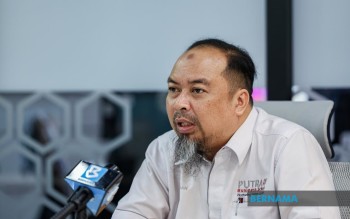
The upcoming parliamentary discussion of the Royal Commission of Inquiry findings on Lembaga Tabung Haji should pivot firmly towards one critical objective: severing the institution from political manipulation and interference. Prof Dr Ahmed Razman Abdul Latiff, director of the MBA programme at Putra Business School, has framed the debate as an opportunity to fundamentally reshape how Tabung Haji operates, moving decisively away from structures that have historically invited partisan influence into its management corridors.
For Tabung Haji to restore public trust and secure its financial future, the academic argues that the Islamic fund management institution must be led exclusively by competent professionals guided by rigorous ethical standards. The current moment—with the RCI report laying bare the institutional weaknesses that accumulated over years—presents a rare window to implement governance reform that strips away layers of political patronage. Ahmed Razman emphasises that professional stewardship, unmarred by personal or partisan agendas, represents the foundation upon which genuine recovery must be built.
The RCI's investigation uncovered substantial governance failures, including significant financial losses, unjustified bonus distributions, apparent conflicts of interest, and investments that failed to generate returns. These findings should not be treated merely as historical curiosities or occasions for blame assignment, but rather as instructive lessons that illuminate exactly where internal controls broke down and why corporate governance frameworks proved inadequate. The academic suggests that the parliamentary debate provides the platform to translate these hard-learned lessons into concrete structural safeguards.
Ahmed Razman articulates a vision for the Dewan Rakyat discussion that prioritises substance over political theatre. The debate, he contends, should unfold constructively and remain anchored in facts, serving ultimately to rebuild the confidence of depositors who depend on Tabung Haji's security and performance. Allowing parliamentary proceedings to devolve into partisan scoring or unfounded allegations risks compounding the reputational damage already inflicted and potentially triggering unnecessary anxiety among account holders.
A particularly sensitive dimension involves the treatment of individuals implicated in wrongdoing during the investigation period. Should further action be warranted against those identified as responsible, such measures must be executed with complete transparency and visibility. The academic raises a legitimate concern: inconsistent or selective enforcement—where some individuals face consequences while others seemingly escape accountability—would breed precisely the kind of public cynicism that recovery efforts cannot afford. Fairness and consistency in pursuing accountability therefore become not merely ethical imperatives but strategic necessities for institutional rehabilitation.
Depositor confidence remains paramount, particularly given the scale of public concern following RCI revelations. Ahmed Razman seeks to reassure account holders by highlighting a crucial distinction between Tabung Haji and conventional commercial banks. Unlike deposits held in private financial institutions, which benefit only from limited government guarantee schemes, funds entrusted to Tabung Haji enjoy complete protection under the law—a fundamental safety net that remains fully intact regardless of the institution's internal difficulties.
The trajectory of Tabung Haji's response to RCI recommendations offers grounds for measured optimism. The institution has already successfully implemented more than 75 per cent of the inquiry's suggestions for institutional improvement, signalling both willingness to reform and capacity to execute meaningful change. This performance suggests that Tabung Haji possesses the organisational capability to chart a credible path toward recovery, provided that the political environment permits such efforts to proceed unimpeded.
The special parliamentary sitting scheduled for the debate will commence with a comprehensive briefing delivered by Dr Zulkifli Hasan, the Minister in the Prime Minister's Department (Religious Affairs). Following this opening presentation, members of parliament will engage in structured questioning and broader debate before Zulkifli winds up proceedings. The format itself creates opportunities for substantive examination, though much depends on whether parliamentarians choose to engage seriously with governance questions or instead deploy the occasion for partisan advantage.
For Malaysian observers and particularly for the Muslim community that relies on Tabung Haji as a dedicated savings vehicle for pilgrimage and other financial goals, this parliamentary moment carries genuine significance. The decisions and commitments made during the debate will shape whether Tabung Haji genuinely transforms into a professionally managed institution insulated from political pressures, or whether underlying structural vulnerabilities persist beneath a veneer of reform. Ahmed Razman's emphasis on depoliticisation thus addresses not merely technical governance improvements but the foundational question of whether public institutions can be reclaimed for public service rather than factional advantage.

