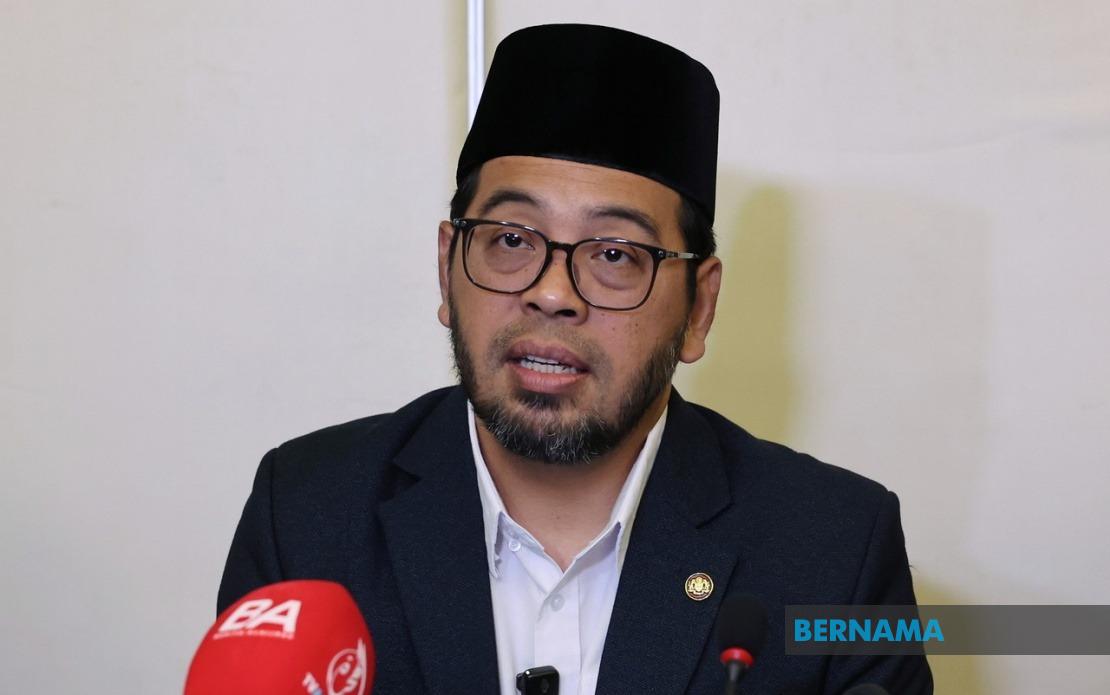
Religious Affairs Minister Dr Zulkifli Hasan has declared that Tabung Haji (TH) has emerged considerably stronger from its institutional recovery process, signalling a turning point for the hajj savings body that faced significant challenges in recent years. Speaking during a special parliamentary sitting focused on the institution's transformation, Zulkifli outlined how the MADANI Government had prioritised rehabilitation of the organisation since assuming office in late 2022, when TH was grappling with accumulated legacy problems inherited from the preceding administration.
When the current government took the helm, Tabung Haji was contending with problematic and uncompetitive assets accumulated since 2018 that had weighed heavily on its operational capacity and financial health. Rather than rushing into public disclosure, the administration opted to grant TH space to conduct its internal rehabilitation programme, a decision that Zulkifli characterised as prudent stewardship of a critical national institution. The minister emphasised that this deliberate approach has now yielded tangible results, positioning the organisation to withstand scrutiny and demonstrate meaningful improvement across financial and operational metrics.
The enhanced standing of Tabung Haji has been validated through international recognition, as the institution claimed five World's Best Haj Management Awards across four consecutive years. Such accolades underscore the government's argument that competent and integrity-driven management can systematically restore institutional credibility. For Malaysian pilgrims and potential depositors, these awards provide external verification that TH's operational standards now align with global benchmarks, a crucial reassurance given the trust deficit created by earlier mismanagement.
The turning point in TH's public accountability came when the Cabinet unanimously approved releasing the Royal Commission of Inquiry report on 29 July, clearing the way for its tabling in Parliament and public disclosure. This 211-page document, chaired by former Chief Justice Tun Mohamed Raus Sharif and composed of five experts spanning public administration, banking, finance, syariah law and accounting, comprehensively examined TH's management and operations between 2014 and 2020. The decision to make these findings public represented a marked departure from opacity, reflecting the government's commitment to transparency in addressing institutional failures that had compromised public trust.
The RCI identified 25 recommendations for improving TH's governance and operations, with implementation progress accelerating notably since the report's formal release. As of late July, three-quarters of the recommended reforms had already been enacted, while remaining measures were undergoing active implementation. This implementation rate suggests that TH's management and the government have moved with considerable urgency to address the commission's concerns, rather than treating recommendations as advisory suggestions that could be deferred indefinitely.
Parallel to institutional reforms, enforcement agencies have moved decisively on alleged misconduct identified in the RCI findings. The Malaysian Anti-Corruption Commission and police have commenced investigations into misappropriation allegations, with several individuals already detained in connection with wrongdoings highlighted in the report. This enforcement response reflects the government's broader messaging that accountability extends beyond internal restructuring to encompassing criminal investigation where evidence of wrongdoing emerges. Zulkifli framed this action as consistent with the decree of His Majesty Sultan Ibrahim, King of Malaysia, that investigations be pursued comprehensively and without compromise, embodying the principle of leaving no stone unturned.
The minister's emphasis on the sacred nature of TH deposits underscores why institutional failure carries particular weight in Malaysian society. The funds held in trust represent not mere financial assets but the accumulated aspirations of millions of Malaysians from diverse socioeconomic backgrounds. Teachers, rural traders, smallholders in the agricultural and fisheries sectors, retirees and urban service workers entrust their savings to TH not primarily to generate investment returns but to facilitate their spiritual journey to the Baitullah. This distinction between profit-seeking investments and spiritually motivated savings means that breaches of trust carry moral and religious dimensions beyond conventional financial misconduct.
Zulkifli's messaging deliberately rejected three problematic approaches that had characterised earlier official responses to TH difficulties: obscuring problems behind statistical abstractions, sweeping controversies under the carpet, or allowing politically motivated narratives to displace the genuine interests of depositors and the broader Muslim community. By contrast, the current administration positioned its handling of the RCI report as grounded in principles of transparency, accountability and restoration of depositor confidence. This rhetorical framing serves multiple audiences simultaneously—reassuring current depositors of the government's commitment to their interests, signalling to potential future depositors that institutional failures will be addressed rather than hidden, and demonstrating to the broader public that even sensitive institutions can be subjected to rigorous scrutiny without institutional collapse.
The RCI's establishment by the previous government in 2021, with member appointments formalised on 20 January 2022 and the report presented to the King on 30 August the same year, situates these findings within a process that predates the current administration's tenure. Zulkifli's government has consequently inherited both the institutional problems and the blueprint for corrective action, positioning itself as the executor of reform rather than the originator of problems. This sequencing allows the current administration to project itself as the catalyst for meaningful change while attributing the underlying difficulties to governance failures of the preceding era.
For Malaysian depositors and the broader Southeast Asian Muslim community, Tabung Haji's recovery trajectory carries implications extending beyond institutional economics into questions of governance and public trust. The institution's experience demonstrates that even compromised organisations can undergo meaningful rehabilitation when strong leadership, enforcement action and transparent accountability mechanisms converge. Conversely, the severity of TH's difficulties during 2014-2020 underscores how institutional failures can accumulate quietly when oversight mechanisms prove inadequate and governance standards deteriorate over extended periods. The current government's approach—combining internal restructuring, public disclosure of findings, implementation of recommendations and enforcement action—establishes a model for institutional rehabilitation that may influence how other Malaysian public institutions address legacy governance failures.

