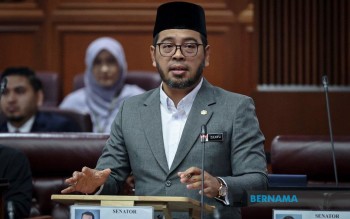
Tabung Haji remains locked in a prolonged dispute with Saudi Arabia-based property developer Al-Rawda Real Estates Development & Project Management Co Ltd over a substantial arbitration award that has gone largely unpaid. The Islamic pilgrimage fund is pursuing multiple enforcement avenues, including asset tracing conducted by specialist consulting firms, after Al-Rawda remitted just 14.9 million Saudi riyal—equivalent to approximately RM16.2 million—from a total arbitration award of 899 million Saudi riyal. Minister in the Prime Minister's Department (Religious Affairs) Dr Zulkifli Hasan disclosed this recovery struggle during parliamentary proceedings addressing findings from the Royal Commission of Inquiry into Tabung Haji's financial deterioration.
The dispute traces back to an investment structure established between 2015 and 2017, when Tabung Haji committed approximately RM1.55 billion in upfront lease payments to Al-Rawda for operational rights to four hotels located in the Islamic holy cities of Makkah and Madinah. These arrangements, spanning lease periods of between 10 and 18 years, were deemed extraordinarily unfavorable by the RCI, deviating substantially from conventional hotel investment practices. Beyond the lease agreements, Tabung Haji appointed Al-Rawda as the management and operational contractor for these properties, establishing a separate revenue structure whereby the fund anticipated receiving 2.49 billion Saudi riyal in rental income. The underlying security for this substantial income stream rested entirely on a personal promissory note guaranteed by Al-Rawda's proprietor, Dr Mashhoor Ali Omar Almadoodi—a singular reliance that proved catastrophically inadequate.
The financial relationship deteriorated markedly from March 2019 onwards, when Al-Rawda ceased remitting the contractually obligated rental payments to Tabung Haji. This cessation triggered the fund's decision to initiate formal enforcement proceedings within Saudi Arabia's legal jurisdiction. The dispute eventually escalated to international arbitration, with Al-Rawda launching proceedings against Tabung Haji in a counteroffensive move. These arbitral processes culminated in a Final Award issued on April 16, 2023, which vindicated Tabung Haji's position and ordered Al-Rawda to remit the full 899 million Saudi riyal compensation. Despite this legal victory, collecting the awarded sum proved vastly more complicated than securing the judgment itself.
Recognizing the structural obstacles to full recovery, Tabung Haji and Al-Rawda negotiated a settlement agreement in November 2024 to facilitate payment of the arbitration award through staged installments. However, this compromise arrangement quickly unraveled when Al-Rawda delivered only the initial 14.9 million Saudi riyal payment before ceasing further compliance with the negotiated terms. Confronted with this breach, Tabung Haji terminated the settlement agreement and pivoted toward more aggressive recovery mechanisms. The fund has now enlisted external consulting expertise specializing in asset tracing—the investigative and legal process of locating and identifying assets held by debtors across multiple jurisdictions—to pursue alternative collection pathways.
Dr Zulkifli's parliamentary statement acknowledged that enforcement actions against Al-Rawda had consistently revealed the company's fundamental lack of liquid financial resources necessary to satisfy the arbitration award. This insolvency reality transforms the Tabung Haji dispute from a straightforward debt collection matter into a complex cross-border asset recovery challenge. The minister indicated that despite exhausting conventional enforcement remedies within Saudi Arabia's legal system, those avenues had failed to produce meaningful recovery results. The appointment of asset-tracing consultants signals Tabung Haji's recognition that collecting the remainder requires sophisticated investigative capabilities to identify hidden, transferred, or obscured assets potentially held by Al-Rawda or its beneficial owners across multiple jurisdictions.
The Al-Rawda investment debacle forms a central component of the broader Tabung Haji financial crisis examined by the Royal Commission of Inquiry. The RCI identified Al-Rawda as one of 14 deeply problematic investments that collectively generated losses exceeding several billion ringgit. The commission's investigation highlighted systemic governance weaknesses, investment due diligence failures, and structural deficiencies in Tabung Haji's management and operational frameworks during the 2014-2020 period. Published in July 2024, the 211-page RCI report documented these institutional vulnerabilities and proposed 25 comprehensive recommendations for organizational rehabilitation and strengthened oversight mechanisms.
The implementation status of RCI recommendations demonstrates cautious progress toward institutional reform. As of July 30, 2024, Tabung Haji had implemented approximately 75 percent of the 25 recommended measures, suggesting meaningful organizational response to the commission's findings. These implementation efforts span governance structures, risk management protocols, investment appraisal processes, and operational accountability systems. However, the continued struggle to recover funds from a single debtor like Al-Rawda underscores how difficult it remains for Tabung Haji to remediate the consequences of historical investment decisions, even as management practices improve prospectively.
For Malaysian pilgrims and the broader Muslim community reliant on Tabung Haji's hajj facilitation services, the unresolved Al-Rawda dispute carries direct financial implications. The billions in accumulated losses across multiple failed investments have constrained the fund's capacity to provide subsidized hajj travel packages and related services at historically accessible rates. The protracted recovery effort against Al-Rawda, though necessary, represents an external drain on managerial resources and financial attention that could otherwise support the organization's core pilgrimage services mission. The shift toward asset tracing suggests that Tabung Haji has accepted the likelihood of incomplete recovery and is now focused on extracting maximum value from a fundamentally compromised investment relationship.
The broader context reveals vulnerabilities within Malaysia's Islamic financial governance that extend beyond Tabung Haji's specific circumstances. Large-scale institutional investments in Saudi property and hospitality ventures, particularly those structured with minimal security provisions and sole reliance on personal guarantees, require substantially higher scrutiny standards. The lesson from the Al-Rawda experience—that enormous capital commitments to foreign entities can rapidly evaporate without robust contractual protections and ongoing asset monitoring—applies across Malaysia's Islamic financial sector. Going forward, institutions managing religious endowments and pilgrimage funds must implement more rigorous international due diligence protocols, diversified security structures, and regular third-party financial verification mechanisms to prevent similar catastrophic capital losses.

