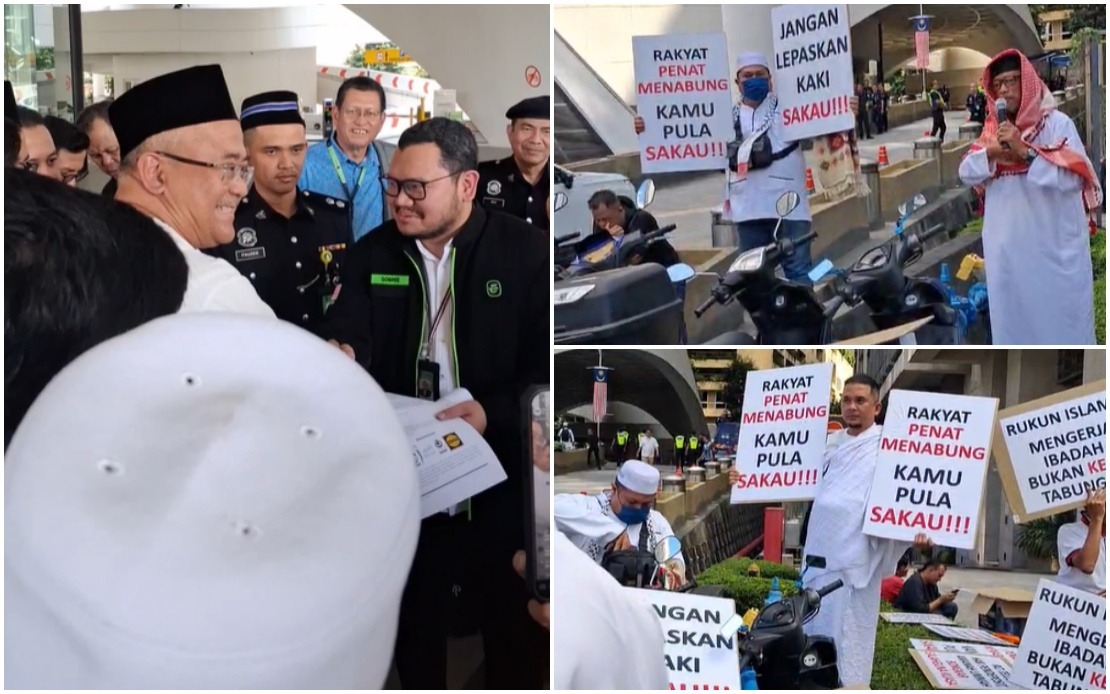
The Royal Commission of Inquiry into Lembaga Tabung Haji's management has triggered fresh calls for an impartial and unimpeded investigation process, with faith-based civil society groups warning against political interference in what they characterise as a matter of public trust. Amir Zuhair Abdull Khalid, leading the MADANI coalition, addressed a solidarity gathering at Menara TH headquarters in Kuala Lumpur, emphasising that the investigation must follow proper legal channels without external pressure compromising its integrity. The RCI's examination of Tabung Haji operations spanning 2014 to 2020 has uncovered issues that demand resolution through the courts rather than backroom settlements or political expediency.
The broader concern underpinning these demands transcends partisan politics. Tabung Haji manages vast sums contributed by millions of Muslim Malaysians who depend on the institution to safeguard their savings and facilitate pilgrimage. When governance failures occur within such an entity, the ramifications extend beyond financial losses to encompass questions of fiduciary duty and religious accountability. Amir Zuhair framed the issue precisely in these terms, stressing that this is not a matter to be resolved through public grandstanding or political point-scoring but through rigorous legal scrutiny designed to protect depositor interests.
The RCI's preliminary findings have already implicated potential political meddling in appointment processes and board governance decisions during the period under review. The commission identified instances where political considerations may have trumped meritocratic principles in selecting individuals to oversee the institution. These revelations create a delicate situation wherein investigators must proceed carefully to distinguish between legitimate governance concerns and politically motivated accusations. The coalition's emphasis on transparency serves partly to reassure the public that the investigation will not become a tool for settling political scores.
Amir Zuhair's repeated insistence that "whoever is at fault" should face prosecution reflects mounting frustration with perceived foot-dragging in the accountability process. He argued that public statements of innocence cannot substitute for judicial determination of guilt or culpability. The proper venue for establishing responsibility lies within the courts following comprehensive investigation by the Malaysian Anti-Corruption Commission and other relevant authorities. This sequential process—investigation followed by prosecution and trial—represents the constitutional framework through which Malaysia's legal system addresses allegations of serious wrongdoing.
For Southeast Asian observers, the Tabung Haji situation reflects broader governance challenges confronting large state-linked institutions managing public funds across the region. How governments respond when commissions of inquiry uncover institutional failures often signals the depth of their commitment to accountability and rule of law. Malaysia's approach in this instance will reverberate beyond its borders, influencing perceptions of governance quality among both investors and international observers scrutinising ASEAN economies.
The Malaysian Islamic Movement Coalition and its constituent organisations—comprising WADAH, IKRAM, HALUAN, and ABIM—have articulated ten specific demands extending beyond mere investigation. These include immediate legal prosecution of those implicated, full recovery of misappropriated assets, comprehensive implementation of the RCI's recommendations, and sustained governance reforms under the current MADANI government framework. The coalition's approach demonstrates that civil society actors are not content with investigation announcements; they expect tangible outcomes demonstrating the state's seriousness about institutional reform.
Implementing the RCI's recommendations presents an equally significant challenge as pursuing legal accountability. Governance structures that permitted the problems identified during 2014-2020 must be fundamentally redesigned to prevent recurrence. This encompasses strengthening board independence, establishing clearer oversight mechanisms, and insulating operational decisions from political pressure. For Tabung Haji specifically, rebuilding institutional credibility among depositors who increasingly question whether their savings remain secure represents a formidable undertaking.
The emphasis on non-interference carries particular weight given Malaysian political dynamics. Past instances of investigations becoming enmeshed in factional struggles have undermined public confidence in accountability processes. By publicly warning against pressure on the MACC and relevant investigative bodies, the MADANI coalition signals awareness that political actors on all sides must resist the temptation to weaponise the RCI process. Such restraint, while seeming obvious in principle, frequently proves elusive when powerful interests face potential prosecution.
For Malaysian depositors and the broader Muslim community that Tabung Haji purports to serve, the investigation's outcome will determine whether institutional trust can be restored. Perceived manipulation or incomplete prosecution would compound the reputational damage already inflicted by the RCI's revelations. Conversely, swift and credible legal proceedings resulting in appropriate consequences for wrongdoing could demonstrate that even prominent figures are subject to the same legal standards. This symbolic dimension of the investigation matters as much as its instrumental function in recovering funds and punishing misconduct.
The coalition's petition demanding implementation of governance reforms signals recognition that legal accountability alone cannot address the systemic issues identified. Structural changes encompassing board composition, executive compensation frameworks, and decision-making transparency must accompany criminal prosecution to create institutional conditions preventing future malfeasance. This comprehensive approach reflects sophisticated understanding that accountability requires both punitive and preventive elements operating in concert.

