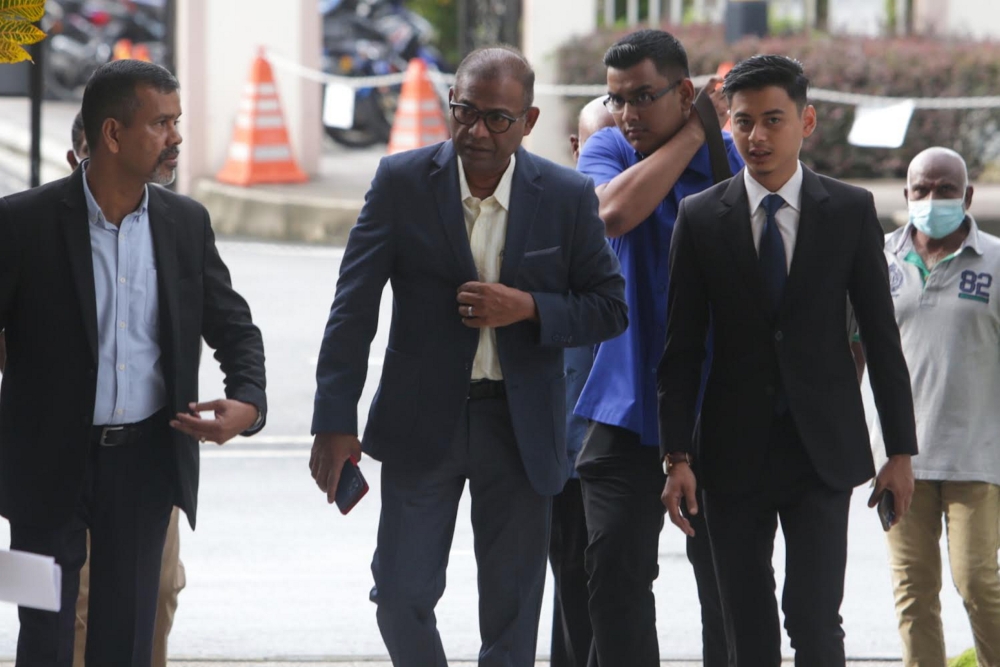
Claims circulating on social media that Datuk Seri Abdul Azeez Abdul Rahim, the former Member of Parliament for Baling, had been arrested by the Malaysian Anti-Corruption Commission were firmly rejected by his son on Friday, with the family characterising the online chatter as unfounded rumour-mongering with no factual basis.
The younger Abdul Azeez took to digital platforms to publicly address the narrative gaining traction among users, describing the allegations as mere speculation unmoored from any verified reporting or official statement. His intervention highlights the recurring challenge of managing misinformation in an ecosystem where unverified claims can rapidly achieve viral status before any fact-checking mechanism becomes operative.
The rumours surfaced against the backdrop of the ongoing Royal Commission of Inquiry into Tabung Haji, the pilgrimage fund management body that has faced mounting scrutiny over its financial operations and governance structures in recent years. The RCI, established to investigate alleged mismanagement and irregularities within the institution, has become a focal point for public discourse about accountability in Malaysia's financial sector, particularly regarding bodies entrusted with handling citizens' savings.
Tabung Haji's operational challenges have been extensively documented, with reports indicating substantial losses and concerns about how investment decisions were made across previous administrations of the fund. The inquiry represents one of the government's significant accountability mechanisms aimed at restoring public confidence in an institution that manages the savings and pilgrimage finances of millions of Malaysian Muslims.
The emergence of unsubstantiated claims linking specific political figures to the RCI investigation underscores how institutional accountability processes can become entangled with rumour and partisan narratives in Malaysia's polarised information landscape. Social media platforms have become primary channels through which such speculation propagates, often outpacing official communication from agencies involved in legitimate investigations.
Abdul Azeez Abdul Rahim served as Member of Parliament for Baling and held various positions within Malaysia's political establishment. His family's need to issue a public denial reflects the reputational implications of being associated with investigations, even when no formal action has been initiated against the individual in question.
The MACC, Malaysia's principal corruption-fighting body, conducts its investigations with considerable discretion, typically announcing enforcement actions only when formal charges are filed. The absence of any official statement from the commission regarding Abdul Azeez does lend credence to the family's assertion that the online claims lack any institutional foundation.
This incident exemplifies a broader challenge facing Malaysian democracy and governance frameworks: the difficulty of maintaining distinction between legitimate inquiry into institutional failings and the spread of personalised allegations that, while framed as exposés, often lack evidentiary support. As Malaysians increasingly consume news through social media rather than traditional news outlets, the responsibility for verification increasingly falls upon individual users rather than institutional gatekeepers.
For political figures and their families, the implications are substantial. Even thoroughly baseless rumours, once amplified across networks, can inflict reputational damage that proves difficult to entirely mitigate. The fact that Abdul Azeez's son felt compelled to issue a denial speaks to how effectively social media campaigns, regardless of their truthfulness, can shape public perception and force response from affected parties.
The RCI into Tabung Haji remains an active institutional process with the potential to uncover genuine misconduct and recommend reforms to the pilgrimage fund's governance. These findings, when released, may implicate various actors across different political eras. However, such legitimate investigations depend on maintaining distinction between evidence-based conclusions and unverified social media speculation.
Moving forward, Malaysian observers and regulators face questions about how to manage information authenticity during periods of significant institutional inquiry. Media literacy initiatives, platform accountability measures, and official agencies' proactive communication strategies all play roles in ensuring that legitimate accountability processes are not overwhelmed by parallel currents of misinformation.
The broader lesson extends beyond this particular incident. As Malaysia navigates complex governance challenges requiring public trust in institutions, the difference between documented investigation and digital rumour becomes increasingly consequential. Political figures' families may find themselves forced to expend considerable energy refuting claims that should never have gained currency in the first place.

