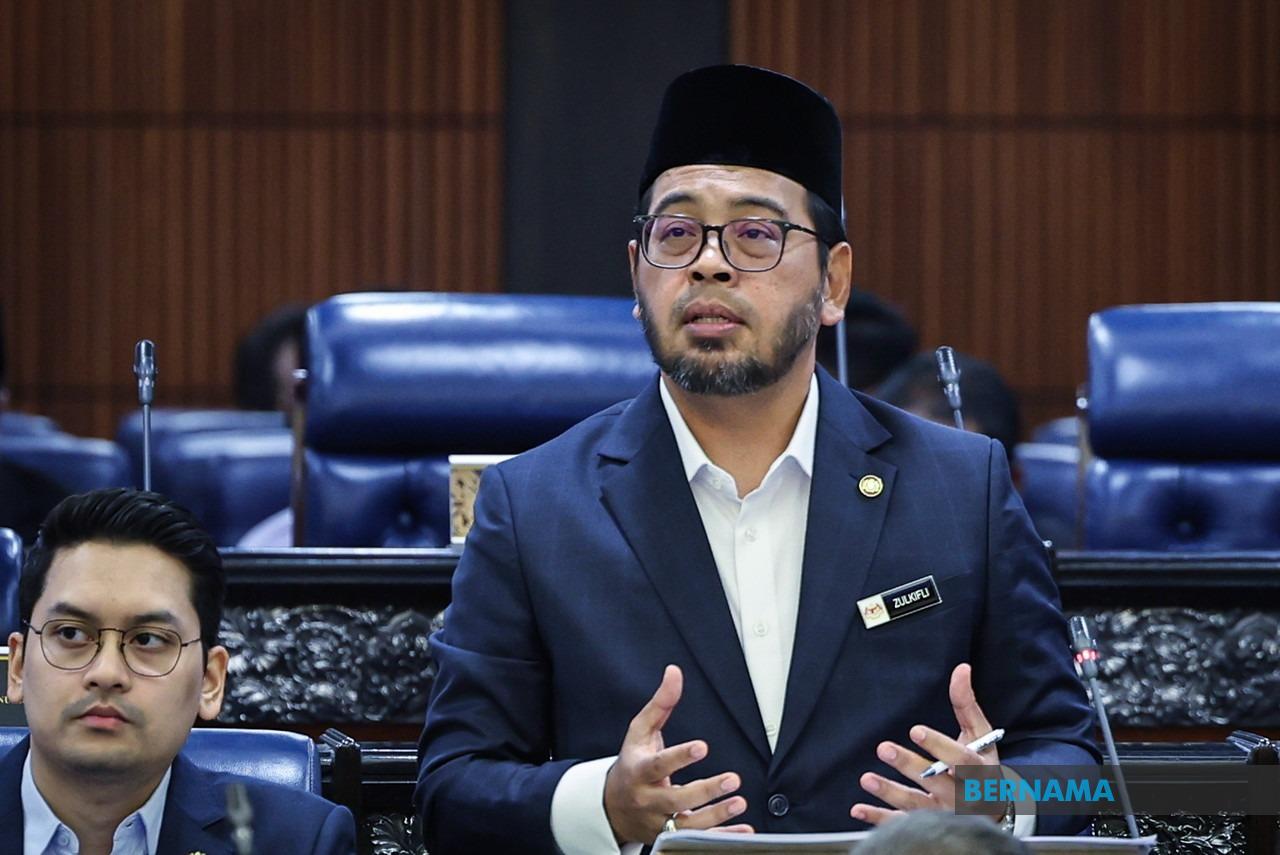
Lembaga Tabung Haji (TH) has emerged significantly stronger from the financial difficulties that engulfed the institution in recent years, thanks to a structured recovery programme launched in 2018, Religious Affairs Minister Dr Zulkifli Hasan declared during a parliamentary briefing on the Royal Commission of Inquiry findings. The carefully calibrated reform agenda has not only arrested the organisation's decline but positioned it as a model of institutional recovery within the Islamic financial sector, addressing concerns that had accumulated over the preceding decade.
The recovery strategy rests upon nine foundational pillars, each designed to address specific vulnerabilities that had weakened TH's operations and damaged public confidence. These encompass the restoration of financial health, reinforcement of governance frameworks and transparency mechanisms, elevation of investment standards, and a commitment to delivering consistent value to the millions of Malaysian Muslims who entrust their hajj savings to the institution. The breadth of this approach reflects recognition that superficial measures would prove insufficient to remedy deeply embedded structural problems.
An equally critical dimension of the reforms targets accessibility to the hajj experience itself. TH has prioritised maintaining the affordability of pilgrimage for ordinary Malaysians, ensuring that participating in one of Islam's five pillars remains within reach for believers across socioeconomic strata. This objective takes on particular weight given the extraordinary inflationary pressures that have characterised recent decades, making it increasingly difficult for institutions managing hajj costs to preserve reasonable pricing for pilgrims.
The most tangible achievement has been the stabilisation of pilgrimage costs at RM33,300, a figure that has been maintained across three consecutive seasons spanning 2024 to 2026. This feat becomes more impressive when contextualised against the broader economic backdrop. Since 2001, when TH introduced financial assistance schemes for hajj participants, inflation has accumulated at a staggering 250 per cent, compressing the purchasing power of every ringgit committed to the pilgrimage. Holding prices constant in such an environment demands sophisticated cost management and strategic negotiation across multiple service categories.
Behind these stable prices lies considerable operational sophistication. TH has secured long-term air travel contracts that insulate the institution from volatile aviation costs, a critical consideration given that international airfares have experienced significant volatility in recent years. Simultaneously, the organisation has reconfigured its accommodation procurement strategy, negotiating directly with hotel proprietors in Makkah and Madinah rather than channelling arrangements through intermediaries. This direct engagement has yielded superior facilities at comparable or lower costs, improving the pilgrim experience while maintaining financial discipline.
Governance transformation has constituted another cornerstone of the recovery initiative. The shift toward professional management unconstrained by inappropriate political interference has allowed TH's leadership to make decisions grounded in institutional best practice rather than external pressures. This recalibration has produced measurable improvements in service quality and hajj administration, moving beyond mere financial metrics to encompass the lived experience of pilgrims utilising TH's facilities and arrangements.
The institution's receipt of the Labaytum Diamond Award for two consecutive years exemplifies the external validation of these improvements. This recognition places TH among an elite cohort of hajj service providers globally, a distinction that carries particular significance for Malaysian Muslims and reflects generational progress in institutional competence. The award represents TH's fifth consecutive Labaytum recognition overall, suggesting sustained upward momentum rather than isolated achievement.
The financial restructuring of assets and liabilities has fundamentally altered TH's balance sheet trajectory. Rather than managing decline, the institution now operates from a position of foundational stability, enabling strategic investment in service enhancement and operational modernisation. This transformation holds importance not merely for TH itself but for the broader ecosystem of Islamic financial institutions in Malaysia and the region, as successful institution-building in this space bolsters confidence in faith-based financial vehicles.
For Malaysian depositors—numbering in the millions—these reforms translate into enhanced security of their hajj savings and improved prospects of realising their pilgrimage aspirations. The combination of stable pricing, professional management, and strengthened financial footing reduces the existential risk that characterised TH's position during crisis years. The emphasis on sustainability rather than quick fixes suggests that improvements are designed to endure rather than represent temporary adjustments.
The broader policy implications extend beyond TH itself. Successful management of this institution demonstrates that large, complex organisations with embedded governance challenges can undertake comprehensive renewal when structured programmes receive sustained commitment. The nine-pillar approach—balancing financial health, accessibility, quality, and institutional integrity—offers a template potentially applicable to other struggling Malaysian institutions requiring systemic overhaul. The recovery demonstrates that stakeholder confidence can be rebuilt through transparent acknowledgment of problems and methodical implementation of demonstrable solutions.
From a regional perspective, TH's stabilisation strengthens Malaysia's capacity to serve as a credible administrator of Islamic financial instruments. Neighbouring countries managing hajj services and Islamic financial institutions monitor such developments closely, as successful models in one jurisdiction inform expectations and standards elsewhere. Malaysian expertise in managing large-scale faith-based financial operations becomes more valuable as the institution establishes proven competence in complex operational and financial management.
Looking forward, the sustainability of these reforms depends on maintaining institutional autonomy while preserving accountability to depositors and regulatory authorities. The explicit rejection of undue interference in professional decision-making marks a significant cultural shift, one that will require vigilant protection as political pressures inevitably emerge. The positive trajectory established since 2018 suggests this balance can be maintained, but institutional maturity demands constant reinforcement of governance principles that have proven effective.

