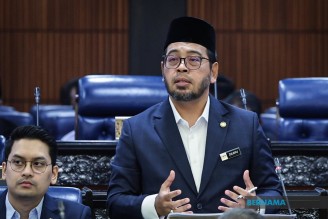
The Royal Commission of Inquiry into Tabung Haji's operations has uncovered how the pilgrimage fund's stake in Putrajaya Perdana Bhd became a conduit for exposure to 1Malaysia Development Bhd's troubled dealings, ultimately draining RM145.3 million from the institution's coffers. Minister in the Prime Minister's Department (Religious Affairs) Dr Zulkifli Hasan disclosed the findings during a parliamentary briefing, highlighting a chain of governance failures and questionable investment decisions spanning the period from 2014 to 2020.
The investment structure itself raised immediate red flags regarding potential conflicts of interest. By installing its then chairman as the chief executive of Putrajaya Perdana, Tabung Haji created a situation where institutional decision-making became intertwined with a company subsequently connected to 1MDB's problematic transactions. The arrangement placed a senior officer of the pilgrim fund simultaneously in positions across entities with divergent interests, creating the institutional equivalent of navigating choppy waters with competing navigation systems. This overlap between Tabung Haji and Putrajaya Perdana proved to be merely the surface manifestation of deeper structural problems within the fund's investment strategy.
Dr Zulkifli articulated the broader concern regarding whether Tabung Haji's capital allocation decisions were genuinely motivated by the institution's fiduciary obligations to its members or whether they served external agendas. The minister posed a pointed question during the parliamentary session: given that Tabung Haji's chief executive officer simultaneously held a directorship at 1MDB, were these investments undertaken to strengthen the pilgrim fund or to provide financial relief to other struggling entities? This query cuts to the heart of governance accountability and the protection of a fund that manages the savings of millions of Malaysian Muslims undertaking the Hajj pilgrimage.
Putrajaya Perdana represented only one component of what the RCI report characterised as a portfolio of 14 problematic investments collectively responsible for losses aggregating to billions of ringgit. These weren't isolated missteps but rather symptomatic of systemic weaknesses in investment due diligence, risk assessment, and board-level oversight that permeated Tabung Haji's operations during this period. The concentration of losses across multiple investments suggests an institutional culture where capital deployment occurred without adequate independent verification or scrutiny.
Additionally, Tabung Haji's decision to purchase land at the Tun Razak Exchange directly from 1MDB during the peak of the development fund's controversy amplified the institution's exposure to a discredited entity. This transaction represented more than a simple real estate purchase; it effectively transferred Tabung Haji's credibility to support a fund facing escalating public and regulatory scrutiny. The timing was particularly problematic, as the broader Malaysian business community and international investors were already questioning 1MDB's financial practices and governance structures.
The pilgrim fund's involvement with FGV Holdings, Malaysia's largest initial public offering raising over RM10 billion, subsequently illustrated how even seemingly successful ventures could deteriorate catastrophically. Tabung Haji's stake in the agricultural company declined in value by more than 80 per cent, ultimately producing losses exceeding RM1 billion. Rather than recognising these losses transparently through its financial reporting, the fund's management modified impairment accounting policies, effectively obscuring the deterioration in asset values. This accounting practice masked the true financial condition of the institution from its stakeholders and regulators during a critical period.
Recovery efforts have begun to reverse some of these damaging decisions. Tabung Haji repurchased the Tun Razak Exchange land, which it had sold in 2018 for RM400 million, at a current valuation of RM270 million—a significant discount reflecting subsequent market conditions and the property's trajectory. Similarly, the fund reacquired the oil palm plantation operations of UJ Estates (Holdings) Sdn Bhd that it had previously divested for RM800 million, completing the acquisition this year at a market value of RM695 million, with the total transaction valued at approximately RM580 million when factoring in the cash component of RM115 million.
The 211-page RCI report, released publicly on July 29, documented an extensive catalogue of management and operational weaknesses spanning the six-year examination period. Beyond identifying specific problematic investments, the inquiry formulated 25 comprehensive recommendations aimed at preventing recurrence of similar institutional failures. The implementation progress has been encouraging, with Tabung Haji completing approximately 75 per cent of recommended reforms by late July, demonstrating institutional responsiveness to the commission's findings.
The government's establishment of the RCI in 2021, coupled with the appointment of commission members in January 2022 and the subsequent presentation of findings to the King in August 2022, represented a significant accountability mechanism for an institution managing substantial public resources. For Malaysian pilgrims and their families whose Hajj savings flow into Tabung Haji, the exposure of these governance failures and the documented path toward remediation offer both cautionary lessons and evidence of institutional reformation. The case exemplifies how inadequately supervised investment decisions, compounded by governance overlaps and compromised decision-making structures, can rapidly erode the financial foundations of organisations entrusted with public stewardship.

