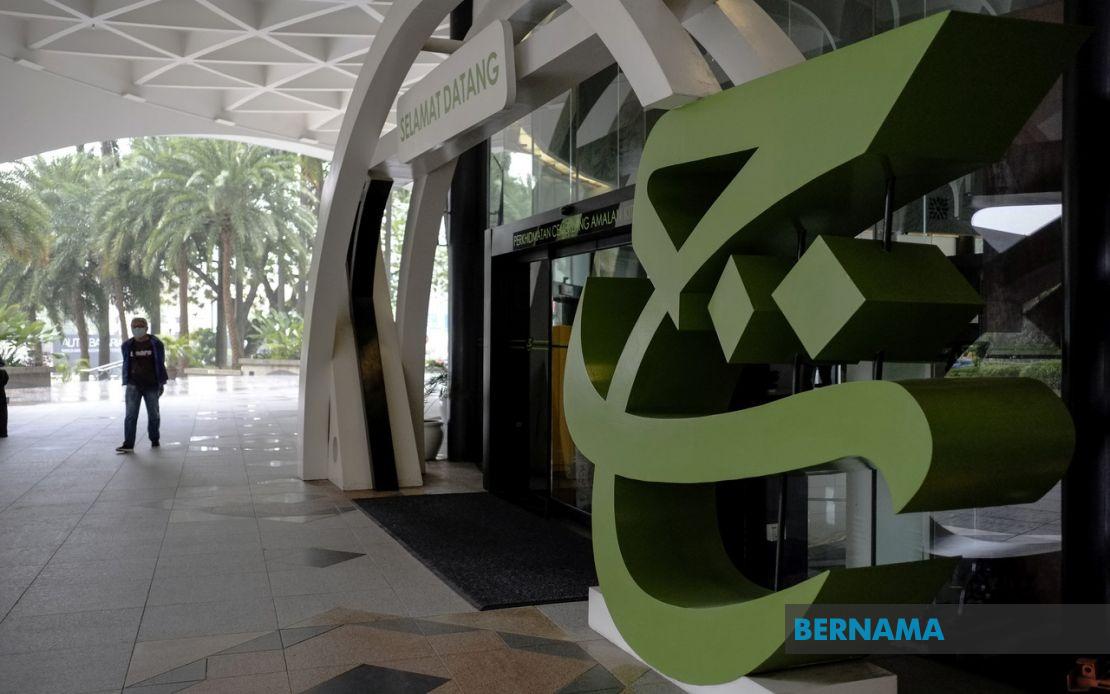
The Royal Commission of Inquiry into Tabung Haji has delivered a broadly positive assessment of the institution's recovery trajectory, confirming that an ambitious restructuring programme launched in 2018 has effectively stabilised the pilgrim fund's finances following catastrophic investment losses that threatened its viability. The full declassification of the RCI's findings provides welcome transparency on one of Malaysia's most consequential financial rescue operations, revealing how RM12.6 billion in accumulated losses were methodically addressed through a combination of asset transfers, government support, and internal reform measures. This verdict represents vindication for policymakers who staked considerable political and financial capital on the recovery plan, yet it simultaneously carries an implicit warning that the work of restoration remains incomplete.
The scale of Tabung Haji's original predicament cannot be understated. The institution's investment portfolio had deteriorated so severely that corrective action became unavoidable, with the 2018 recovery plan immediately absorbing RM10 billion of the accumulated losses through a carefully structured asset transfer. The remaining RM2.6 billion in problematic investments were handled progressively over subsequent years, finally resolved by the close of 2025. This sequenced approach allowed Tabung Haji to maintain operational continuity while undergoing profound restructuring, preventing the kind of sudden shock that might have caused panic among the fund's millions of account holders. The method demonstrated considered governance, even as it pointed to earlier institutional failings that required such drastic intervention.
Central to the recovery strategy was the creation of Urusharta Jamaah Sdn Bhd, a government-owned special purpose vehicle designed to absorb Tabung Haji's most troubled assets and remove them from the institution's balance sheet. Assets totalling RM19.9 billion were transferred to UJSB, though their independently assessed market value at the time stood at merely RM9.7 billion—a RM10.2 billion premium that effectively represented a substantial government subsidy of the institution. While this transfer price appeared generous, it functioned as a deliberate policy mechanism to inject capital into Tabung Haji without drawing down public funds directly, instead layering the cost through future sukuk repayments backed by government guarantees. This financial engineering allowed the pilgrim fund to present a cleaner balance sheet to depositors while preserving the government's fiscal position in formal budget accounting terms.
The effectiveness of these interventions has become measurably apparent in Tabung Haji's recent operational performance. Investment income surged to RM4.64 billion in 2024, reaching its highest level since 2018 and substantially exceeding the depressed returns that characterised the years immediately following the initial crisis. Profit distributions to depositors have climbed from a meagre 1.25 per cent in 2018 to 3.5 per cent in 2025, a sevenfold increase that directly reflects improved underlying performance and restored investor confidence. These figures carry symbolic weight for millions of Malaysian Muslims who entrust their savings to Tabung Haji for the sacred purpose of performing the pilgrimage, making the institution's financial resilience a matter of profound personal and religious significance beyond conventional investment considerations.
Yet the RCI's analysis, while largely positive regarding the recovery plan's mechanics, identifies persistent structural vulnerabilities that demand sustained attention. The commission has determined that 75 per cent of its recommendations have been implemented, leaving one quarter of proposed reforms still pending. These outstanding measures include comprehensive revision of the Tabung Haji Act 1995, deepening corporate governance frameworks beyond minimum requirements, and establishing regulatory systems that genuinely embed risk awareness throughout the institution's decision-making hierarchy. The commission explicitly cautioned that the recovery plan, however successful tactically, cannot substitute for the institutional transformation necessary to prevent recurrence of the circumstances that created the crisis initially. This distinction between treating immediate symptoms and curing underlying pathologies frames the RCI's overall message: the worst danger has passed, but complacency would be imprudent.
A critical ongoing concern centres on the government's capacity to service the sukuk issued by UJSB and maintain the annual cash allocations that underpin the restructuring framework. These instruments carry profit rates of 4.05 and 4.10 per cent respectively, representing a substantial recurring obligation that depends entirely on government budgetary allocations. Should fiscal pressures or competing priorities lead to reduced funding, the consequences could cascade through Tabung Haji's profit distribution capacity and ultimately undermine depositor confidence. The RCI identified this dependency as a structural weakness, highlighting that profit distributions without commensurate cash reserves pose long-term sustainability risks. This concern resonates within the broader Malaysian context of tightening public finances and competing demands for government resources, suggesting that Tabung Haji's recovery, while real, exists within a narrower margin of safety than superficial indicators might suggest.
Interestingly, recent asset repurchase activity demonstrates that UJSB and Tabung Haji have begun negotiating a gradual reintegration of certain properties whose values have stabilised or declined since original transfer. Tabung Haji repurchased land at Tun Razak Exchange for RM270 million against an original transfer price of RM400 million, and acquired the UJ Estates oil palm plantation for RM695 million compared with its RM800 million handover valuation. These transactions signal that the pilgrim fund is rebuilding confidence in its capacity to manage asset portfolios selectively, while simultaneously indicating that the initial asset transfer prices incorporated significant embedded losses that are gradually being recovered through market movements. This gradual normalisation of the relationship between Tabung Haji and UJSB suggests confidence that the acute crisis phase has genuinely concluded.
The implications of Tabung Haji's experience extend well beyond this single institution within the Malaysian financial ecosystem. The recovery operation represents a significant government bailout that was justified by the institution's special mandate serving pilgrims and by concerns about depositor protection, yet the costs—ultimately borne by taxpayers through future sukuk servicing—illustrate the fiscal consequences of inadequate institutional oversight. The case studies underlying the RCI's investigation likely revealed governance lapses and investment discipline failures that could apply across other government-linked entities and statutory bodies. Malaysian policymakers have opportunity to extract broader lessons about the importance of maintaining robust internal controls, ensuring that remuneration structures for investment professionals do not create incentives for excessive risk-taking, and establishing regulatory frameworks with genuine independence and enforcement authority.
Looking ahead, the critical variable determining whether Tabung Haji's recovery becomes permanent transformation or temporary reprieve will be sustained commitment to governance reform. The commission's identification of 25 per cent of recommendations remaining unimplemented suggests that the momentum for change may be fragile. The political incentives surrounding Tabung Haji are complicated by its fundamental connection to Islamic practice and religious obligation; any suggestion of inadequate support for the institution risks triggering community mobilisation, which may constrain policymakers' willingness to impose tough discipline on underperforming operations. Balancing protection of Muslim depositors' interests against the need for genuine accountability in institutional management remains the core challenge as Tabung Haji moves beyond recovery toward sustainable long-term operation.
For Malaysian and Southeast Asian investors monitoring the institution's trajectory, the RCI's report provides reasonable reassurance that the immediate crisis has been contained and that operational recovery is demonstrable. However, the sustained emphasis on governance and regulatory reform suggests that the institution remains in a probationary period, with full institutional maturity and resilience still requiring several more years of consistent implementation of recommended changes. The success of Tabung Haji's recovery ultimately depends not on what has already been accomplished, impressive though those achievements may be, but on the sustained commitment of government leadership and institutional management to complete the unfinished agenda of structural transformation. Without that sustained effort, the genuine recovery achieved thus far risks becoming merely a temporary stabilisation preceding future deterioration.

