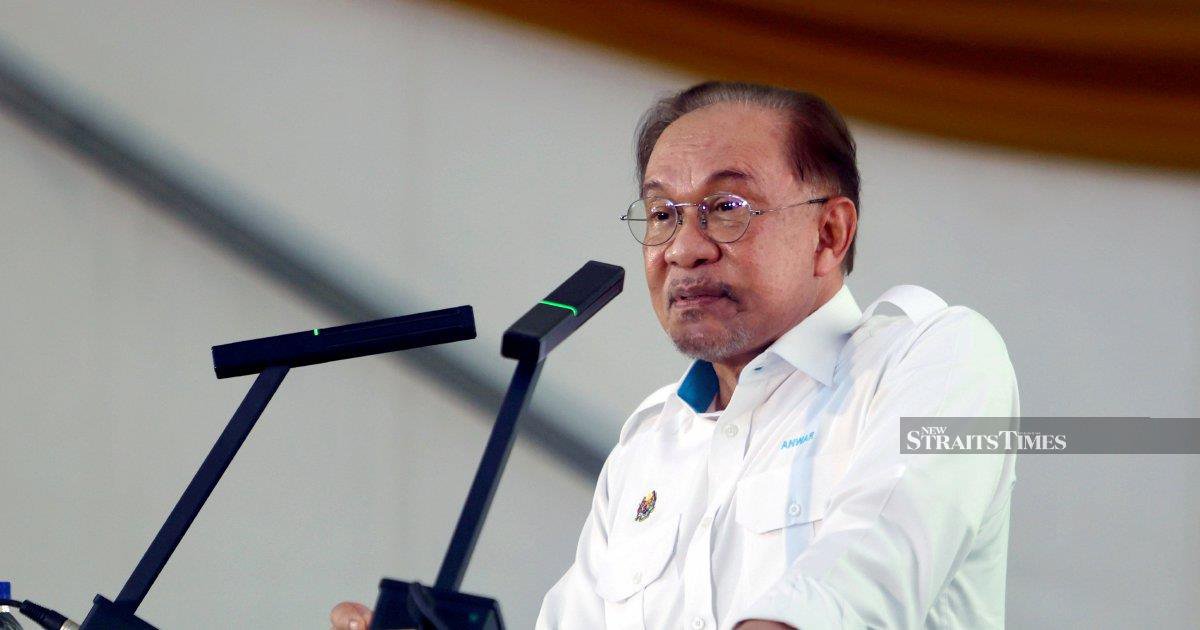
Malaysia's relationship with Taiwan's business community has grown noticeably strained following Prime Minister Datuk Seri Anwar Ibrahim's public statements about Taiwan's political status. The Taiwan Chamber of Commerce & Industry in Malaysia has formally registered what it describes as "deep concern" about the premier's recent description of the self-governing island as "part of China", signalling potential fallout that extends beyond diplomatic niceties into the realm of economic opportunity and industrial investment.
The chamber's warning carries particular weight given the significance of Taiwan-based companies to Malaysia's electronics and semiconductor ecosystem. Over the past decade, Taiwanese manufacturers have established substantial operations across the country, drawn by proximity to regional markets, established supply chains, and skilled workforces. The semiconductor industry forms a critical pillar of Malaysia's manufacturing sector, contributing substantially to export revenues and employment. Any hesitation among Taiwanese investors could therefore create genuine economic consequences that ripple through multiple regions of the nation.
The timing of the chamber's statement reflects how sensitive Taiwanese business interests have become regarding political messaging from Southeast Asian governments. Taiwan's diplomatic isolation globally means that private sector engagement has become an increasingly important channel for maintaining meaningful relationships with other nations. When political leaders make statements about Taiwan's sovereignty that align with Beijing's position, Taiwanese companies and their parent organisations naturally become apprehensive about the stability of their commercial environment and the political reliability of host governments.
Anwar's remarks represent a notable diplomatic positioning that appears designed to navigate Malaysia's complex relationship with China whilst maintaining traditional neutrality. However, the reaction from TCCIM illustrates how statements about Taiwan's political status carry immediate commercial implications that extend far beyond symbolic significance. For Taiwanese executives considering whether to expand operations, deepen investment, or establish new manufacturing facilities in Malaysia, political positioning by national leaders directly influences risk assessment and investment decisions.
The semiconductor sector in particular operates under extraordinary time pressures and competitive dynamics, with manufacturers constantly evaluating whether to direct new capacity towards countries perceived as politically stable and commercially welcoming. Taiwan's own chipmakers face intense scrutiny regarding where they establish advanced manufacturing capabilities, with geopolitical considerations increasingly intertwined with purely commercial calculations. A Malaysian political environment perceived as tilting too heavily towards Beijing's narrative about Taiwan naturally triggers concerns about whether future administrations might impose restrictions on Taiwanese business operations.
Malaysia has developed a sophisticated ability to balance relationships with both Taiwan and China over decades, but this equilibrium depends on maintaining certain implicit understandings. Taiwanese investors have generally accepted Malaysia's official One China policy while expecting the government to maintain pragmatic engagement with Taiwan's commercial sector. When political leaders explicitly articulate positions that emphasise Taiwan as part of China rather than simply acknowledging the official diplomatic line, this crosses into territory that suggests a potential shift in the underlying framework governing Taiwan-Malaysia business relations.
The chamber's intervention also reflects broader uncertainty within Taiwan's business community about how Malaysian politics may evolve under Anwar's administration. During his earlier career, Anwar developed extensive connections throughout Southeast Asia and beyond, but his current positioning on China-related issues suggests a potentially different approach than predecessors. For investors making decisions about whether to commit capital to long-term manufacturing projects in Malaysia, clarity regarding the government's stance towards Taiwan becomes essential information.
Semiconductor investment decisions operate on timelines extending many years into the future, requiring investors to forecast political stability and regulatory consistency. An apparent shift towards more explicitly pro-Beijing positioning by Malaysia's political leadership naturally creates uncertainty about whether the business environment will remain welcoming to Taiwanese companies. The chamber's warning therefore functions partly as a signal to Malaysian policymakers about the unintended consequences of particular rhetorical choices, and partly as a message to parent companies in Taiwan about the changing risk profile of Malaysian operations.
The concern extends beyond immediate investment decisions to encompass broader questions about Malaysia's positioning within regional technology and manufacturing networks. As supply chain networks become increasingly sophisticated and geopolitically sensitive, countries must choose whether to position themselves as reliable partners for companies from all major democracies or whether they will align more clearly with particular geopolitical blocs. Malaysia's historical strength has derived from its ability to work effectively with investors from multiple regions, but this advantage erodes if political positioning creates uncertainty about the treatment of particular national origins.
For Malaysian policymakers, the chamber's statement presents a reminder that economic diplomacy operates through multiple channels and that commercial relationships remain vulnerable to political statements perceived as hostile to Taiwan's interests. The semiconductor industry represents one of Malaysia's most valuable sectors, and Taiwanese participation remains integral to its competitiveness and growth trajectory. Balancing diplomatic relations with China and maintaining openness towards Taiwanese business investment requires careful calibration rather than explicit statements that appear to endorse Beijing's political framing.
The situation also highlights how Taiwan's strategic importance to global electronics manufacturing and advanced technology ensures that political statements about its status will continue drawing responses from business communities throughout Asia. Malaysia's capacity to attract and retain semiconductor investment depends partly on maintaining a reputation as a destination where companies from all origins can operate without encountering discriminatory policies or hostile political rhetoric. The Taiwan Chamber's intervention suggests that this reputation may now be perceived as under pressure, a development with potentially serious implications for the sector's future development and Malaysia's broader economic competitiveness.

