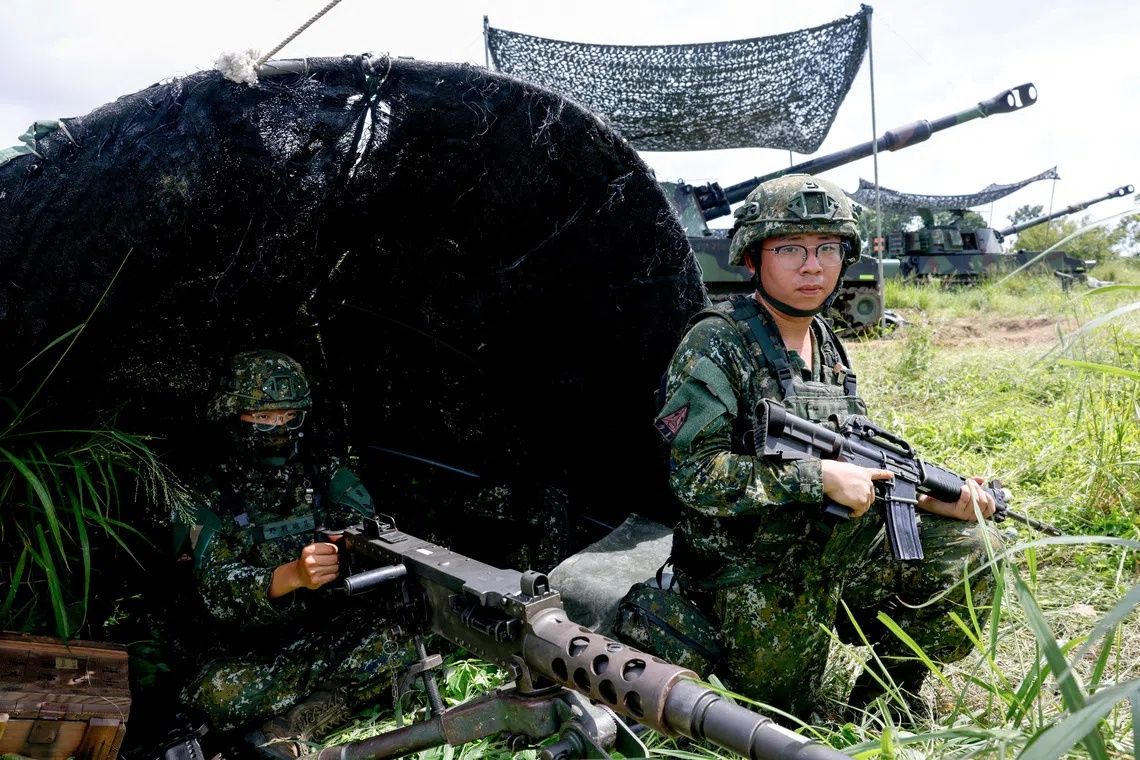
Taiwan's armed forces launched a comprehensive 10-day military exercise this week designed to evaluate how commanders would adapt to unpredictable combat situations and maintain operational control during a potential conflict. The Han Kuang drills, which commenced on Wednesday following orders issued from an underground command centre in Taipei, represent an evolution in the island's approach to defence readiness, incorporating lessons learned from previous exercises that were criticised for being overly choreographed and disconnected from realistic warfare conditions.
The exercise introduces several significant innovations aimed at bridging gaps between training scenarios and actual combat operations. For the first time, Taiwan has implemented deliberate internet throttling measures to simulate how civilian communications networks would function under wartime conditions, allowing authorities and the public to test their ability to maintain essential services when bandwidth becomes critically constrained. This realistic constraint reflects growing concerns about infrastructure vulnerability during armed conflict, particularly given the potential for coordinated strikes against telecommunications hubs in any confrontation with China.
Among the military innovations, Taiwan has adopted a "backbrief" methodology derived from United States military practice, in which junior officers repeat back mission orders to their commanders to ensure shared understanding of operational objectives. Defence officials emphasise that this approach aims to guarantee that commanders and their subordinates maintain perfect alignment regarding the strategic intent behind tactical directives, reducing the risk of miscommunication during high-stress combat situations where rapid decision-making is essential. The emphasis on synchronisation reflects recognition that successful defence against a technologically advanced adversary depends not merely on equipment quality but on seamless coordination across hierarchical chains of command.
The exercise specifically targets concerns about China's potential strategy during an invasion scenario. Taiwan's military planners are particularly focused on rehearsing responses to early strikes against command centres, port facilities, logistics networks, and defence industrial sites—infrastructure that would be critical to sustained resistance. By incorporating simulations of this threat, Taiwan demonstrates its understanding that any conflict would likely begin with attempts to disrupt the island's command and control capabilities and sever supply lines, particularly maritime connections to allied nations. The drills therefore go beyond conventional military manoeuvres to encompass the protection and continuity of administrative functions.
Taiwan's defence establishment has consciously shifted towards what officials describe as "real field environment" conditions rather than controlled laboratory-style exercises. This represents a philosophical change in how the military approaches readiness, moving away from pre-scripted scenarios where variables are tightly controlled towards testing soldiers and commanders against unexpected developments that mirror genuine battlefield unpredictability. Defence officials indicated that commanders would be deliberately confronted with scenarios deviating from initial intelligence assessments, forcing them to rapidly reassess situations, adjust plans, and issue new directives under pressure—precisely the type of decision-making that determines outcomes in actual conflicts.
The mobilisation encompassing more than 20,000 troops, including approximately 5,000 reservists, underscores Taiwan's determination to test both active-duty personnel and citizen soldiers who would form crucial components of any defensive effort. Reserve forces represent a significant multiplier for Taiwan's limited active-duty strength, making their training and integration essential to overall readiness. The inclusion of reservists at this scale signals Taiwan's broader strategic approach: any credible defence posture requires the entire population to be prepared for conflict, not merely professional soldiers.
Taiwan has also introduced an "embedded reporter" mechanism within the exercise framework, recognising that information warfare represents a critical dimension of modern conflict. This initiative tests how Taiwan's military would manage frontline communications during wartime, including methods for rapidly disseminating accurate information to counter disinformation campaigns. Given the sophistication of Chinese information operations targeting Taiwan's population, this component of the exercise addresses a vulnerability that extends far beyond military capabilities—it encompasses the psychological resilience of civilians and their trust in official communications during crisis conditions.
The broader context reflects Taiwan's understanding that defending against a vastly larger adversary requires not merely military hardware superiority, which it lacks, but rather organisational excellence, population resilience, and the ability to sustain will to resist. Recent years have witnessed intensifying Chinese military pressure on Taiwan, including sustained aircraft operations near the island and increasingly assertive naval activities. Taiwan's defence strategy therefore depends on creating sufficient uncertainty about the costs of any military adventure that Beijing determines the political and military risks outweigh potential benefits.
Taiwan's annual Han Kuang exercises have been conducted since 1984, but their character has shifted noticeably in recent years as strategic circumstances have evolved. Where earlier iterations could function as largely symbolic demonstrations of capability, contemporary drills must reflect grim realities: any genuine conflict would impose severe costs on the island, potentially extending to infrastructure destruction and civilian casualties. This sobering assessment drives the emphasis on realism and the deliberate introduction of hardship conditions, such as internet constraints, that would characterise an actual conflict scenario.
Defence officials emphasised that the overarching objective extends beyond military readiness to encompassing societal preparation. The framing explicitly references how "the entire population, the Republic of China as a whole—especially our citizens—should face war," indicating that Taiwan's leadership views civilian psychological and practical readiness as integral to deterrence strategy. If the population believes Taiwan can sustain resistance, that belief becomes a strategic asset in deterring Beijing from attempting military coercion. Conversely, if the population perceives helplessness or inevitable defeat, that perception could undermine political resolve at the critical moment when outside support and internal determination prove decisive.
The exercise also incorporates resilience drills testing how local government officials would maintain administrative functions during cascading crises, from natural disasters to military attack. This reflects recognition that effective defence requires functioning civilian government throughout crisis conditions, not merely military operations. The capacity to maintain order, distribute resources, and coordinate evacuations during wartime significantly affects both military effectiveness and civilian survival prospects. These administrative components of the Han Kuang exercise therefore deserve attention equal to military manoeuvres.

