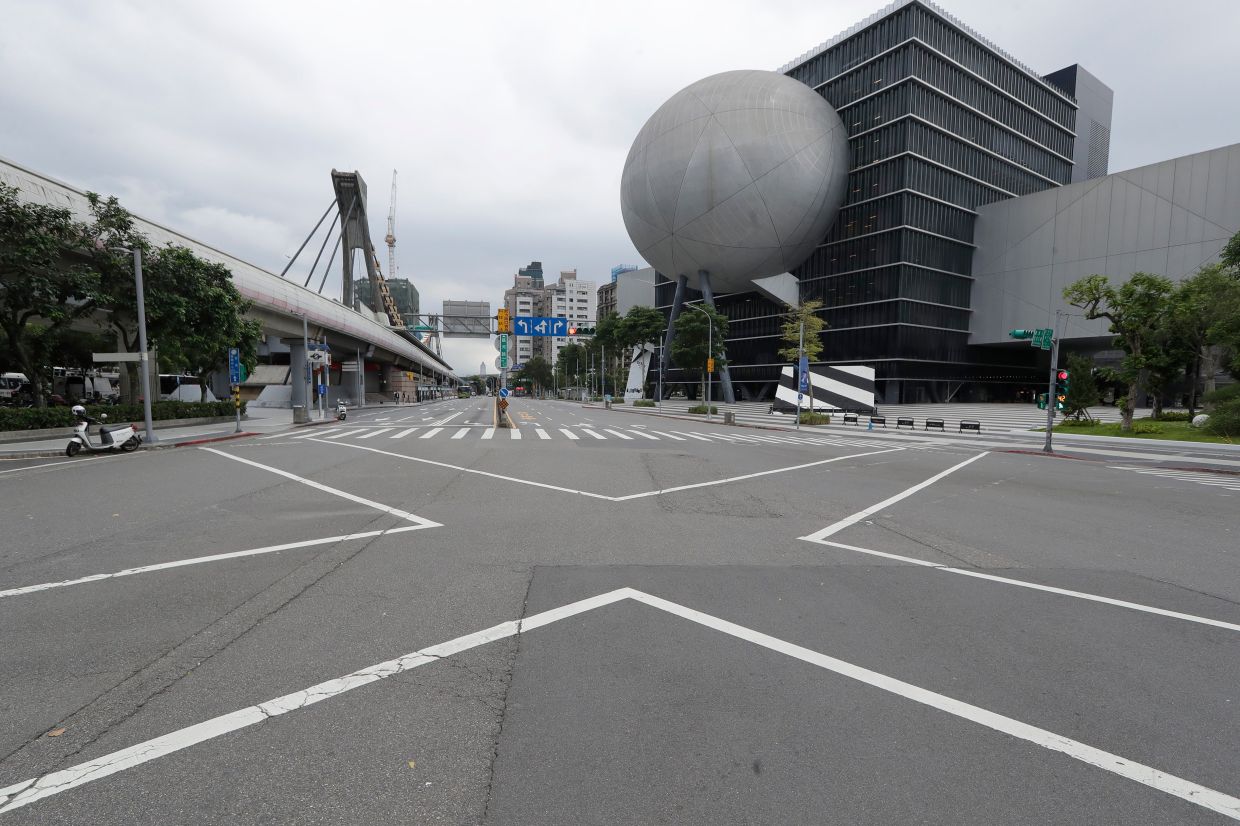
Taiwan deliberately degraded mobile internet speeds to just 256 kilobits per second across Taipei and six other cities on August 13, restricting residents to text communications and effectively disabling data-hungry applications. The temporary slowdown, orchestrated by the island's telecommunications operators, formed part of the closing phase of Taiwan's Han Kuang exercises—annual military drills that had commenced the previous week and now incorporate unprecedented levels of civilian participation and real-world operational scenarios.
The intentional throttling marked a significant departure from Taiwan's previous approach to urban resilience training. Earlier iterations of such drills, particularly air raid simulations in Taipei's metro system, proceeded with minimal disruption to daily routines and often went largely unnoticed by the general public. Passengers continued flowing through stations; commuters maintained their schedules; the exercises remained largely theoretical exercises in mass coordination. This year's Han Kuang represents a strategic recalibration, reflecting Taipei's assessment that civil defence preparation must now encompass tangible, disruptive scenarios that test societal adaptation under genuine stress conditions.
President Lai Ching-te acknowledged the public inconvenience directly, framing the exercise as an unavoidable necessity given Taiwan's security environment. His statement—"We ask for your understanding and support, as this is a necessary drill"—reflected recognition that such measures demand explicit justification, particularly in a densely populated, digitally connected society where internet restrictions carry immediate economic and social consequences. The presidential intervention underscored official awareness that even temporary connectivity reductions constitute significant departures from normal operations in a modern economy.
The expanded scope of Han Kuang exercises now systematically integrates military reservists, civilian populations, and local government agencies into coordinated responses. This comprehensive mobilisation approach addresses a strategic vulnerability identified in Taiwan's defence planning: the disconnect between military preparedness and civilian resilience. By incorporating reservists into active scenarios and mandating civilian participation across multiple municipalities, Taiwan's military establishment has shifted from compartmentalised military exercises toward integrated territorial defence simulations that blur distinctions between military and civilian response mechanisms.
Hospital facilities participated prominently in the drills, with Taiwan's healthcare infrastructure demonstrating operational protocols for relocating critical services to underground facilities. This component reflected genuine concerns about medical system continuity under potential armed conflict or intensive bombardment scenarios. President Lai visited participating hospitals to observe these relocations firsthand, signalling top-level engagement with civil defence preparation across all critical infrastructure sectors. The underground facility component acknowledged that Taiwan's geographic vulnerability and population density necessitate comprehensive contingency planning extending beyond traditional military defence postures.
The exercises generated notable reactions from international observers within Taiwan. Allen Hsieh, a Hong Kong tourist caught within Taipei's metro system during the air raid simulation, experienced the 30-minute station closure firsthand. His assessment proved illuminating: he anticipated receiving only text messages but found the exercise "so real" and unexpectedly convincing in its operational authenticity. Hsieh's observation suggested that the drills achieved their intended effect of creating authentic stress conditions that test both systems and human responses under realistic constraints. His willingness to endorse the inconvenience—"I can understand that"—reflected broader regional recognition of Taiwan's security imperatives.
Taiwan's security situation has intensified substantially in recent years, driven by accelerating Chinese military capabilities, increasing PLA activity around the strait, and strategic assessments indicating diminishing windows for peaceful resolution of cross-strait tensions. These factors explain why Taiwan's government has prioritised escalating drill intensity and expanding civilian participation. Officials evidently concluded that incremental, minimally disruptive exercises no longer adequately prepare society for potential conflict scenarios. The transition toward genuinely disruptive drills reflects hardened strategic assumptions about likelihood and intensity of potential future contingencies.
The mobile internet throttling specifically targeted a critical vulnerability in modern urban warfare scenarios: dependence on high-speed connectivity for civilian coordination, emergency services dispatch, and information flow. By demonstrating how society functions under severely degraded connectivity—a realistic war scenario given potential infrastructure damage—Taiwan's authorities tested both technological systems and individual adaptation. The restriction to text-only communications forced users to abandon multimedia-dependent applications and adapt to lowest-common-denominator connectivity, simulating genuine combat conditions where infrastructure damage predictably cascades across interconnected systems.
Regional implications of Taiwan's escalating drill intensity warrant consideration. Southeast Asian nations observing Taiwan's preparations may reassess their own civil defence protocols and the adequacy of existing resilience frameworks. Taiwan's experience with integrating civilian populations into defence exercises provides practical models for other regionally vulnerable states confronting asymmetric security threats. The emphasis on infrastructure continuity, particularly for healthcare and critical services, offers transferable lessons for nations concerned with societal resilience under stress.
The Han Kuang exercises ultimately reflect institutional evolution in Taiwan's approach to national security. Rather than maintaining artificial separation between military preparedness and civilian adaptation, Taiwan now pursues integrated territorial defence mobilisation. The willingness to impose temporary but significant disruptions to normal economic and social function—restricting internet speeds during business hours, closing public transit infrastructure during peak usage—demonstrates governmental confidence that public acceptance exists for such measures when framed as security necessities. This social compact between state and citizenry, tested through exercises like Han Kuang, may prove as strategically significant as the military capabilities the drills ostensibly evaluate.

