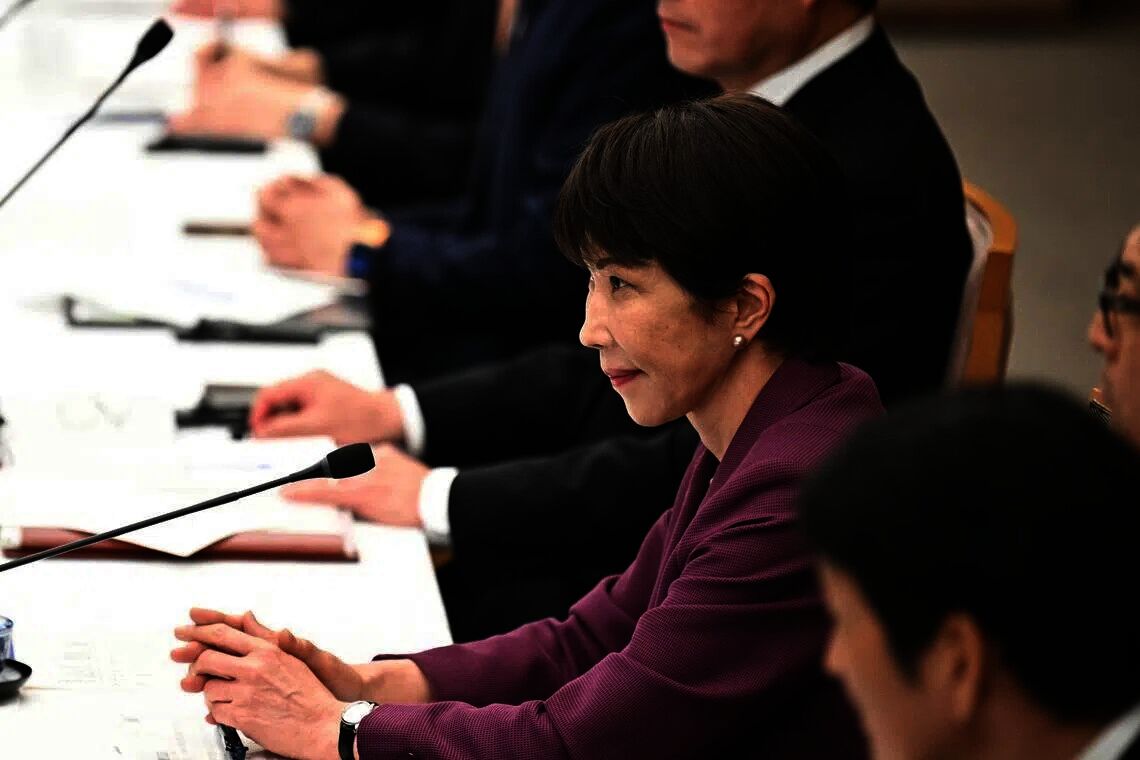
Japanese Prime Minister Sanae Takaichi faces intensifying pressure at home following the resurfacing of a television debate from more than two decades ago in which she advanced contentious interpretations of Japan's wartime conduct. The clip, which circulated widely on social media platforms in recent days, has reignited longstanding tensions over historical revisionism within Japan's political establishment and prompted fresh calls questioning her fitness to lead the nation.
During a live political discussion broadcast by TV Asahi in 2002, when Takaichi served as a lawmaker, she characterised Japan's military campaign against China as an exercise in self-defence rather than aggression. She further asserted that imperial expansion in China during the 1930s represented accepted international practice. These remarks directly contradict mainstream historical consensus and have become flashpoints in broader debates about how Japan should reckon with its wartime legacy, a matter that continues to shape relations across East Asia.
Soichiro Tahara, the veteran political journalist who moderated the debate, responded sharply to Takaichi's assertions at the time, publicly dismissing her historical perspective as fundamentally flawed and arguing that someone holding such views had no business serving in parliament. His characterisation of her understanding as ignorant struck a chord with viewers who later encountered the footage online, particularly given her ascension to the nation's highest political office.
The YouTube comments section became a repository for widespread disapproval, with users condemning Takaichi for historical distortion and expressing alarm that someone with what many regarded as deeply flawed comprehension of World War II had become prime minister. The emotional tenor of responses suggested that public disquiet transcended conventional partisan divides, reflecting genuine concern about the direction of Japanese historiography and national identity under her leadership.
Yusuke Yamashita, an associate professor specialising in corporate social responsibility at Sakushin Gakuin University, offered a particularly incisive critique, arguing that Takaichi's inability to construct a coherent intellectual framework underpinning her self-defence narrative revealed that her positions rested on emotion rather than rigorous logic or evidence. This observation carries particular weight for those concerned that Japan's prime minister may be advancing historical claims rooted in sentiment rather than scholarly foundation.
Ichiro Ozawa, a veteran politician with a parliamentary career spanning from 1969 to 2026, joined the chorus of disapproval through social media, framing the situation as presenting genuine national risk. His language escalated the stakes considerably, suggesting that Takaichi's continuation in office posed dangers that extended beyond historiographical debate into the realm of potential geopolitical miscalculation or domestic institutional harm. His call for immediate resignation reflected the severity with which some Japanese political figures view the implications of her worldview.
Takaichi's ideological trajectory throughout her parliamentary career has been consistently oriented toward conservative-nationalist positions within the Liberal Democratic Party since her election in 1993. She has persistently advocated for constitutional amendments that would expand Japan's military capacities, including institutional rebranding of the Self-Defence Forces. This continuity suggests that her historical revisionism represents not isolated commentary but rather an integral component of a broader political philosophy spanning three decades.
Her rhetoric aligns with patterns evident among other right-wing figures in Japanese politics who perpetuate interpretations of World War II that minimise, reframe, or deny historical atrocities perpetrated against China and other Asian neighbours. Such narratives have proven particularly sensitive in regional contexts, where memories of wartime suffering inform contemporary diplomatic relations and public sentiment across the region. For Southeast Asian nations with their own histories of Japanese occupation, these debates carry resonance beyond Japan's borders.
The timing of the revisionist debate's resurfacing coincides with a period of significant political vulnerability for Takaichi. Public opinion surveys released in July indicated declining support for her administration, marking a turning point where disapproval began exceeding approval in certain polls for the first time since she assumed office. This shift suggests that Japanese voters have begun reassessing her leadership across multiple dimensions, from historical positioning to bread-and-butter governance concerns.
Observers have attributed the erosion of public confidence partly to Takaichi's focus on contested political priorities whilst seemingly neglecting mounting anxieties among ordinary Japanese citizens regarding their economic circumstances and quality of life. The juxtaposition of divisive constitutional and historical debates against a backdrop of material hardship has created a political environment where her administration struggles to maintain coalition-building momentum. The resurfaced historical comments thus land during a particularly precarious moment in her political fortunes.
The broader controversy illuminates recurring tensions within Japanese democracy regarding how the nation should interpret and teach its wartime role. Unlike some other defeated powers that underwent comprehensive historical reckoning in the postwar period, Japan has experienced persistent contestation over historical narratives. This unresolved dimension of national memory continues to surface in contemporary politics, complicating Japan's efforts to maintain stable regional relationships and project a consistent international identity.

