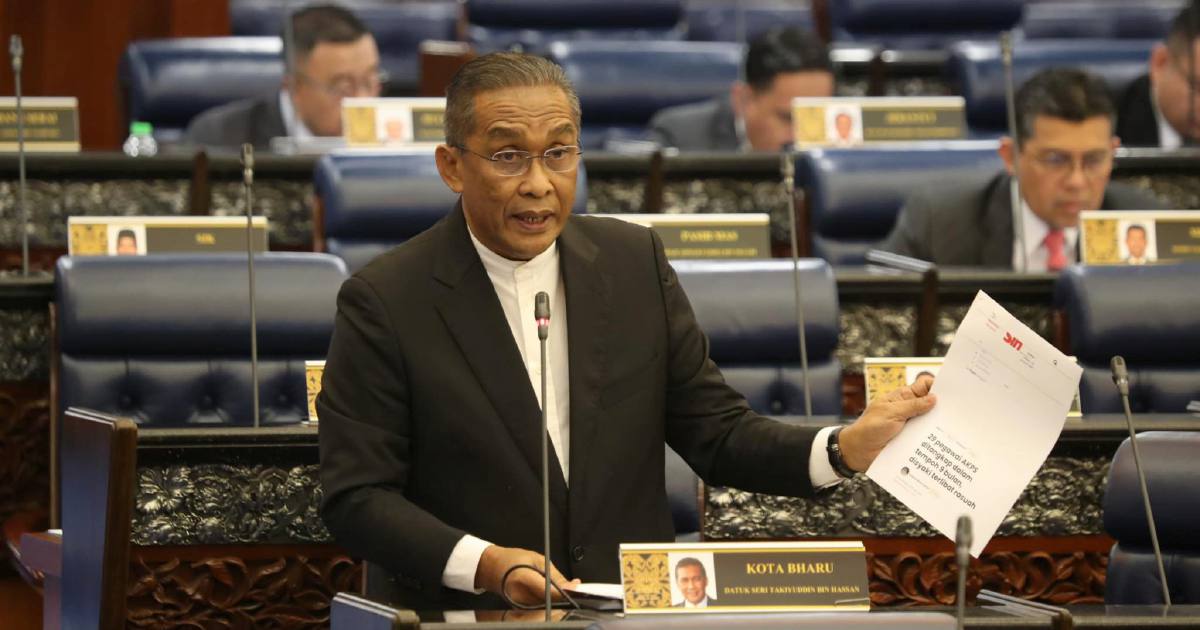
The opposition's chief whip has made a formal request to delay a critical parliamentary session examining the Royal Commission of Inquiry findings into Tabung Haji, citing the absence of the Prime Minister from Parliament as grounds for postponement. Datuk Seri Takiyuddin Hassan's intervention signals the opposition's intent to ensure that any substantive discussion of the pilgrimage fund's affairs involves the nation's top political leadership, reflecting the weight and complexity of the issues likely to be raised.
Tabung Haji, the statutory body responsible for managing savings and facilitating pilgrimage to the Holy Land for Malaysian Muslims, has been under scrutiny following a series of controversies regarding its financial management and governance practices. The establishment of the Royal Commission of Inquiry represents a formal government acknowledgement that concerns warrant independent investigation, and the forthcoming parliamentary session is intended to provide legislators with the opportunity to examine and respond to the commission's conclusions.
Takiyuddin's request underscores broader parliamentary conventions regarding major policy debates, particularly those touching on substantial institutional reforms or findings of governmental concern. The presence of the Prime Minister during such sessions typically enhances the authoritative nature of responses and ensures that the highest levels of executive accountability are engaged directly with legislators, rather than through ministerial proxies or parliamentary secretaries.
The timing of this intervention carries implications for Malaysia's parliamentary schedule, which operates under strict conventions governing the availability of the Prime Minister and parliamentary sitting days. International travel, official engagements abroad, and other state duties frequently require the PM's absence from Parliament, and such absences can result in postponements of significant legislative business or policy discussions where executive input is considered essential.
For Malaysian pilgrims and their families, the parliamentary debate holds considerable personal significance. Tabung Haji serves approximately 1.7 million account holders who depend on the institution's governance and financial stability for their religious aspirations and savings security. The RCI's investigation and subsequent findings would therefore directly affect the confidence and welfare of this substantial constituency, making comprehensive and transparent parliamentary examination a matter of public importance.
The opposition's insistence on the PM's presence during the debate reflects not merely procedural punctiliousness but also recognition that governance failures or institutional weaknesses merit direct accountability from the highest executive office. In Malaysian parliamentary practice, when contentious issues requiring substantial policy response or clarification emerge, legislators typically expect that such matters will be addressed by the Prime Minister himself rather than delegated entirely to subordinate officials.
Tabung Haji has faced multiple challenges in recent years, ranging from investment losses to governance restructuring initiatives aimed at restoring institutional credibility. These concerns have generated considerable public discourse, particularly among the Muslim community, for whom the organisation holds religious and cultural significance beyond its purely financial functions. A parliamentary hearing that addresses these issues comprehensively, with the PM's direct participation, would demonstrate government commitment to transparency and accountability in this sensitive area.
The request to postpone also suggests that opposition members may be preparing substantive questioning regarding the RCI's findings and the government's intended response to any recommendations or findings of concern. By ensuring the PM's presence, the opposition aims to create conditions for accountability at the highest level, rather than engaging in what might be perceived as incomplete or secondary-level responses to serious institutional matters.
Parliamentary sittings devoted to examining independent commission reports and their implications represent opportunities for thorough scrutiny of government performance and institutional management. These sessions typically generate intense public and media attention, particularly when institutions affecting large population segments or touching on matters of cultural and religious importance are involved. The opposition's call reflects strategic understanding that the forum's effectiveness depends substantially on the calibre and seniority of government participation.
The timeline for this postponement request remains unclear, as does any indication from the government regarding its willingness to accommodate such a delay. The Prime Minister's parliamentary calendar and international commitments will ultimately determine whether rescheduling proves feasible, and parliamentary leadership will need to balance opposition requests against the government's legislative agenda and scheduling constraints.
For Malaysian observers of governance and parliamentary affairs, this procedural dispute illuminates the ongoing tensions between executive flexibility and legislative prerogative in Malaysia's parliamentary system. Questions regarding institutional accountability, the appropriate level of executive engagement with parliamentary oversight, and the optimal timing of public scrutiny for sensitive policy matters continue to shape Malaysia's democratic discourse. The resolution of Takiyuddin's request will offer insight into how the government balances the opposition's oversight demands against its own operational requirements and priorities.
Larger questions about Tabung Haji's future governance, the adequacy of current institutional frameworks, and the measures required to restore public confidence in its management remain pending the parliamentary examination of the RCI report. Whether this debate proceeds with or without the PM present, it will represent a significant moment for assessing government accountability and the state of Malaysia's institutional governance across a critical public organisation.

