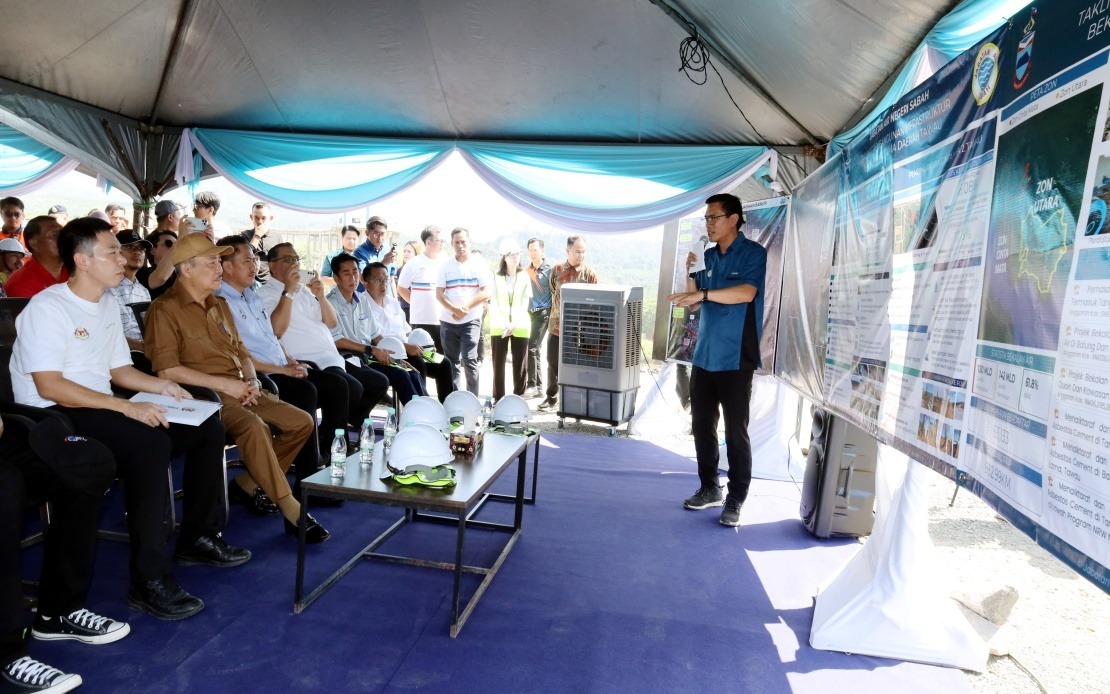
Tawau's persistent water supply crisis is moving towards resolution with the anticipated completion of the RM450.5 million Tawau Water Supply Scheme Phase III before the end of 2027, marking a significant milestone for the east coast Sabah district. Sabah Chief Minister Datuk Seri Hajiji Noor said the project, comprising a new dam facility and upgraded water treatment infrastructure, remains on track despite the main contractor's request for additional time. The infrastructure development represents a substantial investment by the state government to address water security challenges that have plagued the district for years.
The comprehensive project centres on the construction of the Tawau Dam, which will augment the region's raw water storage capacity by 30 million cubic metres. This storage facility will feed raw water to the existing Cinta Mata 1 and Cinta Mata 2 water treatment plants through newly constructed 700-millimetre pipelines spanning 11.6 kilometres. The engineering solution aims to bridge the persistent gap between supply and demand, as Tawau currently produces only 130 million litres daily against an estimated requirement of 142 million litres per day across its 53,133 registered water accounts.
As of late July, construction work on the Tawau Dam had reached 74.04 per cent physical completion, according to senior officials from the Sabah State Water Department. Beyond resolving supply constraints, the dam will provide the added benefit of mitigating flood risks affecting downstream communities in Tawau. The three water treatment plants—Cinta Mata 1, Cinta Mata 2, and Utara—will collectively achieve a treated water production capacity of 161 million litres per day once fully operational, substantially exceeding current demand projections and providing a buffer for population growth.
The Cinta Mata 2 water treatment plant, a RM299.9 million component of the wider scheme, represents the most substantial individual investment within the Phase III project. With a dedicated treatment capacity of 30 million litres daily, this facility is projected to serve approximately 42,000 consumers across Tawau and neighbouring areas. As of late July, construction had achieved 16.08 per cent progress, with completion anticipated by July 2028. The staggered completion schedule demonstrates the complexity and scale of the infrastructure works involved in modernising the district's water delivery system.
Chief Minister Hajiji emphasised that the state administration inherited this infrastructure challenge from previous governments and has committed substantial resources to rectify the situation. His remarks underscore the political significance of water security as a public service issue, particularly in districts where supply deficits have created genuine hardship for residents and businesses. The willingness to allocate additional funding if required, contingent on technical assessments from relevant departments, signals determination to see the project through to completion without compromise.
The decision to pursue external consultation and potential supplementary financing demonstrates the pragmatic approach the Sabah government is adopting towards this critical infrastructure gap. Reports from the Sabah State Water Department and the Department of Irrigation and Drainage will guide any decisions regarding cost escalations or scope adjustments. This structured approach to project oversight aims to prevent the delays and cost overruns that have historically plagued major water infrastructure projects across Southeast Asia.
For Malaysian readers in other states, Tawau's water challenges offer instructive lessons about the long-term planning requirements for districts with growing populations and limited indigenous water sources. The scale of investment required—RM450.5 million—reflects the genuine infrastructure costs involved in addressing chronic supply problems. Similar challenges confront other rapidly developing districts throughout Malaysia, where demand has outpaced infrastructure expansion, making Tawau's experience particularly relevant to broader national water security discussions.
The project's progression despite contractor requests for time extensions is noteworthy, as it suggests the state government maintains sufficient oversight to keep activities moving forward. Construction timelines for large water infrastructure projects frequently encounter delays due to site conditions, material procurement challenges, or labour availability issues. The maintenance of a completion target before the end of 2027, even with the acknowledged extension request, suggests realistic planning and effective project management rather than optimistic projections prone to failure.
Water supply security carries particular importance in Sabah's context, where several districts experience intermittent shortages that affect economic productivity, public health, and quality of life. Tawau, as an important commercial and agricultural centre, depends on reliable water supply for industrial operations, aquaculture, and palm oil processing. The resolution of the district's water deficit will remove a significant constraint on economic expansion and improve living standards for existing residents while creating capacity to accommodate future population and industrial growth.
The completion of Phase III is expected to transform Tawau's water security profile from a deficit position to one of surplus capacity. This transition will provide the district with flexibility to manage seasonal variations, accommodate population increases, and support industrial expansion without the constraints that have characterised recent years. For consumers, the completion of this scheme promises an end to the periodic rationing and supply interruptions that have become familiar challenges in daily life.

