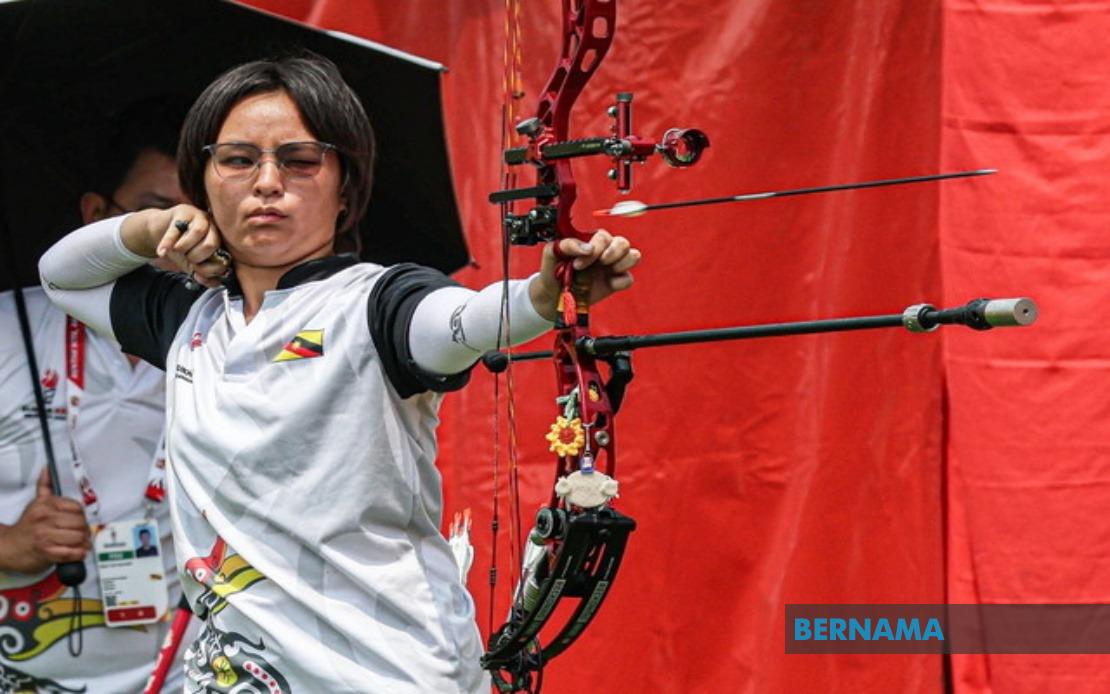
The tactical shift from recurve to compound archery proved immediately successful for Sarawak's Wee Yee Qi, who delivered an impressive double-gold performance at the SUKMA 2026 Games in Bangi, marking a breakthrough moment for the 17-year-old on her regional debut. Her victories in both mixed and women's team disciplines underscore the competitive potential of younger Malaysian archers willing to adapt their approach to the sport, a shift increasingly common among Southeast Asian competitors seeking to maximise their technical advantages.
Yee Qi's path to these medals was built on partnership and precision. In the mixed team competition, she paired with Eason Lau Hui Wan to secure victory by the narrowest of margins, edging Kedah's combination of Muhammad Zaim Ahmad and Ili Nabihan Shafizan in a tightly contested final that concluded 151-150. The one-point separation illustrated the depth of competitive archery at SUKMA level and the razor-thin margins between success and heartbreak in team disciplines where individual performance directly translates to collective outcome.
The women's team gold demonstrated greater separation in execution, though the path to victory required composure under pressure. Alongside Aira Nadirah Aizuddin and Nur Zara Aisyah Khairul Fadly, Yee Qi propelled Sarawak to a 217-213 victory over Terengganu in a dramatic turnaround. The Sarawak trio faced adversity early in the competition, trailing throughout the opening three ends before orchestrating a decisive comeback in the final stretch. This capacity to recover from a disadvantageous position speaks to mental resilience and technical consistency under stress—qualities that define elite archers across regional and international stages.
The decision to switch to compound archery came after Yee Qi struggled to achieve meaningful competitive results in the recurve discipline. Rather than accepting that initial setback as definitive, she pursued a technical reorientation that has already begun yielding dividends. The compound bow offers distinct mechanical advantages including let-off mechanisms that reduce holding strength requirements, allowing archers to focus on consistency and accuracy. For a young competitor still developing physical strength and competitive experience, the transition can unlock previously constrained potential.
Yee Qi attributed her success to the guidance and support of her coaching team, individuals who identified her capacity for development and facilitated access to competitive opportunities that accelerated her learning curve. Her recognition of coaching importance reflects an understanding that technical skill alone cannot sustain elite performance; systematic preparation, exposure to high-level competition, and constructive feedback from experienced mentors form the foundation of sustained progression. She specifically mentioned that tournament experience garnered through her coaches' efforts had provided invaluable developmental stimulus.
Her archery journey spans six years, beginning when her talents were identified during school activities. That early talent identification and subsequent family support created conditions for sustained development rather than casual participation. This trajectory mirrors successful athlete pathways across Southeast Asia, where school-based talent spotting programs feed into structured coaching systems that nurture promising young competitors. The critical juncture came when initial promise required either renewed commitment to existing technical approaches or willingness to fundamentally restructure her competitive framework.
Looking beyond her immediate SUKMA success, Yee Qi faces the competing demands of academic preparation and athletic development. She must sit the Sijil Pelajaran Malaysia examination in November, requiring sustained focus on secondary education even as she rides momentum from her gold medal performances. The discipline to balance examination preparation with archery training represents a distinct challenge for young Malaysian athletes whose national syllabuses demand substantial time commitment during their final secondary years. Her articulated plan to return full attention to archery following examinations suggests realistic understanding of these competing priorities.
The long-term aspiration Yee Qi articulated—representing Malaysia at senior international competitions—positions her within a broader pipeline of young Southeast Asian archers developing compound disciplines. Malaysia's archery development has historically leaned toward recurve at elite levels, making her explicit focus on compound trajectory noteworthy. If she sustains her developmental momentum, she could represent a generational shift toward compound archery at Malaysian national teams, potentially altering the sporting infrastructure and coaching specialisations required to support elite competitors.
Beyond individual achievement, the SUKMA results highlighted Sarawak's archery depth. The state claimed gold through Yee Qi's efforts while Selangor, a traditional archery powerhouse, claimed bronze medals in both mixed and women's team competitions through distinct pairings and combinations. Muhammad A'rif A'fiq Suhaimi and Nur Alyaa Nazurah Fadzil Fairuz earned mixed team bronze by defeating Sabah 154-152, while Selangor's women's team comprising Amira Batrisyia Mohamad Azizul Rahman, Nur Alya Sofrina Mohd Sarif, and Nur Alyaa Nazurah Fadzil Fairuz secured bronze with a 219-212 victory. This distribution of medals across multiple states demonstrates healthy competitive development across Malaysia's regional archery programs.
The SUKMA Games continue serving their fundamental purpose as talent identification and development platforms, evidenced clearly through Yee Qi's emergence. For Malaysian sports administration, the successful transition of a young archer from a technical discipline (recurve) to an alternative specialisation (compound) while maintaining competitive trajectory offers a case study in athlete flexibility and coaching adaptability. As Southeast Asian archery develops greater technical sophistication and regional competition intensifies, such willingness to recalibrate technical approaches may increasingly distinguish progressing athletes from those whose development plateaus.

