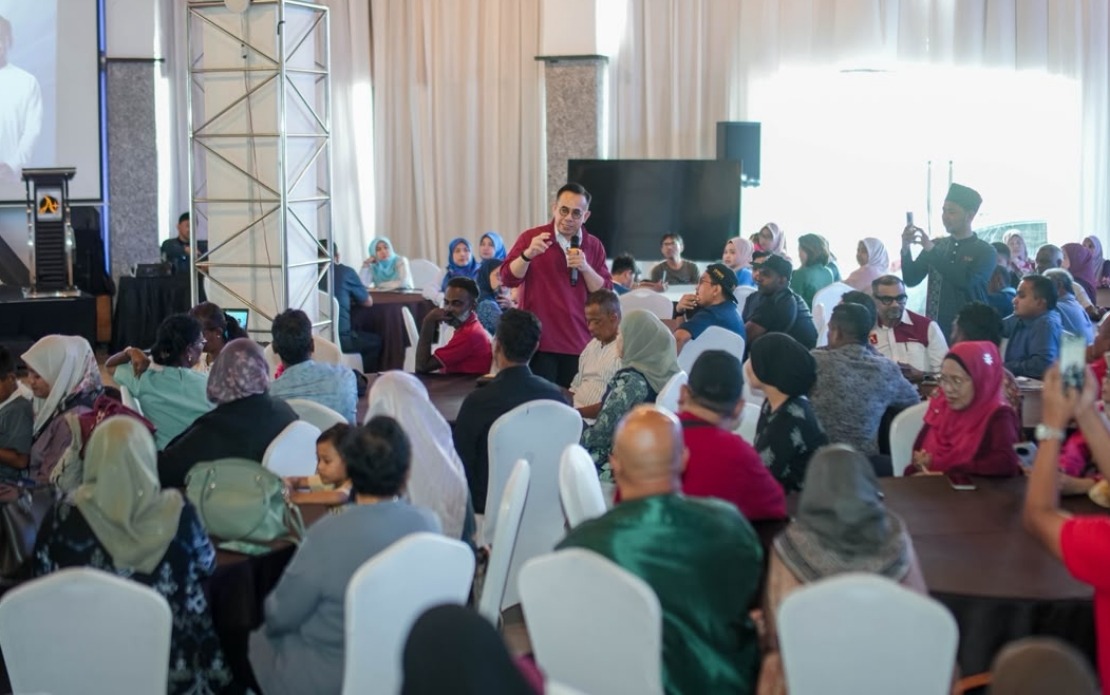
TEKUN Nasional has channelled RM36 million in financing to roughly 1,500 entrepreneurs across Negeri Sembilan as of June this year, according to Entrepreneur Development and Cooperatives Minister Steven Sim Chee Keong. At the national level, the agency—which has supported business growth for three decades—has dispersed RM540 million to about 25,600 entrepreneurs during the same period, underscoring its expanded reach across Malaysia's small and medium-sized enterprise ecosystem.
The three-decade-old institution has become a cornerstone programme in nurturing local entrepreneurship, yet Minister Sim acknowledges that delivering quality financing support requires continuous refinement. During a recent engagement with TEKUN entrepreneurs in Seremban, he gathered insights directly from borrowers about their experiences navigating the application, disbursement, and repayment phases. These frontline conversations revealed inefficiencies that the ministry is now moving to address through concrete operational targets.
Recognising that speed matters when businesses need capital, Minister Sim has mandated that financing decisions for applications requesting RM100,000 or less must be delivered within seven days, whether approved or rejected. This timeline applies across the board, removing ambiguity and allowing entrepreneurs to plan accordingly. For smaller micro-financing requests not exceeding RM20,000, the Ministry of Entrepreneur Development and Cooperatives (KUSKOP) is pursuing an even more aggressive target of 24-hour turnaround on application decisions, a significant compression from historical processing periods.
Beyond faster approvals, Minister Sim stressed that acceleration in the decision-making phase must be matched by swift fund disbursement. Lengthy approval times followed by drawn-out disbursement cycles defeat the purpose of expanding entrepreneurial access to capital. Entrepreneurs who have qualified for financing should be able to deploy those funds quickly into their operations rather than languishing in administrative limbo. This dual focus on both approval velocity and disbursement efficiency reflects a more sophisticated understanding of what actually enables business growth.
A critical theme running through Minister Sim's recent remarks concerns removing politics from the financing process altogether. TEKUN applications require no letters of support or endorsement from elected representatives—a practice the minister is explicitly attempting to eradicate. Every application must be evaluated on professional and transparent grounds, with decisions based solely on the applicant's eligibility criteria and business merits. Race, religion, and political affiliation play no role in the assessment, nor should entrepreneurs feel compelled to cultivate relationships with politicians to strengthen their chances.
This transparency push addresses a long-standing perception in Malaysia that accessing government support requires political connections or intermediaries. By insisting that blue-collar entrepreneurs wearing any political colour—or none at all—receive equal treatment based on objective standards, Minister Sim is attempting to depoliticise a programme that has historically been vulnerable to accusations of patronage. The emphasis on professional evaluation without supporting letters represents a structural reform designed to restore confidence in the meritocratic allocation of public resources.
Meanwhile, the government is expanding financing pathways for specific communities as part of its inclusive development agenda. The Indian Community Entrepreneur Development Scheme (SPUMI) has seen its allocation increased from RM30 million to RM50 million, reflecting heightened commitment to supporting Indian business owners. Additionally, the Indian Community Entrepreneur Financing Package (MUDARA) currently provides RM220 million in total financing for 2024, creating multiple channels through which entrepreneurs from this demographic can access capital.
These community-specific schemes sit within a broader philosophy that Minister Sim articulated forcefully: local enterprise development should not be viewed through a racial or communal lens. While targeted programmes acknowledge historical disparities in entrepreneurial access and capital availability, the ultimate objective is to strengthen all Malaysian businesses competing as a unified economic force on the international stage. Domestic success in the global marketplace requires Malaysian companies of all backgrounds and ownership profiles to thrive together.
The minister's framing of entrepreneurship as a collective national project rather than an exercise in zero-sum communal competition carries implications for Southeast Asia's broader economic integration. As regional trade deepens through mechanisms like the ASEAN Economic Community, Malaysian entrepreneurs will increasingly face competition from and cooperate with businesses across the region. Domestic divisions based on political affiliation or ethnicity become a competitive disadvantage when measured against cohesive regional competitors. Minister Sim's emphasis on shared success reflects this emerging reality.
TEKUN's role in this landscape extends beyond disbursing capital. As the institution approaches its fourth decade, it functions as a barometer of how Malaysia's government support infrastructure serves entrepreneurs during periods of economic transition. The decision to tighten processing timelines and eliminate political gatekeeping suggests a recognition that the programme's legitimacy and effectiveness depend on being genuinely accessible and efficiently responsive. Entrepreneurs who repeatedly encounter bureaucratic delays or implicit requirements to cultivate political relationships will eventually seek alternative financing sources, undermining the programme's reach.
The RM36 million deployed in Negeri Sembilan represents not merely funds distributed but a signal about institutional priorities. By visiting the state, publicly committing to faster approvals, and emphasising merit-based evaluation, Minister Sim is repositioning TEKUN as a responsive agency rather than a passive disbursement mechanism. Whether these targets are achieved consistently will determine whether the programme's next phase succeeds in building the entrepreneurial ecosystem that Malaysia's economic aspirations demand.

