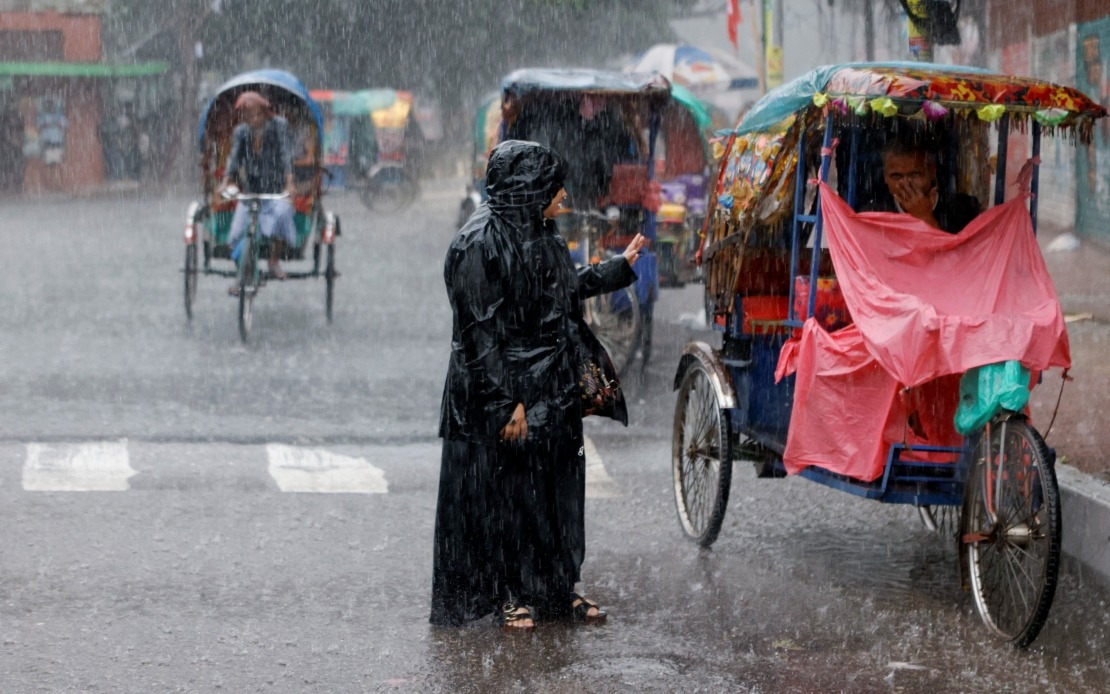
Southeastern Bangladesh experienced a tragic day on Wednesday as multiple landslide incidents swept through the Chattogram region, leaving ten children dead and several others injured. Three separate incidents of rain-triggered ground collapse unfolded throughout the afternoon, marking one of the deadliest landslide events to strike the mountainous area in recent memory. The cascading disasters underscore the region's persistent vulnerability to extreme weather events, particularly during the monsoon season when moisture-laden winds from the Indian Ocean deliver torrential downpours.
The most devastating incident occurred in Cox's Bazar district, located within the broader Chattogram region, where a single landslide claimed eight lives on Wednesday afternoon. According to Mohammed Mizanur Rahman, Bangladesh's Refugee, Relief and Repatriation Commissioner, the catastrophic collapse killed eight children while injuring five others. The rapid mobilization of emergency responders and relief officials highlighted the immediate scale of the disaster, though the challenging terrain and ongoing rainfall hampered rescue and recovery operations throughout the day.
Beyond the Cox's Bazar tragedy, two additional separate landslide incidents unfolded in a remote hilly area of Chattogram city itself, claiming two more young lives. These multiple simultaneous occurrences reflect the widespread instability affecting hillside communities across the region as soil became increasingly saturated by the relentless precipitation. The geographic distribution of incidents across both Cox's Bazar district and Chattogram city proper suggests that weather conditions created dangerous conditions across an extensive area, affecting diverse settlements and populations.
Metereological experts attributed the exceptional rainfall to an active monsoon system that had established itself over parts of Chattogram. A senior meteorologist from the Bangladesh Meteorological Department, speaking anonymously to international news agencies, explained that the monsoon's intensity had produced the dramatic precipitation patterns that destabilized hillside terrain. The active monsoon system typically brings seasonal rains essential for agricultural cycles, but in concentrated bursts can overwhelm drainage systems and trigger mass movements of earth and debris.
The rainfall recorded on Tuesday through Wednesday morning shattered historical benchmarks for the region. Chattogram city itself experienced its most intense precipitation in 43 years, with measurements reaching 412 millimetres during the 24-hour period ending at 3.00 pm local time on Wednesday. This figure compared starkly with the previous record of 411 millimetres established in 1983, meaning Wednesday's deluge came within a single millimetre of matching a four-decade maximum. Such exceptional rainfall events demonstrate the intensifying nature of weather extremes in South Asian monsoon zones, with implications extending beyond Bangladesh to other countries in Southeast Asia facing similar climate vulnerabilities.
The concentration of deaths among children in this incident raises broader concerns about the vulnerability of young populations in landslide-prone regions. Children often lack the mobility and awareness to evacuate quickly when geological hazards emerge, making them disproportionately susceptible to such disasters. The presence of injured survivors alongside fatalities suggests that some communities managed partial evacuation, though the sudden nature of multiple concurrent landslides likely prevented comprehensive warnings and systematic movement away from danger zones.
In response to the unfolding emergency, authorities moved swiftly to implement evacuation procedures across hillside communities throughout the Chattogram region. Officials prioritized removing residents from areas deemed at high risk of additional landslides, recognizing that saturated soil and continued rainfall created conditions for further collapses. These proactive measures reflected lessons learned from previous monsoon disasters and demonstrated coordination between disaster management agencies, though the scale and speed of events challenged response capacity in real time.
The Cox's Bazar district, site of the deadliest incident, holds particular significance as a region already stressed by other humanitarian pressures. The district hosts large refugee populations and dense informal settlements where housing standards and building practices may not meet safety standards designed to withstand extreme weather. This socioeconomic context often amplifies disaster impacts in developing countries, where vulnerable populations occupy the most hazardous locations due to limited alternatives and economic pressures.
Landslides remain a recurring challenge throughout Chattogram's hilly terrain, particularly during monsoon months when geological stability is compromised by groundwater saturation. The region's topography, characterized by steep slopes and fragile soil compositions, creates inherent susceptibility to mass movement. Climate scientists have noted that changing precipitation patterns may intensify extreme rainfall events in South Asian monsoon regions, suggesting that communities like Chattogram may face increasing frequency of disasters similar to Wednesday's tragedy.
The death toll from Wednesday's landslides reflects the particular hazard profile of the Chattogram region, where rapid urbanization and population growth have extended settlements into increasingly marginal and dangerous terrain. As Bangladesh continues developing economically, managing disaster risk in hazard-prone zones remains a critical governance challenge. Early warning systems, land-use planning that restricts development in high-risk areas, and infrastructure improvements to manage drainage represent ongoing priorities for regional and national authorities seeking to reduce future casualties.
The incident carries implications for other South Asian nations with similar geography and monsoon exposure, including parts of Southeast Asia. Countries throughout the region face comparable challenges managing populations in mountainous terrain during intense seasonal rainfall. International cooperation on disaster preparedness, sharing of early warning technologies, and regional coordination on meteorological forecasting could enhance collective resilience across monsoon Asia, potentially reducing future loss of life in similar incidents.

