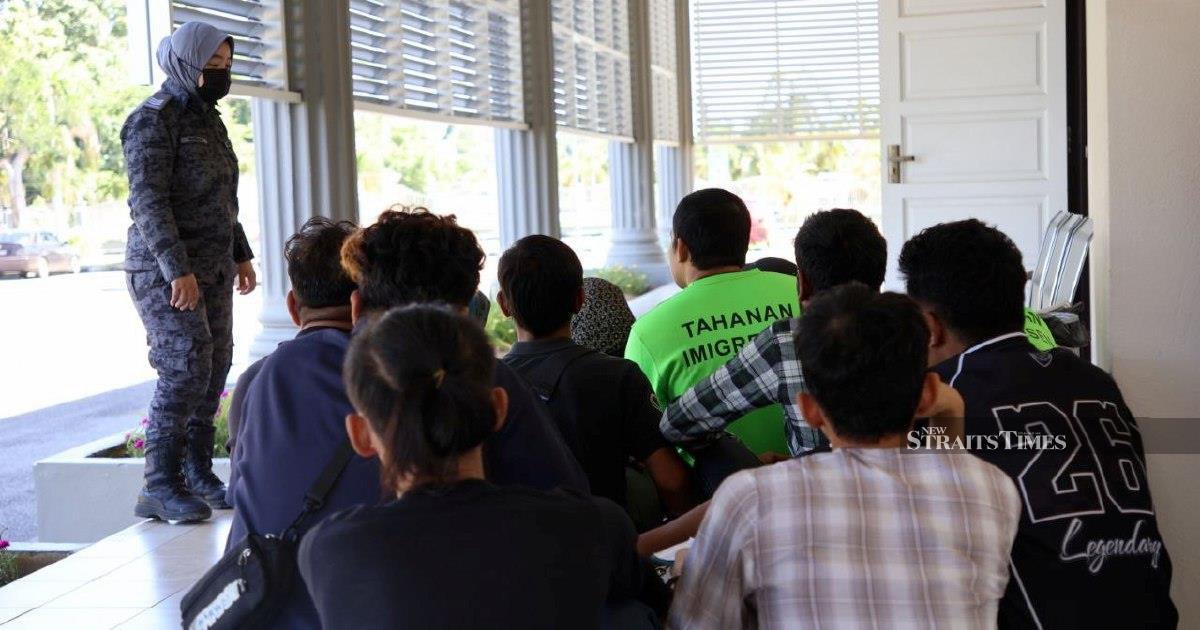
A total of ten undocumented migrants made court appearances in Pasir Mas on Wednesday, with the group comprising three foreign women and seven others facing multiple immigration-related charges. The accused were brought before the Sessions Court to answer allegations spanning overstaying beyond permitted periods, fraudulent use of social visit permits, and unauthorised entry into Malaysian territory—offences that reflect ongoing compliance challenges within the country's immigration system.
The specific composition of the accused group highlights a significant demographic pattern in Malaysia's irregular migration flows. The presence of three women among the ten charged underscores that immigration violations transcend gender lines, with women participating in overstaying arrangements and document misuse at proportions that warrant attention from enforcement authorities. This represents a notable dimension often underemphasised in public discourse surrounding undocumented migrant apprehensions, where media coverage frequently concentrates on male offenders or generalised statistics without demographic breakdown.
Overstaying constitutes one of the most prevalent immigration violations in Malaysia, driven by economic incentives and enforcement gaps across the country's diverse geography. Foreign nationals who remain beyond their visa validity period often do so to continue employment arrangements that offer immediate financial returns, sometimes at wages exceeding what they could secure in their home countries. The Pasir Mas proceedings represent routine yet indicative enforcement actions reflecting the Immigration Department's ongoing operations against non-compliance, particularly in northern Peninsular Malaysia where cross-border movement patterns from Thailand create distinct regulatory pressures.
Misuse of social visit passes—the second category of charges—points to a specific vulnerability in Malaysia's entry permit architecture. A social visit pass typically permits tourist or leisure activities within defined timeframes; its conversion or exploitation for employment purposes constitutes document fraud and undermines the distinction between legitimate temporary visitors and authorised workers. This particular violation pattern suggests sophisticated awareness among migrants regarding available permit categories and deliberate attempts to circumvent employment visa requirements, potentially indicating coordinated practices rather than isolated instances of misunderstanding.
Unauthorised entry into Malaysia represents the third dimension of these charges, encompassing individuals who crossed borders without processing through official immigration checkpoints. This category encompasses both those who failed to present themselves for entry documentation entirely and those who traversed borders through non-designated routes or transit points. The enforcement action against such entrants serves both immediate security objectives and demonstrates capacity for detecting and intercepting individuals at various points within Malaysia's porous frontier regions, particularly along the Thailand-Malaysia border where Pasir Mas is strategically located.
The Kelantan district of Pasir Mas occupies particular significance within Malaysia's immigration enforcement geography due to its proximity to Thailand and established cross-border movement corridors. The prevalence of immigration cases processed through Pasir Mas Sessions Court reflects the concentration of enforcement resources in border proximity areas and the logistical advantages of proximity when apprehending individuals attempting to transit between jurisdictions. This geographical positioning makes Pasir Mas a natural nexus for immigration proceedings, as authorities concentrate attention on transit zones and entry points rather than dispersing enforcement evenly across urban centres.
The legal framework governing these charges draws from Malaysia's Immigration Act 1959/63, which establishes penalties ranging from fines to imprisonment for various overstaying durations and entry violations. Courts applying these provisions must balance enforcement of statutory compliance with considerations of the offenders' circumstances, often resulting in varied sentencing outcomes even for comparable violations. The Sessions Court proceedings in Pasir Mas follow established prosecutorial protocols whereby the Immigration Department presents evidence of permit violations or absence of entry documentation, with accused individuals afforded opportunities to respond to allegations before judicial determination.
From a Southeast Asian perspective, Malaysia's enforcement actions against undocumented migrants align with regional trends toward stricter immigration compliance mechanisms. However, Malaysia's approach remains comparatively moderate relative to enforcement intensities implemented in Singapore or Thailand, reflecting different resource allocations and political priorities regarding irregular migration. The Pasir Mas court proceedings exemplify routine administrative enforcement rather than the large-scale crackdowns periodically documented in regional media, suggesting consistent rather than sporadic application of immigration law.
Economic dimensions underpin migration patterns that generate these enforcement cases. Undocumented workers often accept lower wages and hazardous conditions that authorised migrants might reject, creating incentives for employers to engage irregular labour while relying on immigration violations as a mechanism for controlling workforce behaviour through leverage. The charges against these ten individuals thus represent enforcement against the migrant side of bilateral arrangements that inherently involve Malaysian employers or labour intermediaries, though prosecutions typically concentrate exclusively on foreign nationals rather than the employment side of irregular labour arrangements.
The adjudication process in Sessions Court will determine appropriate penalties, with outcomes likely influencing future conduct among potential migrants evaluating risk-benefit calculations regarding unauthorised Malaysian residence. Convicted individuals typically face deportation proceedings alongside criminal penalties, though enforcement of return varies depending on diplomatic relationships and documentation verification with home countries. For Malaysia's immigration administration, successful prosecution reinforces deterrent signalling while generating data regarding violation patterns that inform resource allocation decisions across the department's regional operations and checkpoint deployment strategies.

