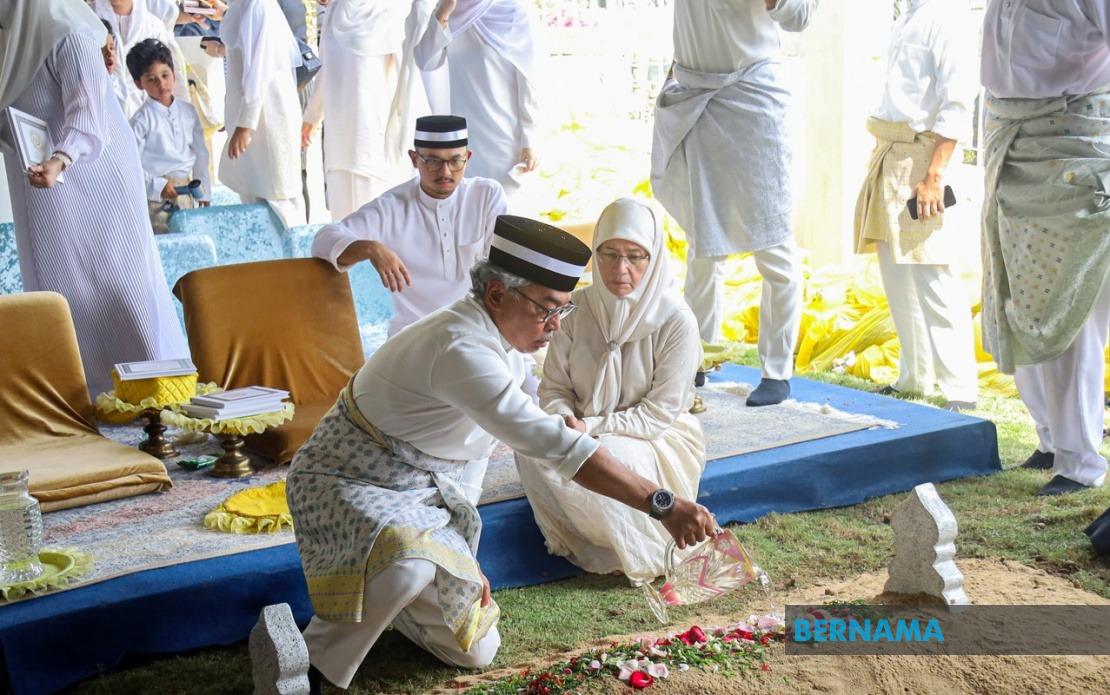
The funeral ceremonies for Tengku Puteri Seri Kemala Tengku Datuk Seri Aishah, the elder sister of Pahang's reigning monarch Al-Sultan Abdullah Ri'ayatuddin Al-Mustafa Billah Shah, concluded on Wednesday with her interment at the Royal Mausoleum in Pekan. The 69-year-old member of the Pahang royal household died on Tuesday evening at 9.25 pm at a hospital in Kuala Lumpur, marking the passing of a significant figure within one of Malaysia's most prominent sultanates.
The morning's proceedings began with Islamic funeral rites conducted at the Khalid bin Al-Walid Mosque situated on Jalan Padang Tembak in Kuala Lumpur, where close family members and officials paid their final respects. Following the prayers, her remains were transported by air from Subang Air Base back to Pahang, reflecting the customary protocol observed for members of the royal family. The journey underscored the formal nature of state funeral arrangements and the respect accorded to those of high rank within Malaysia's monarchical system.
Upon arrival in Pekan, the deceased was conveyed to the Sultan Ahmad 1 Mosque, where the cortège arrived at approximately 1.25 pm. A second round of funeral prayers took place after the midday zuhur prayers, allowing mourners to gather and offer their condolences to the immediate family. This staged approach to the funeral service, spanning both the capital and the state capital, reflected customary practices within the Pahang royal establishment and provided an opportunity for various dignitaries to participate in honouring her memory.
Sultan Al-Sultan Abdullah was present throughout the burial ceremony, accompanied by his consort Tengku Ampuan of Pahang Tunku Azizah Aminah Maimunah Iskandariah and their son Tengku Mahkota of Pahang Tengku Hassanal Ibrahim Alam Shah. The presence of the immediate royal family at each stage of the funeral procession demonstrated the personal significance of the occasion within the household. The gathering also included state-level dignitaries, among them Melaka's Yang Dipertua Negeri Tun Mohd Ali Rustam and Pahang's Menteri Besar Datuk Seri Wan Rosdy Wan Ismail, indicating the wider political acknowledgment of the event.
The burial itself was conducted with full state honours befitting her status as a member of the royal family. Pahang Mufti Datuk Dr Asmadi Mohamed Naim presided over the recitation of Yasin, the customary Quranic chapter read during Islamic funeral ceremonies, followed by tahlil—the Islamic expression of faith and prayers for the deceased. These religious observances formed the spiritual core of the interment service at the Royal Mausoleum, which sits adjacent to the Sultan Ahmad 1 Mosque in Pekan.
In a poignant moment concluding the formal proceedings, Sultan Al-Sultan Abdullah and Tunku Azizah sprinkled rose water upon the grave and scattered flowers, gestures that combined Islamic mourning practices with royal tradition. These final acts represented a deeply personal farewell from the immediate family to Tengku Puteri Seri Kemala, while also maintaining the ceremonial dignity associated with royal funerals in Malaysia.
The death of Tengku Puteri Seri Kemala represents a generational shift within the Pahang royal household, as senior family members of earlier eras gradually pass from the scene. Her position as the Sultan's elder sister would have granted her significant social standing and influence within state affairs, though the nature and extent of such influence typically remain private matters within royal circles. The succession of funeral activities, orchestrated with precision across Kuala Lumpur and Pekan, demonstrated the institutional frameworks that govern royal ceremonies in Malaysia.
For observers of Southeast Asian monarchical practices, the funeral exemplifies how contemporary Malaysian royal households balance Islamic religious observance with ceremonial state protocol. The involvement of both religious officials—such as the state mufti—and secular political representatives illustrated the integrated nature of governance and spirituality within Pahang's formal structures. This institutional blend reflects broader patterns across Malaysia's constitutional monarchy, where religious and administrative functions intersect at various levels.
The interment at the Royal Mausoleum places Tengku Puteri Seri Kemala among other members of the Pahang ruling family, situating her within the dynasty's historical continuum. Such burial sites serve as physical repositories of dynastic memory and continuity, anchoring contemporary rulers to their predecessors and successors. The presence of three generations of the royal family at Wednesday's ceremonies—the current Sultan, his son the Tengku Mahkota, and his deceased elder sister—visually represented this historical connection and the transmission of authority and tradition across time.
The broader Malaysian public and regional observers often gain limited insight into the private dimensions of royal family dynamics, as such matters are typically handled with considerable discretion. Nevertheless, the public aspects of Tengku Puteri Seri Kemala's funeral—documented through official announcements and media coverage—provide a window into how Malaysia's sultanates observe formal mourning protocols. These ceremonies serve not only to honour the deceased but also to affirm the legitimacy and continuity of the institution of monarchy itself, values that remain culturally significant across Malaysia and Southeast Asia.

