The Terengganu State Government is moving swiftly to develop transit-oriented facilities around six East Coast Rail Link stations, capitalising on an accelerated launch schedule that will see Phase 1 operations begin this December rather than January 2027. The early commencement of services between Kota Bharu and Gombak has created a window of opportunity for integrated urban development that state leadership believes will be crucial to maximising the rail project's economic benefits for the region and its entrepreneurs.
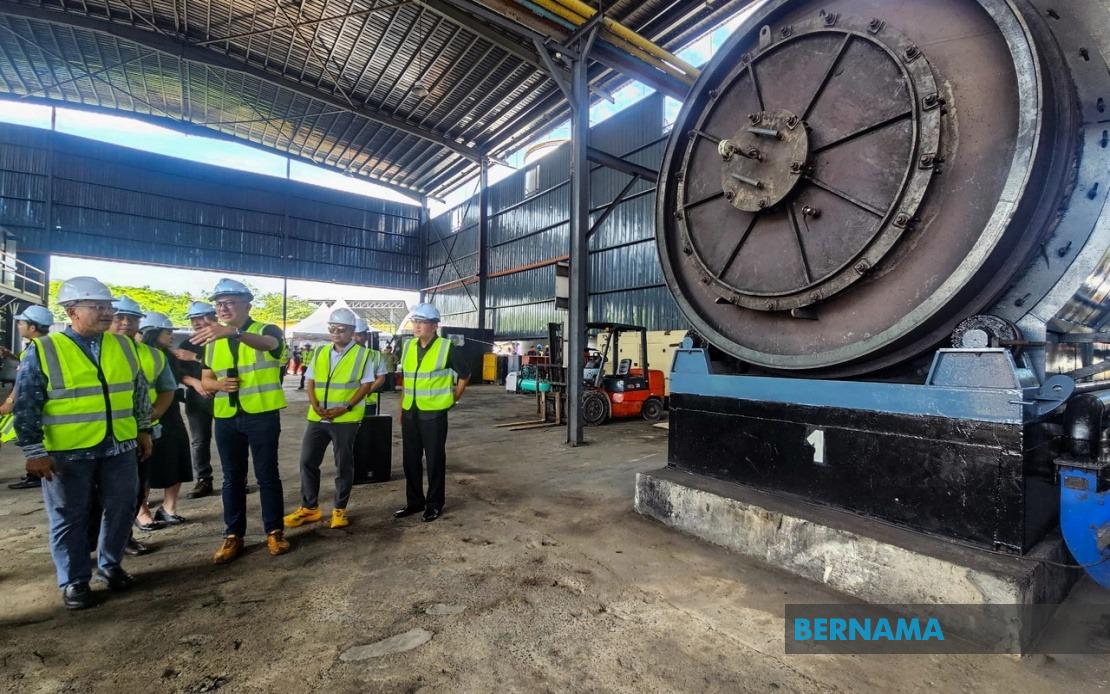
Menteri Besar Datuk Seri Dr Ahmad Samsuri Mokhtar articulated the rationale behind this acceleration during remarks at the launch of a solid waste recovery facility near Kerteh, emphasising that the state cannot afford to allow infrastructure to remain underutilised. The coordination between the Terengganu State Government, China Communications Construction Company Ltd, Malaysia Rail Link Sdn Bhd, the Transport Ministry, and private investors represents a deliberately structured approach to development that has moved beyond preliminary discussions into concrete planning and implementation phases.
The financial architecture underpinning these projects reflects pragmatic resource allocation. Rather than attempting to shoulder the entire development burden, the state government has positioned itself as a facilitator of foundational infrastructure—roads, electricity networks, and water systems—while actively courting private sector participation to construct and operate commercial facilities around the stations. This division of responsibility aims to distribute financial risk while creating a sustainable ecosystem of businesses and services.
The six stations targeted for rapid transit-oriented development represent strategic nodes within the broader ECRL corridor. Their importance lies not merely in passenger convenience but in their potential to function as economic multipliers that can revitalise surrounding communities and unlock commercial opportunities for local entrepreneurs. The state administration has been deliberate in framing this as an opportunity for Terengganu residents to participate in economic activity generated by the rail infrastructure, rather than seeing development imposed upon them from external forces.
A critical dimension of the ECRL's value proposition that has gained emphasis involves freight and cargo services rather than passenger transport alone. Ahmad Samsuri has publicly highlighted the potential for companies to utilise the rail link for goods movement, arguing that this capability could substantially amplify the project's economic returns across the state. This perspective reflects a more sophisticated understanding of rail infrastructure's role in regional supply chain architecture, particularly relevant for a state with significant industrial and port operations.
The Kemaman port connection deserves particular attention within this framework. Ahmad Samsuri, who represents Kemaman as a Member of Parliament, has identified this link as a transformative element that could substantially benefit companies operating in port-adjacent zones, including the state-owned Eastern Pacific Industrial Corporation Berhad. The convergence of rail, port, and industrial assets creates potential for integrated logistics solutions that could position Terengganu competitively within regional trade networks.
Transport Minister Anthony Loke has cautioned that the December timeline remains contingent upon successful completion of rigorous testing and commissioning procedures currently underway. System Integration Testing and Fault-Free Run protocols are proceeding without compromise on safety standards, establishing a parameter that cannot be negotiated regardless of political or economic pressure to accelerate operations. This insistence on thorough validation reflects lessons learned from previous infrastructure projects across the region and internationally.
The coordination required across multiple stakeholders—state and federal government agencies, major construction contractors, rail operator entities, and prospective private investors—demonstrates the complexity inherent in large-scale infrastructure projects. Malaysia Rail Link and Terengganu Incorporated have been tasked with arranging investor participation, a responsibility that carries significant implications for the pace and quality of development ultimately realised. The state government's design frameworks for station-area facilities remain dependent on private sector agreement and financial commitment.
For Malaysian and Southeast Asian observers, the Terengganu approach offers instructive lessons regarding infrastructure monetisation and integrated development strategy. Rather than viewing rail connectivity as an end in itself, the state has positioned station development as integral to capturing economic value from the underlying asset. This philosophy could inform future transport infrastructure projects across the region where incomplete station development has historically underperformed expectations.
Entrepreneurs across Terengganu have been explicitly encouraged to position themselves to capture opportunities created by the accelerated timeline. Supporting businesses—retail, food service, logistics hubs, and tourism-related enterprises—could benefit substantially from proximity to high-traffic station locations. The state government's emphasis on local participation reflects both economic logic and political commitment to ensuring that infrastructure benefits distribute broadly across communities rather than concentrating among external operators.
The December launch of Phase 1 services represents a critical milestone that will generate real-world operational data regarding capacity, demand, and user behaviour. This information will be invaluable for refining the subsequent development of facilities and services at the six target stations and potentially informing TOD strategies at stations included in later ECRL phases. The accelerated timeline has compressed planning windows but also created compelling economic incentives for rapid stakeholder mobilisation.
Looking forward, the success of transit-oriented development at these six stations will likely establish precedent for ECRL station development throughout the broader project corridor. Terengganu's proactive approach, emphasising local entrepreneurship and phased private investment, may represent a replicable model that other state governments examine as their respective regions approach rail connectivity. The outcomes will provide measurable evidence regarding whether accelerated infrastructure deployment, supported by deliberate commercial development strategy, can deliver substantive economic benefits to regional communities.

