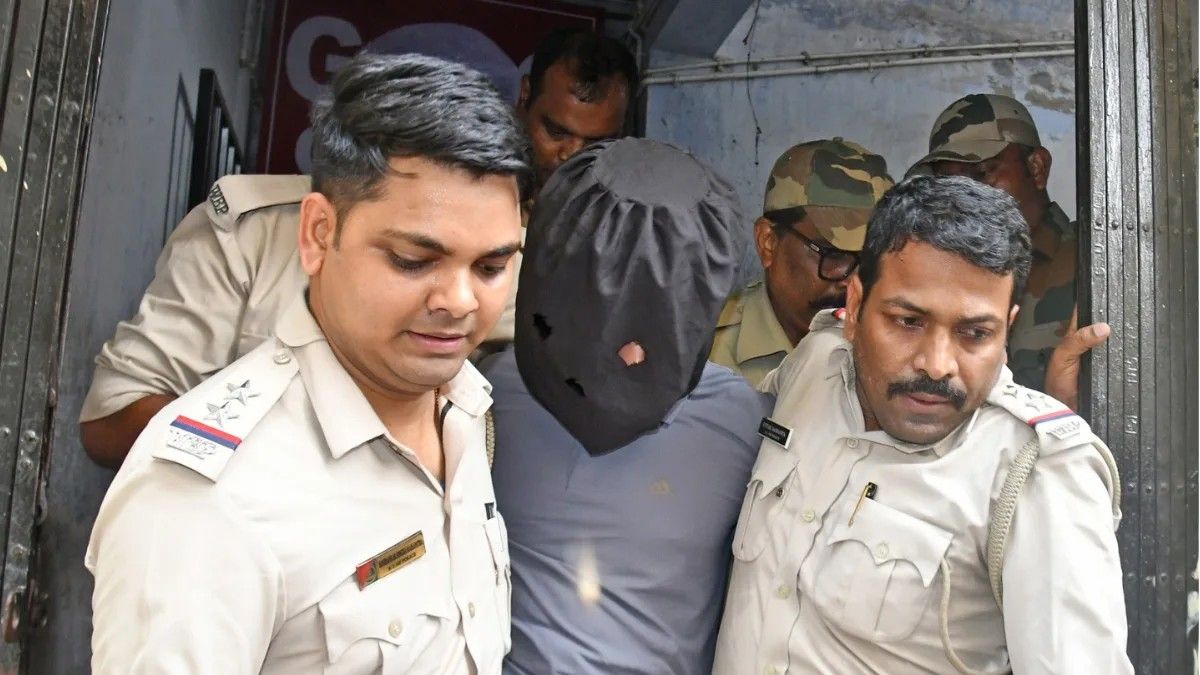
West Bengal's Bardhaman district has once again become the focus of a major counterterrorism investigation following the arrest of a suspected operative with alleged ties to the Pakistan-based Jaish-e-Mohammed (JeM) outfit. The detention of 24-year-old Hamim Mondal on Friday underscores the persistent challenge of militant recruitment in eastern India and serves as a reminder that the region remains vulnerable to cross-border terrorist networks more than a decade after a significant security breach exposed a sleeper cell in the same locality.
The arrest marks a notable escalation in the security situation in the district, coming 12 years after a blast in the Khagragarh area had unveiled the presence of the Jamaat-ul-Mujahidin Bangladesh (JMB) network operating within West Bengal's urban centres. The timing and nature of Hamim's alleged activities suggest that security forces continue to grapple with the challenge of identifying radicalized individuals before they can act on their intentions. According to investigators from the Special Task Force (STF), the young man from East Bardhaman had developed connections with militant organizations across the border, creating what authorities describe as a concerning security vulnerability.
Police allege that Hamim was part of a module led by an operative named Sajjad Bhat within the JeM network. What has particularly alarmed authorities is evidence suggesting he may have been preparing for an infiltration operation targeting high-profile state figures. Investigators discovered that he had recently placed online orders for uniforms resembling those worn by the Central Reserve Police Force (CRPF), raising serious questions about his intentions regarding the security arrangements of Chief Minister Suvendu Adhikari. The procurement of official-looking uniforms is a tactic historically associated with militant attempts to breach security cordons and gain proximity to protected individuals.
Forensic examination of digital devices seized from Hamim has revealed what police describe as encrypted communications with individuals allegedly affiliated with Pakistan's Inter-Services Intelligence (ISI). The nature and frequency of these communications, coupled with other evidence recovered from his laptop and mobile phone, have led investigators to conclude that he was not acting in isolation but rather as part of a broader coordinated network. This discovery suggests a level of operational sophistication and organizational backing that extends beyond amateur agitation.
Hamim's background appears unremarkable on the surface, which police believe may have aided his ability to operate without drawing attention. The 24-year-old, who grew up largely at his grandmother's residence in Bankra, Howrah, had established himself as a small businessman running a label-printing operation in Pilkhana, Howrah after completing his education. His father works for a private company in Kolkata, and the family originates from Dignagar village in East Burdwan's Manteswar block, approximately 25 kilometers north of the district headquarters. This outwardly normal existence appears to have masked involvement in activities that authorities now characterize as deeply conspiratorial and dangerous.
The investigation leading to Hamim's arrest reportedly originated from a telephone threat allegedly directed at Minister of State Umesh Rai several days before his detention. When police traced the call, they identified a young woman from Birbhum district as the initial contact, but following investigative threads ultimately led authorities to Hamim and uncovered what they contend was an elaborate network of activities conducted under the false pretence of student status. This methodical detective work demonstrates how seemingly disparate incidents can connect to reveal larger security concerns.
Three months prior to his arrest, Hamim had rented a three-room apartment at Rohini Tower in the Renaissance Township locality on Bardhaman's western periphery, ostensibly as accommodation for his younger siblings. The landlord, Ekta Mehera, and a local grocer named Mohammad Ali facilitated the arrangement, with Ali reportedly using his father's identity documents to complete the rental agreement. Neighbours described Hamim as quiet, calm, and soft-spoken—characteristics that investigators suggest may have been deliberately cultivated to avoid suspicion. A schoolteacher residing nearby expressed shock at the allegations, noting that nothing in Hamim's demeanor had suggested involvement in any illicit activities.
The arrest operation itself was conducted with considerable operational security measures. At approximately 6:50 in the morning, STF personnel and officers from Bardhaman Police Station conducted simultaneous raids at a gymnasium where Hamim regularly exercised and at his rented apartment. Officers recovered his laptop along with various documents during the searches, all of which are now being analysed as part of the ongoing investigation. The early morning timing of the operation reflects standard counterterrorism protocols designed to minimize risk during apprehension.
Following his initial detention, Hamim was produced before the Chief Judicial Magistrate's Court in Bardhaman, where he was remanded to police custody for a period of 14 days to enable extended questioning. The formal charges levelled against him cite Sections 61 and 152 of the Bharatiya Nyaya Sanhita (India's new criminal code), along with relevant provisions of the Information Technology Act and Immigration Act. These charges carry implications extending beyond simple criminal conduct, encompassing conspiracy, sedition, and offences related to foreign espionage. He was subsequently transported to Kolkata for further interrogation by the STF.
The arrest raises significant implications for regional security discourse in South Asia. For Malaysia and other Southeast Asian nations with Muslim-majority populations and cross-border movement challenges, the case illustrates how terrorist networks exploit digital communication platforms and existing grievances to recruit operatives across borders. The sophistication evident in JeM's operations—including the use of encrypted communications, deliberate operational planning, and integration of local recruits with external handlers—reflects broader trends in how Pakistan-based militant networks are evolving their recruitment and operational methodologies.
Family members have vehemently denied the allegations. Hamim's grandfather Nasiruddin Mondal, a farmer, and uncle Suman Mondal have rejected suggestions of terrorist connections, with Nasiruddin questioning whether such a young man could realistically be involved in serious militant activities. They suggest that police may have received incorrect information or that circumstances have been misinterpreted. However, police maintain that their investigation uncovered substantive evidence of his participation in what they characterize as a multi-layered criminal conspiracy involving coordination with foreign hostile elements, recruitment of local operatives, arms procurement, intelligence gathering on prominent individuals, and planning for potential targeted violence.
The investigation remains ongoing, with authorities continuing to pursue leads relating to other potential members of the network. The case has prompted renewed concerns among security analysts about the permeability of borders to militant recruitment networks and the challenge of identifying radicalized individuals who maintain superficially normal lives whilst secretly engaging in preparations for violence. For regional security watchers, the arrest underscores why sustained vigilance, intelligence sharing between neighbouring countries, and community-level awareness programmes remain essential components of counterterrorism strategy in South Asia.

