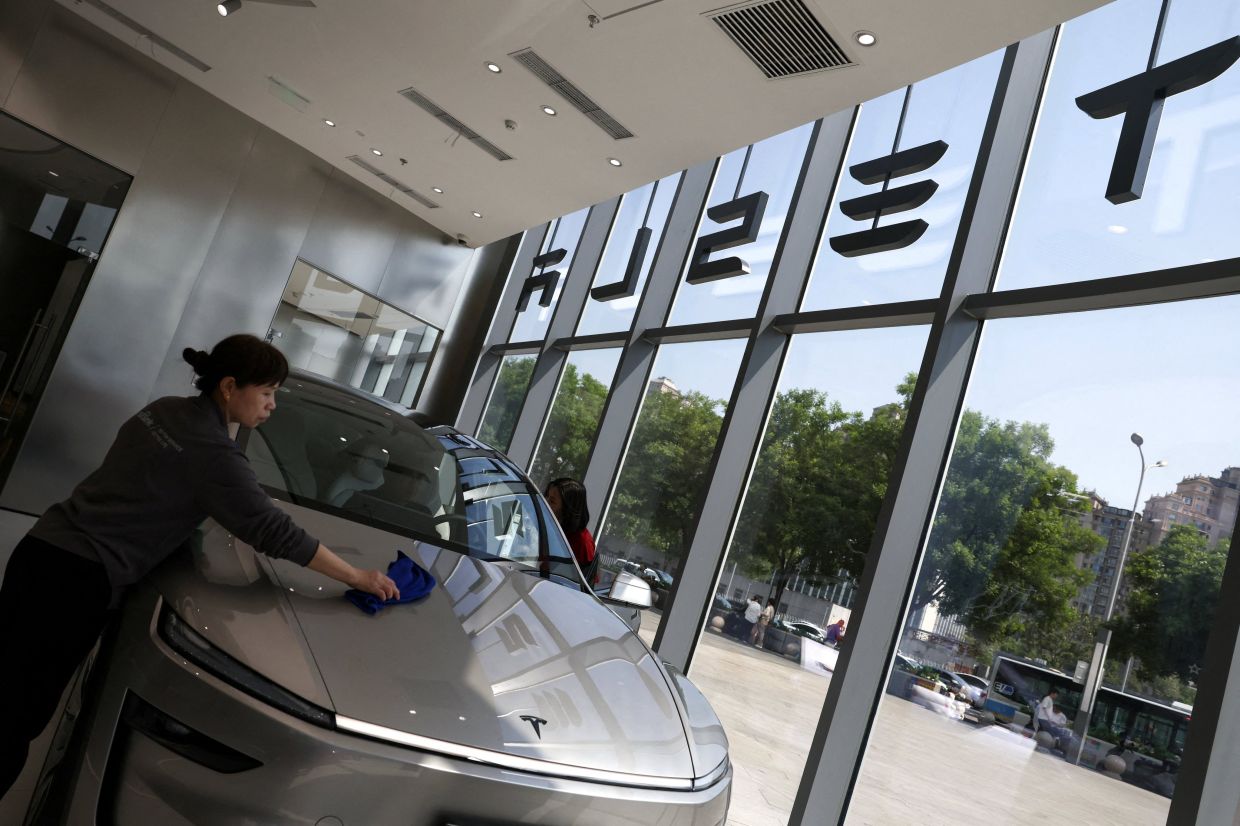
Tesla has been forced to undertake the largest-ever product recall in mainland China's electric vehicle sector, with the American automaker pledging to address a door-handle malfunction affecting close to 3 million vehicles. The unprecedented scale of this recall underscores escalating regulatory scrutiny and mounting public anxiety over automotive safety in China's booming EV market, where quality and reliability concerns have begun to overshadow the sector's rapid growth trajectory.
The impetus for this action stems directly from Chinese authorities' determination to restrict the use of retractable car door handles, a feature increasingly viewed as a potential hazard. Regulators have cited serious safety concerns following a tragic incident in late 2024 when a driver became trapped inside a burning vehicle, unable to escape as bystanders could not operate the doors. This incident, combined with growing consumer anxiety, has prompted China's Ministry of Industry and Information Technology to signal its intention to prohibit such door mechanisms from the coming year onwards.
While Tesla is far from the only manufacturer affected by these emerging safety regulations, the company's recall announcement represents the most substantial commitment to address the issue thus far. The Elon Musk-led firm will retrieve a total of 2.98 million vehicles, marking a significant operational and financial undertaking for the company's Chinese operations. This recalls announcement demonstrates how regulatory pressure in the world's second-largest economy can force even the most prominent global automakers to mobilise resources on an extraordinary scale.
Tesla's remedial approach combines both hardware and software interventions. Beginning from 25 September, the company will affix warning labels to the internal door handles of recalled vehicles once they complete the recall process. Simultaneously, Tesla will deploy an over-the-air software update targeting the vehicle's window-control mechanisms, which will automatically lower windows following a collision—a practical measure that could provide an alternative exit route if door handles malfunction during emergencies.
The severity of China's regulatory response reflects genuine public health concerns that gained prominence following a fatal accident in October in Sichuan province. The incident involved a Xiaomi SU7 Ultra electric vehicle, where bystanders attempting to rescue a 31-year-old driver from the burning wreckage discovered they could not manually open the doors. This high-profile tragedy catalysed broader discussions about vehicle safety standards and prompted Chinese authorities to take decisive action. The incident demonstrated that China's rapidly growing EV sector, whilst technologically advanced, had not adequately addressed fundamental safety considerations surrounding emergency egress.
In response to these safety incidents, China's Ministry of Industry and Information Technology formalised its regulatory stance in February by announcing a forthcoming ban on retractable door handles. The new standards, which take effect next year, will mandate that all passenger vehicles be equipped with both internal and external door handles capable of mechanical operation under all circumstances. Critically, these handles must function independently of the vehicle's electrical system, ensuring that even if the car experiences total power failure or suffers damage in an accident, occupants retain the ability to exit the vehicle manually.
Beyond the door-handle recall, Tesla confronts an additional separate recall affecting 2.74 million Model 3 and Model Y vehicles manufactured at its Shanghai production facility. This supplementary action requires deployment of another over-the-air update focused on the vehicle's assisted steering and autonomous driver-assistance systems. The software modification aims to ensure these safety features remain properly engaged when drivers fail to respond rapidly during collision scenarios—an important safeguard against potential incidents where driver inattention could compound accident severity.
Tesla's Shanghai factory holds particular strategic significance within the company's global operations. During 2025, the facility produced approximately 851,000 vehicles destined for both the Chinese market and international export, accounting for more than half of Tesla's total worldwide production that year. This geographical concentration underscores China's critical importance to Tesla's business model, particularly as global vehicle production declined 8.6 per cent year-on-year to reach 1.63 million units overall. Any disruption to Shanghai operations or quality issues originating from this facility reverberate throughout Tesla's supply chain and financial performance.
China ranks as Tesla's second-most significant market globally, trailing only the United States. The scale of Tesla's presence in China—both as a manufacturing base and consumer market—means that regulatory pressures, safety recalls, and quality concerns in the Chinese market directly impact shareholder value and the company's reputation internationally. For Malaysian and Southeast Asian automotive observers, Tesla's experience illustrates how rigorously Chinese regulators now scrutinise EV safety standards, and how even established manufacturers must adapt rapidly when safety defects emerge.
Industry analysts suggest that these large-scale recalls by Tesla and other manufacturers will ultimately strengthen China's automotive sector. Zhang Wenjie, manager of a Shanghai-based car maintenance workshop, observed that growing regulatory vigilance and consumer awareness regarding vehicle safety will compel the broader auto industry to reassess product design and quality assurance protocols. Rather than viewing recalls as corporate setbacks, industry professionals increasingly recognise them as necessary correctives that enhance overall market credibility and consumer confidence.
The regulatory framework now emerging in China establishes precedents with potential regional implications. Southeast Asian nations, many of which have rapidly expanding EV sectors with less mature regulatory infrastructure, may eventually adopt or adapt similar safety standards. Malaysia, Thailand, and Vietnam—all pursuing aggressive electric vehicle adoption targets—may find themselves considering whether mechanically-operable door handles and enhanced collision-response systems should become mandatory. Tesla's Chinese recall thus represents not merely a national safety measure but potentially the genesis of regional automotive safety standards across Asia-Pacific.
For consumers and policymakers across the region, this recall emphasises the importance of robust safety regulations and recalls procedures even for cutting-edge technology platforms. While electric vehicles offer environmental and performance benefits, fundamental safety features such as reliable emergency exit mechanisms remain non-negotiable design requirements. The incident that triggered China's regulatory response serves as a stark reminder that no technological advancement can justify compromising driver and passenger safety during emergencies.

