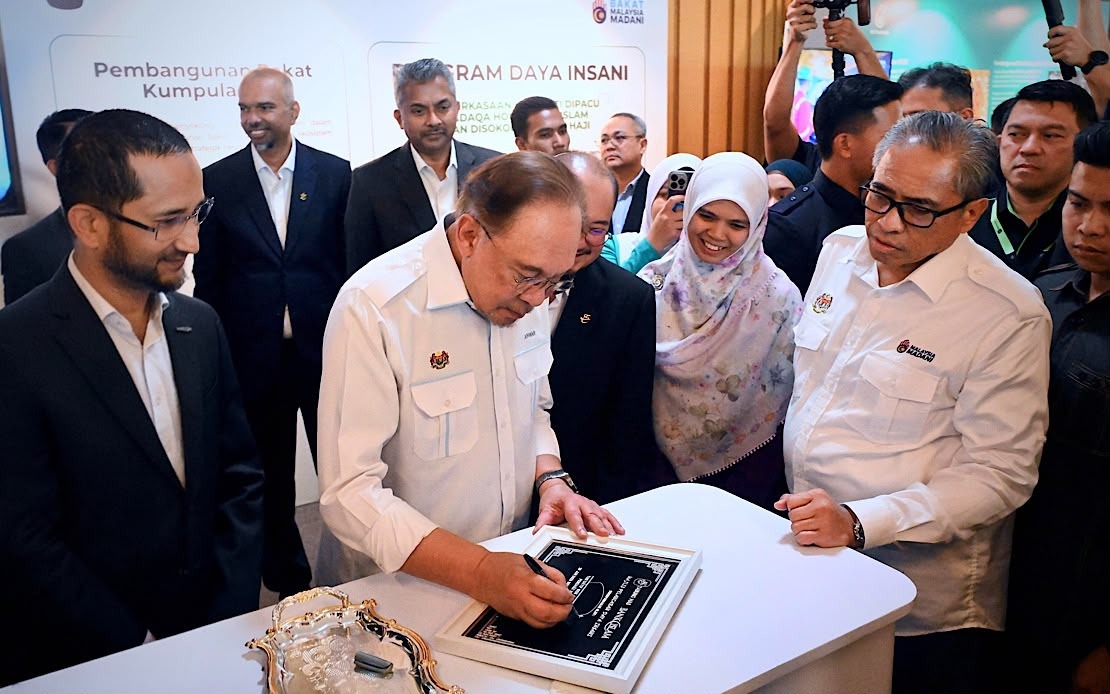
Lembaga Tabung Haji (TH) and Bank Islam Malaysia Berhad have unveiled an ambitious human capital development scheme aimed at transforming the economic prospects of vulnerable young Malaysians. The Asnaf Youth Development Programme for Inclusive and Sustainable Empowerment (DAYA INSANI), backed by an initial RM1 million commitment, represents a strategic pivot towards addressing talent shortages whilst simultaneously fulfilling corporate social responsibility objectives aligned with the government's MADANI Talent initiative announced by Prime Minister Datuk Seri Anwar Ibrahim in Sendayan, Negeri Sembilan.
The collaborative venture channels TH's substantial financial resources through Bank Islam's Sadaqa House social finance platform to reach more than 100 asnaf youth and orphans over its initial implementation phase. This approach leverages Islamic banking's traditional commitment to community welfare whilst deploying modern skills training methodologies. The partnership demonstrates how established financial institutions can operationalise social impact agendas beyond conventional charitable giving, creating sustainable pathways for marginalised populations to enter formal employment sectors experiencing acute labour shortages.
Daya Insani distinguishes itself through an integrated three-pronged approach combining technical skills acquisition, direct industry exposure, and guaranteed job placement mechanisms. Rather than offering generic training divorced from market realities, the programme connects participants with strategic partners across high-demand sectors. The Kulim Hi-Tech Park Skills Centre provides technical vocational training producing skilled workers for advanced manufacturing and technology sectors. Kolej Universiti Bestari and Kumpulan Medic Iman Sdn Bhd collaborate on nursing diploma programmes, addressing Malaysia's persistent healthcare workforce deficits. The Malaysian Professional Accountancy Centre delivers accountancy qualifications meeting international standards, whilst Showme Education trains therapists for Malaysia's expanding wellness and mental health services.
Existing cohorts already demonstrate the programme's viability. Nineteen nursing diploma candidates enrolled in 2024 have shown strong progression, with one graduate already employed in clinical roles. A technical training cohort of thirteen participants commenced at the Kulim Hi-Tech Park in June, with organisers targeting rapid expansion to one hundred participants within the immediate term. These early results provide concrete evidence that structured support can meaningfully reduce employment barriers for asnaf populations, where systemic disadvantages typically restrict access to quality vocational pathways.
The expansion capacity embedded within Daya Insani reflects TH's broader strategic positioning as a development-oriented institution beyond its primary hajj management function. TH Group Managing Director and Chief Executive Officer Mustakim Mohamad framed human capital investment as the agency's highest priority, viewing skills development as foundational to long-term community prosperity. His statement emphasised that employment access and industry exposure represent transformative interventions enabling asnaf youth to achieve financial independence and contribute meaningfully to national economic development.
Bank Islam's participation underscores evolving expectations for Islamic financial institutions to deliver measurable social outcomes aligned with shariah principles emphasising community welfare and inclusive prosperity. Bank Islam Group Chief Executive Officer Raja Datin Paduka Teh Maimunah Raja Abdul Aziz positioned Daya Insani as embodying social finance principles that privilege direct community impact over abstract corporate social responsibility metrics. Her emphasis on providing "right access and support" reflects recognition that capability development requires removing structural barriers beyond individual effort.
The programme's openness to corporate and institutional contributions expands its funding base beyond TH's initial capital commitment. Mobilising contributions from the corporate sector creates multiple stakeholder alignment where employers invest directly in cultivating future workers whilst demonstrating corporate citizenship. This approach differs fundamentally from extraction-focused business models, instead positioning skills development as mutually beneficial investment strengthening Malaysia's competitive talent landscape whilst improving asnaf economic mobility.
Daya Insani's integration with TH's existing partnerships with INCEIF University and the Malaysian Professional Accountancy Centre creates specialised pathways producing certified accountants and Islamic finance professionals meeting international competency standards. This specialisation addresses Malaysia's positioning as an Islamic finance hub requiring world-class talent across banking, accountancy, and Islamic economics domains. Asnaf participation in these elite programmes signals recognition that talent exists across all socioeconomic strata, with disadvantage primarily reflecting access barriers rather than capability limitations.
The programme arrives amid broader Malaysian policy shifts prioritising inclusive growth and human capital development as competitive advantages in an increasingly technology-driven regional economy. Southeast Asian nations competing for foreign investment and regional talent face mounting pressure to develop comprehensive workforce development ecosystems. Malaysia's asnaf population, representing economically vulnerable households within Muslim communities, represents untapped human potential currently constrained by educational and economic access barriers. Daya Insani demonstrates policy alignment between religious institutions, Islamic financial services, and government development objectives.
Implementation challenges remain significant despite ambitious programme design. Sustaining employer engagement, ensuring quality training delivery across diverse partner institutions, and maintaining post-placement job security require continuous coordination. Geographic disparities mean rural and semi-urban asnaf youth may face transportation and logistical obstacles accessing training centred in industrial parks and urban education facilities. Measuring genuine economic mobility improvements—salary progression, skill application, entrepreneurship outcomes—extends beyond placement statistics.
Longer-term programme viability depends on demonstrating measurable returns justifying continued corporate and institutional contributions. Early cohort success stories, if systematically documented and publicised, could catalyse additional funding and employer participation. Conversely, high dropout rates, placement failures, or insufficient wage improvements compared to non-participant asnaf peers could undermine stakeholder confidence.
Daya Insani represents an important institutional intervention recognising that asnaf economic advancement requires coordinated effort combining financial resources, quality training, employer partnerships, and sustained support mechanisms. The RM1 million seed capital and hundred-person initial target suggest modest scale relative to Malaysia's broader asnaf population, yet the programme's structured approach and partnership architecture offer replicable models for scaling. Success in demonstrating employment outcomes and income mobility improvements among initial cohorts could establish proof-of-concept attracting substantially larger institutional commitments addressing Malaysia's talent development imperatives whilst advancing inclusive economic participation.

