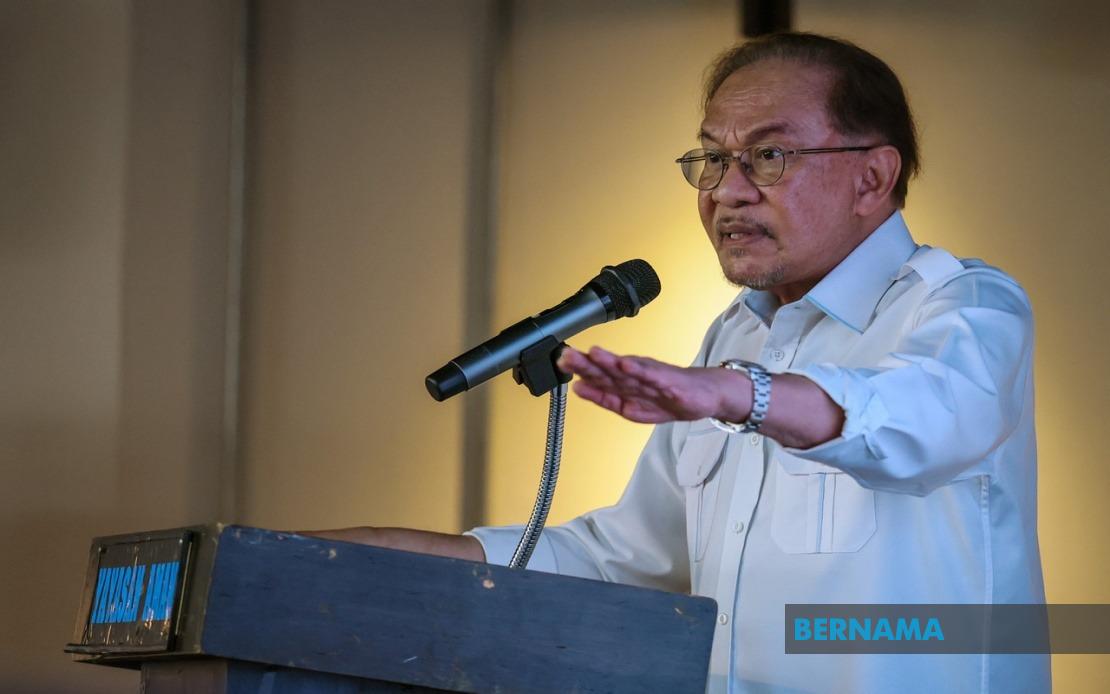
Prime Minister Datuk Seri Anwar Ibrahim has stressed the critical importance of continuing the investigation into findings contained in the Royal Commission of Inquiry report on Lembaga Tabung Haji, asserting that such scrutiny is essential to prevent further financial damage to Malaysia. Speaking at an event in Bukit Mertajam, the premier underscored that the government remains committed to pursuing the inquiry with rigour while adhering strictly to legal principles and evidentiary standards.
Anwar's comments represent a deliberate effort to address mounting criticism regarding the government's handling of the Tabung Haji matter, a sensitive issue that has long troubled Malaysian policymakers and the public alike. The pilgrimage savings scheme, which manages funds for Malaysian Muslims intending to perform the Hajj, has faced significant scrutiny following revelations of substantial losses. The Prime Minister's emphasis on both accountability and procedural fairness signals an attempt to navigate the politically charged terrain between those demanding swift action against alleged wrongdoers and those concerned about the rule of law.
Central to Anwar's position is the contention that inaction and action alike invite criticism, yet one serves the national interest while the other does not. He articulated frustration at the apparent contradiction, pointing out that failing to investigate losses would leave public resources unprotected, yet pursuing investigations generates accusations of political motivation or persecution. This framing reveals the delicate balance the administration must maintain when addressing institutional failures that may implicate senior figures from previous administrations.
The Prime Minister specifically referenced the magnitude of losses within Tabung Haji, citing a figure of RM12 billion, and posed a series of rhetorical questions about the nature, timing, and responsibility for these losses. By demanding clarity on these fundamental points, Anwar signalled that the government's approach will be methodical and evidence-driven rather than reactive or emotionally driven. This methodology aligns with international best practices for investigating financial misconduct within state institutions.
Anwar's articulation of the government's governing philosophy emphasizes transparency and judicial determination. He outlined a clear procedural framework: investigation must be conducted with thoroughness, evidence must be substantiated, charges must be filed if warranted, and ultimately courts rather than politicians must determine guilt or innocence. This delineation of institutional roles underscores the administration's commitment to separating investigative, prosecutorial, and judicial functions, a principle fundamental to democratic governance.
The Prime Minister made explicit that the government would neither punish individuals without proper legal processes nor shy away from action when compelling evidence of wrongdoing exists. This dual commitment reflects an effort to reassure both those concerned about rule of law protections and those demanding accountability for public fund mismanagement. The statement implicitly acknowledges that the Tabung Haji situation involves questions about institutional governance and fiduciary responsibility that transcend ordinary partisan politics.
For Malaysian citizens and policymakers, the Tabung Haji losses represent more than an accounting problem; they touch upon trust in government stewardship of Islamic financial institutions and the protection of ordinary Malaysians' savings. The scheme serves millions of Malaysians planning for one of Islam's fundamental pillars, making any erosion of its financial integrity a matter of considerable religious and social consequence. The RCI investigation thus carries weight beyond mere financial auditing.
Anwar's remarks, delivered while launching an economic scheme in Permatang Pauh, demonstrate how the government seeks to maintain momentum on policy initiatives while simultaneously addressing institutional accountability matters. The juxtaposition of these events underscores the administration's desire to project competence and forward momentum despite grappling with inherited institutional challenges.
The investigation into Tabung Haji also carries implications for Malaysia's broader governance narrative, particularly regarding how the nation addresses legacy issues from previous administrations. The careful calibration of Anwar's language reflects awareness that heavy-handed action risks appearing vengeful, while inadequate investigation invites charges of negligence or complicity. This tension will likely continue to characterize the government's handling of other institutional investigations undertaken since assuming office.
For Southeast Asian observers, Malaysia's approach to the Tabung Haji matter offers a case study in how democracies balance accountability with institutional stability. The region has witnessed various responses to discovered financial misconduct, ranging from aggressive prosecutions to quiet settlements. Malaysia's emphasis on evidence-based action within established legal frameworks represents one model for addressing such challenges while maintaining institutional credibility.
The implications for Malaysian Muslims participating in the Tabung Haji scheme remain significant. Restoring confidence in the institution requires not merely recovering lost funds but demonstrating that governance structures have been reformed and accountability mechanisms strengthened. Anwar's commitment to investigation without political interference theoretically provides the foundation for such restoration, though actual implementation will prove crucial to public acceptance.

