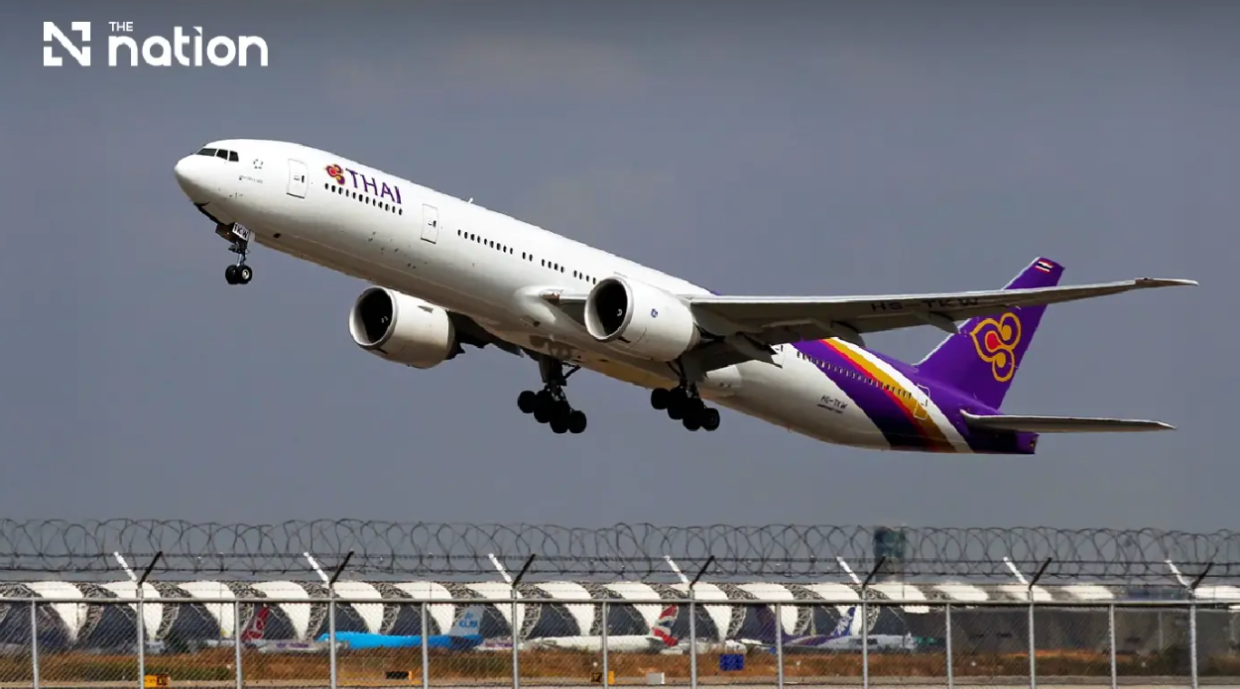
Thai Airways International chief executive Chai Eamsiri has committed the airline to full cooperation with Australian law-enforcement agencies following the arrest of a female cabin crew member at Melbourne Airport, stating the carrier will not obstruct the legal proceedings unfolding in Australian courts. The arrest represents a significant security and reputational challenge for one of Southeast Asia's major carriers and has prompted swift internal action as well as regulatory scrutiny from Thai aviation authorities.
Australian police detained the 26-year-old Thai Airways employee after she arrived on flight TG465 from Bangkok to Melbourne on June 25. Officers discovered more than one kilogramme of heroin in her baggage, with the drugs estimated to carry a street value of A$500,000, equivalent to approximately 11.5 million baht. The discovery triggered formal charges under Australian federal legislation, with the Australian Federal Police and Australian Border Force charging her with importing a marketable quantity of a border-controlled drug and possessing a marketable quantity of a border-controlled drug—offences each carrying maximum penalties of up to 25 years imprisonment.
In response to the incident, Thai Airways moved rapidly to demonstrate institutional accountability and commitment to compliance. Chai announced that the airline had immediately suspended the crew member from operational duties and established a dedicated fact-finding and disciplinary panel to conduct an internal investigation through established company procedures. The panel has been granted seven days to complete its examination, though Chai indicated that a faster resolution remained possible. Should the inquiry substantiate any breach of airline regulations or conduct standards, the employee faces Thai Airways' most severe disciplinary sanction—termination of employment.
The incident carries troubling implications for the airline's international standing and operational relationships. Chai acknowledged candid concerns about reputational damage to Thai Airways, noting the episode could potentially complicate travel procedures and airport processing for other Thai crew members and Thai nationals arriving in Australia. However, he expressed confidence that international aviation authorities and border agencies would evaluate each case on individual merit rather than imposing collective restrictions on Thai personnel based on a single criminal allegation. This optimism appears measured against the reality that high-profile drug seizures can prompt enhanced scrutiny of particular nationalities at major international airports.
The airline operates with a substantial workforce spread across multiple functional areas. Thai Airways maintains more than 4,000 cabin crew members and over 1,000 pilots, Chai explained, highlighting the statistical challenge of managing conduct standards across such an extensive team despite rigorous institutional rules. He acknowledged that despite comprehensive pre-flight briefings covering applicable regulations, prohibited items, and the distinction between legal and illegal goods, individual crew member behaviour can prove difficult to control through procedural mechanisms alone. In response, Chai stated he had instructed relevant departments to strengthen supervision protocols across the airline's operations.
Thailand's Civil Aviation Authority has simultaneously engaged with the situation from a regulatory vantage point. The CAAT contacted the airport operator and Thai Airways to establish factual details and undertake a procedural review. The authority emphasised that passenger and baggage screening at Thai airport checkpoints comply with CAAT requirements and align with standards established by the International Civil Aviation Organization. The CAAT clarified that aviation security screening primarily targets items that could threaten aircraft safety or endanger passengers and crew—a distinction that reflects the compartmentalisation of responsibilities between aviation regulators and drug-enforcement agencies.
The regulatory boundaries became explicit in the CAAT's formal statement. Aviation-security screening represents a distinct operational domain from narcotics enforcement, which falls under the purview of law-enforcement bodies requiring domestic and international cooperation frameworks. The CAAT has directed Thai Airways to continue monitoring its preliminary investigation, signalling regulatory attention to the case's progression. Should investigation findings establish wrongdoing, the CAAT indicated it may pursue action concerning the crew member's aviation certificate, viewing such measures as necessary to maintain aviation safety standards and preserve international confidence in Thailand's civil aviation oversight.
The Melbourne Magistrates' Court remanded the suspect in custody on June 26, with her next scheduled appearance set for September 14. This extended timeline for preliminary court proceedings offers Thai Airways and Thai aviation authorities several months to conclude their parallel investigations and determine what institutional or regulatory measures remain appropriate. The case exemplifies the intersection of criminal law, aviation security, and employment discipline—three distinct legal frameworks converging on a single individual's alleged conduct.
For Southeast Asian aviation industry observers, the incident underscores persistent vulnerabilities in supply-chain integrity despite sophisticated screening infrastructure. Thai Airways' emphasis on pre-flight crew briefings and regulatory compliance documentation demonstrates institutional diligence, yet the alleged smuggling attempt suggests these mechanisms can be circumvented by individuals determined to evade detection. The scale of the alleged seizure—over one kilogramme of a high-value narcotic—indicates sophisticated logistics rather than opportunistic individual wrongdoing, raising broader questions about whether organised networks target airline personnel as transportation conduits.
The case also illuminates divergent international standards in drug prosecution and sentencing. Australian criminal law mandates maximum penalties of 25 years for the alleged offences, substantially exceeding penalties in many Southeast Asian jurisdictions. This legal environment creates powerful deterrent effects for nationals of countries with comparatively lenient drug laws, though alleged offenders rarely conduct risk-benefit calculations before attempting smuggling operations.
For Malaysian readers and regional aviation professionals, the incident reinforces the importance of enhanced personnel vetting, supervisor training, and regulatory cooperation between carriers and border authorities. Thai Airways' transparent acknowledgment of reputational damage and swift institutional response contrast sharply with defensive postures some carriers adopt following security breaches. However, the airline's simultaneous emphasis on the statistical inevitability of individual misconduct within large workforces reflects the genuine challenge large carriers face in maintaining zero-tolerance compliance cultures while operating across dozens of international jurisdictions with varying regulatory environments and enforcement capabilities.

