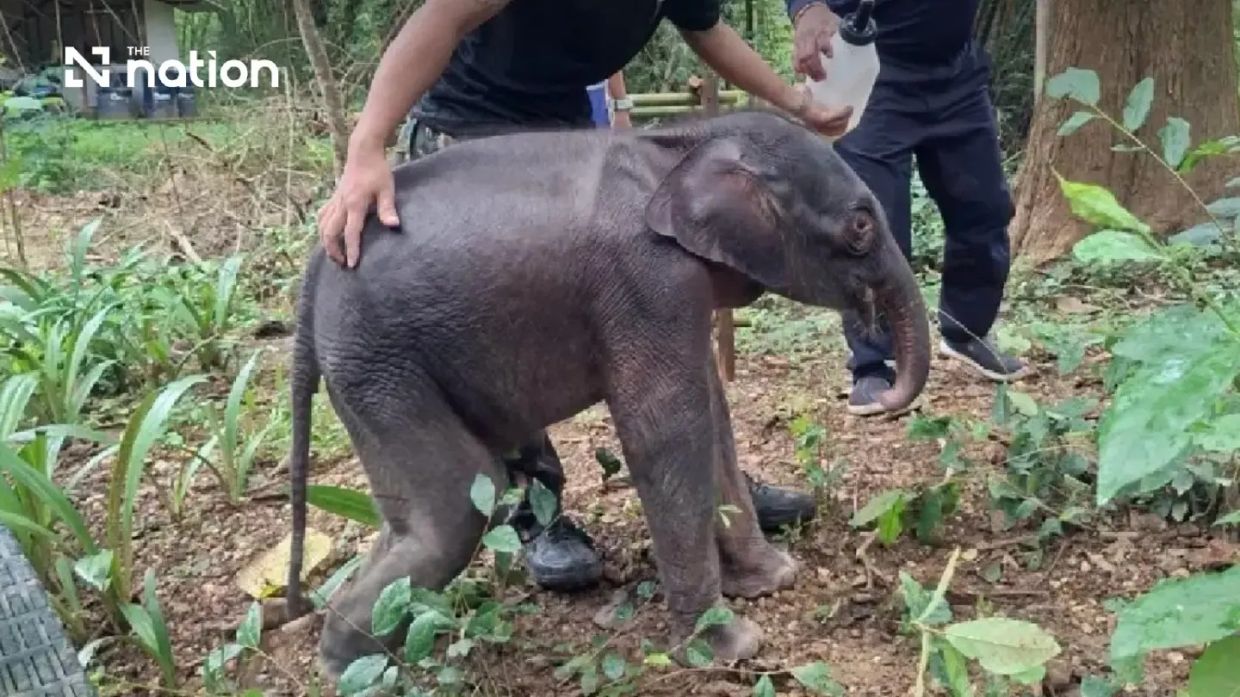
A male wild elephant calf believed to be less than two weeks old has been pulled back from the brink of death after rescuers found the tiny animal abandoned and suffering on a riverbank in Sai Yok district, Kanchanaburi. The calf's discovery highlights the escalating challenges facing elephant populations in Southeast Asia as habitat degradation and environmental pressures force wildlife into dangerous predicaments. The dramatic rescue operation, which unfolded over the final days of July 2026, required coordinated efforts from national park officers and veterinary specialists working against severe weather conditions and treacherous river terrain.
Villagers first spotted the distressed calf on July 30 after the animal had apparently become separated from its mother and herd during recent heavy rainfall that swelled local waterways. The alert reached Sai Yok National Park Protection Unit No. 5 at 6am, prompting immediate mobilisation of park officers who faced a gruelling one to two-hour boat journey to reach the calf's location. The rescue crew discovered a solitary animal in an extremely weakened condition marooned on a narrow riverbank, with barely 1.5 metres of accessible space and the swollen Huai Mae Nam Noi river blocking its escape route. Park staff remained overnight to observe whether the herd might return, but the calf's repeated desperate calls for its mother went unanswered throughout the night, suggesting the elephant family had retreated far inland across flooded terrain.
Initial veterinary assessments conducted by specialists from Protected Areas Regional Office 3 on July 31 revealed an alarming array of medical crises threatening the young animal's survival. The calf weighed only around 40 kilograms and presented with severe dehydration, mouth ulcers the size of Thai ten-baht coins, wounds and blistered lesions across its trunk, and a critically infected navel wound. Veterinarians documented additional complications including conjunctivitis caused by insect swarms, dark discoloured urine indicating possible infection or extreme fluid loss, and loose stools with putrid odours suggesting gastrointestinal distress. The cumulative toll of these injuries, combined with the calf's refusal to drink milk due to oral pain, painted a deeply concerning clinical picture that demanded immediate intensive intervention.
The apparent cause of the separation underscores environmental challenges increasingly threatening Thailand's remaining wild elephants. Park officials believe the herd likely crossed the swollen waterway during heavy downpours, but the calf, unable to navigate the dangerous current, became stranded on the opposite bank. The extreme rainfall over preceding days had transformed normally manageable streams into treacherous torrents, turning a routine river crossing into a potentially fatal obstacle for a vulnerable newborn. This scenario mirrors patterns documented across Southeast Asia, where climate-related weather extremes are fragmenting elephant populations and separating mothers from calves with tragic frequency.
Minister of Natural Resources and Environment Suchart Chomklin personally intervened following reports of the rescue operation, recognising both the animal welfare implications and the broader significance for Thailand's conservation efforts. Suchart publicly commended the remarkable dedication displayed by park officers and veterinary personnel who braved dangerous conditions, heavy rain, and powerful currents to reach and stabilise the calf. His directive galvanised the Department of National Parks, Wildlife and Plant Conservation to deploy specialist veterinarians for sustained intensive care, ensuring the rescue would not conclude with the initial recovery but continue through the critical rehabilitation phase that often determines survival outcomes for separated elephant calves.
The rescued calf was transported to Sai Yok National Park headquarters, where it entered an intensive care regimen addressing multiple simultaneous health crises. Veterinary teams commenced aggressive treatment protocols targeting the severe dehydration through carefully managed fluid replacement, oral medication for the painful mouth ulcerations that prevented normal feeding, and wound management addressing the infected navel site and blistered trunk lesions. Beyond immediate trauma care, the rescue operation incorporated mandatory testing protocols for elephant endotheliotropic herpesvirus, a devastating pathogen that poses particular risk to young calves and frequently claims lives despite treatment efforts. The clinical uncertainty surrounding potential EEHV exposure added another layer of urgency to the already critical care situation.
The physical injuries documented during examination tell a sobering story of the calf's desperate struggle for survival during its estimated two-day isolation. The constellation of wounds and infections—mouth ulcers preventing proper feeding, navel infections threatening septicaemia, blistered trunk tissue with areas of dead flesh, and the absence of pus or insect egg colonisation only because the injuries were relatively recent—suggests the animal was rapidly deteriorating when discovered. The calf's attempts to nourish itself by sucking tree roots and nearby stones demonstrate both the instinctive survival drive of the species and the complete absence of maternal milk essential for growth and immune function. Every hour of additional separation from the herd carried exponential risk of worsening metabolic crisis and organ dysfunction.
This incident reflects broader conservation realities facing Thailand's elephant population, currently estimated at fewer than 4,000 individuals in the wild, compared to several hundred thousand at the turn of the twentieth century. The concentration of remaining elephants in protected areas like Sai Yok National Park means that isolated survival challenges affecting individual calves carry disproportionate genetic and population-level significance. Loss of even a single calf reduces the species' reproductive capacity and genetic diversity. Conversely, successful rescue operations validate investment in park infrastructure, veterinary expertise, and early-warning systems that enable rapid response to wildlife emergencies. The Kanchanaburi rescue demonstrates the tangible value of maintaining trained specialist teams positioned throughout conservation zones.
The medium-term prognosis for the rescued calf remains uncertain despite aggressive treatment. Surviving separated elephant calves in rehabilitation programs face extended periods away from natural social structures essential to normal development, including maternal teaching and herd integration necessary for species-typical behaviours. Even successful medical interventions that stabilise acute injuries and infections do not guarantee psychological recovery or eventual reintegration into wild populations. Thai wildlife authorities face the complex decision of whether to attempt eventual reunion with the original herd, if located, or to incorporate the calf into existing elephant sanctuary programmes alongside other orphaned or rescued individuals.
The rescue operation also underscores vulnerabilities within wildlife protection systems across Southeast Asia. The reliance on villager reports for initial detection, the extreme difficulty accessing remote habitat areas, and the hazardous conditions rescuers endured to reach one distressed animal suggest that numerous additional elephants in crisis may go undetected or unreachable. Climate change projections indicate intensifying rainfall extremes and flooding patterns throughout the region, suggesting such separated-calf scenarios will likely recur with increasing frequency. Investment in expanded ranger networks, improved early-detection systems, and pre-positioned emergency equipment could enhance response capacity to future incidents.
For Malaysian observers, the Kanchanaburi rescue carries particular relevance given Malaysia's equally threatened elephant populations, estimated at fewer than 1,500 individuals across Peninsular Malaysia and Sabah. The Peninsular Malaysia subspecies faces comparable challenges of habitat fragmentation, human-wildlife conflict, and climate pressures, with recent years documenting multiple incidents of separated calves, herd deaths, and population stress. The Thai approach to intensive veterinary intervention and ministerial-level coordination offers potential models for Malaysian wildlife authorities managing similar crises. Conversely, the incident underscores the limitations of reactive rescue protocols when preventive habitat protection and connectivity corridor development remain chronically underfunded across the region.
The ultimate outcome for this individual calf—whether it survives to adulthood and reintegrates into wild herds or remains permanently dependent on human care—will become a benchmark for evaluating Thailand's commitment to elephant conservation under contemporary environmental pressures. The public profile of the rescue, amplified by ministerial statements and media coverage, has momentarily elevated elephant welfare to prominence in Thai political discourse. Sustaining this attention beyond the immediate crisis to drive policy changes addressing underlying habitat loss and climate adaptation will prove essential for transforming individual rescue successes into population-level recovery for wild elephants across Southeast Asia.

