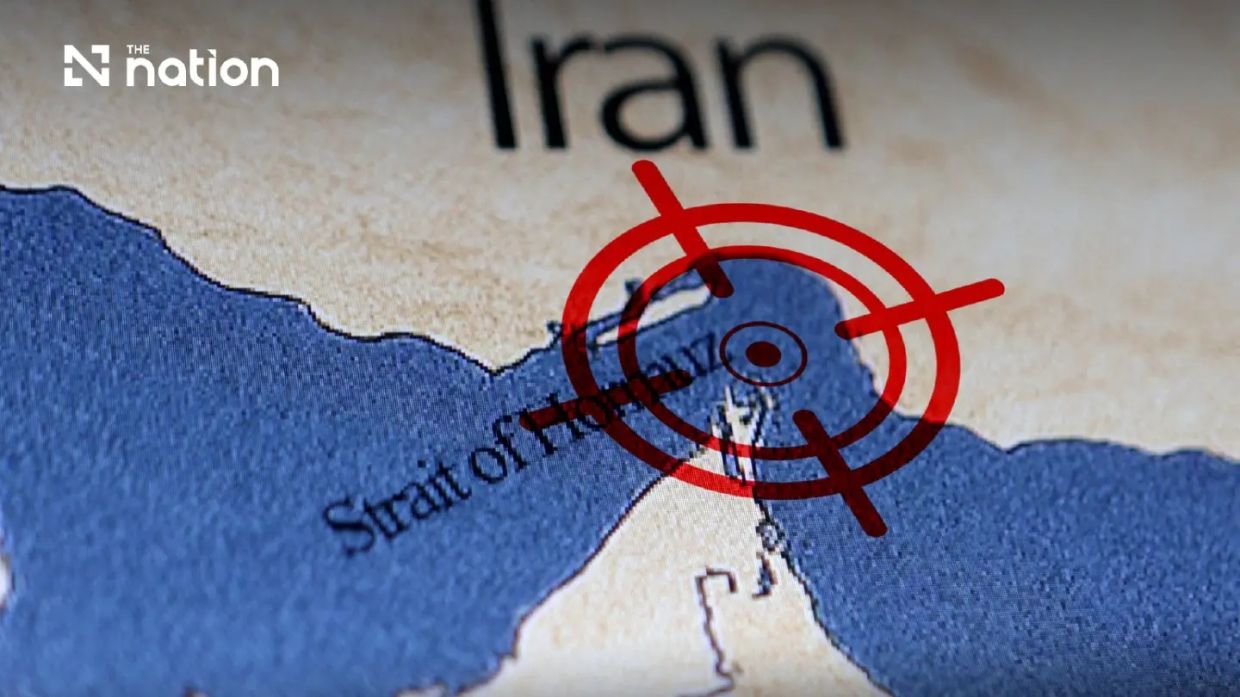
A vessel flying the Thai flag has reportedly come under attack from Iranian forces while transiting the Strait of Hormuz, marking another escalation in the volatile standoff between Washington and Tehran that threatens the safety of commercial shipping through one of the globe's most strategically vital waterways. The Iranian semi-official Tasnim news agency carried the report of the incident but refrained from releasing details about the ship's identity, ownership, cargo specifications, destination or the nationalities of those aboard, leaving critical information about the attack unconfirmed by independent sources or Thai maritime authorities.
Without corroboration from Bangkok's authorities, established maritime monitoring organisations, or the vessel's operator, the full circumstances of the alleged incident remain unclear. Reports do not specify whether the ship sustained damage or if any crew members were harmed, adding to the uncertainty surrounding the event. This information vacuum reflects the broader difficulty in obtaining verified accounts from the region during periods of heightened military activity, where official narratives from competing powers often diverge sharply and independent observers struggle to access reliable facts on the ground.
The reported Thai vessel incident occurs within a broader context of dangerous escalation in the Strait of Hormuz, where Iran has issued military notices demanding that shipping companies comply with directives from its armed forces. Tasnim simultaneously reported that two oil tankers caught fire and exploded after attempting to pass through waters that Iranian media described as a designated minefield in the southern section of the strait. The Islamic Revolutionary Guard Corps Navy characterised the waterway as having become dangerously unsafe and said it had been entirely closed due to what it termed American aggression, suggesting that Iran is enforcing a de facto blockade through military warnings and implicit threats.
The IRGC separately claimed responsibility for intercepting four additional oil tankers allegedly attempting passage through the Strait of Hormuz with United States military support. According to the Iranian naval force, these vessels were ordered to remain stationary during a coordinated missile and unmanned drone operation. Tehran issued a stark warning to shipowners to heed Iranian military notices rather than depend on protective measures offered by American forces, effectively pressuring commercial operators to prioritise compliance with Iranian demands over their traditional reliance on international maritime law and escort arrangements. However, the four tankers mentioned were never identified, and details regarding their locations, flag states, registration credentials and current condition were withheld from public disclosure.
The cumulative effect of these incidents has intensified global anxiety about the viability of the Strait of Hormuz as a secure passage for commercial vessels. This 33-kilometre-wide waterway represents a critical chokepoint through which approximately one-third of the world's seaborne traded oil transits annually, making its stability essential to international energy markets and economic stability worldwide. Any sustained disruption to shipping movements through the strait would precipitate significant increases in freight costs and insurance premiums, potentially trigger shortages in energy supplies to dependent nations, and generate volatile swings in global commodity prices that reverberate through every industrialised economy.
These maritime tensions have coincided with an unprecedented campaign of American military strikes against Iranian targets. The United States Central Command announced via its social media platform that it had launched its seventh consecutive night of aerial bombardment against Iran, with the latest operation commencing at 7pm Greenwich Mean Time on Friday, equivalent to 3pm on the United States East Coast. The American military characterised the escalating air campaign as designed to progressively weaken Iran's military infrastructure and operational capabilities, though CENTCOM declined to release a comprehensive inventory of targeted locations or quantify the full extent of destruction inflicted.
Iranian officials have countered by asserting that preceding American strikes have caused significant collateral damage to civilian infrastructure across southern Iran, including destruction of bridge structures, airport facilities, electrical generating stations and railway networks. Foreign Minister Abbas Araghchi reported that three individuals died in an American attack on a bridge in Bandar Khamir, representing part of a death toll of eight people resulting from overnight strikes attributed to the United States. Additionally, Tasnim cited statements from a Bushehr province administrator claiming that American forces had targeted an Iranian petroleum tanker positioned at the Kharg Island terminal facility. These casualty figures and damage assessments derive exclusively from Iranian officials and state-controlled news outlets and have not been substantiated through independent verification mechanisms.
Iran has responded to the American bombardment campaign with retaliatory strikes of its own, with military commanders claiming successful attacks on American military infrastructure and personnel deployed across multiple Gulf host nations. The Iranian armed forces asserted that they struck United States installations and military bases located in Bahrain, Jordan, Kuwait and Qatar. Qatari authorities acknowledged that their armed forces intercepted an incoming Iranian attack, with officials reporting that a child sustained injuries from falling debris generated during the air defence interception. Iran has also claimed responsibility for additional strikes against other American-affiliated military targets scattered across the broader region, though the actual damage inflicted by these Iranian operations remains shrouded in contradictory claims and limited transparency.
The intensity of these military exchanges has amplified apprehension that the bilateral confrontation between America and Iran could metastasise into a broader regional conflagration. The Persian Gulf region hosts numerous American military personnel and substantial permanent defence installations spread across several allied nations, creating multiple potential flashpoints where accidents or miscalculation could trigger wider hostilities. Adding to the mounting tension, the Iranian Revolutionary Guard Corps asserted that its forces had successfully shot down an American MQ-9 Reaper unmanned aerial vehicle operating over the Iranian port city of Bushehr, claiming the aircraft had been intercepted and destroyed by a newly developed air-defence system integrated into Iran's unified air-defence architecture. The United States military establishment has not yet publicly confirmed the loss of any MQ-9 drone above Bushehr, leaving this claim unverified.
For Malaysia and other Southeast Asian maritime nations with significant commercial shipping interests, the deterioration in Strait of Hormuz security presents tangible economic risks beyond the immediate political drama unfolding between Washington and Tehran. Malaysian shipping lines, petrochemical importers and energy consumers would face measurable consequences from any sustained disruption to oil and gas flows through this critical corridor, with potential ripple effects touching fuel prices, transportation logistics and manufacturing competitiveness across the region. The apparent coordinated nature of recent incidents—from the alleged Thai vessel attack to the tanker interceptions and military retaliation—suggests a pattern rather than isolated events, indicating that international stakeholders should prepare for extended instability in the Strait of Hormuz until a diplomatic resolution emerges.

