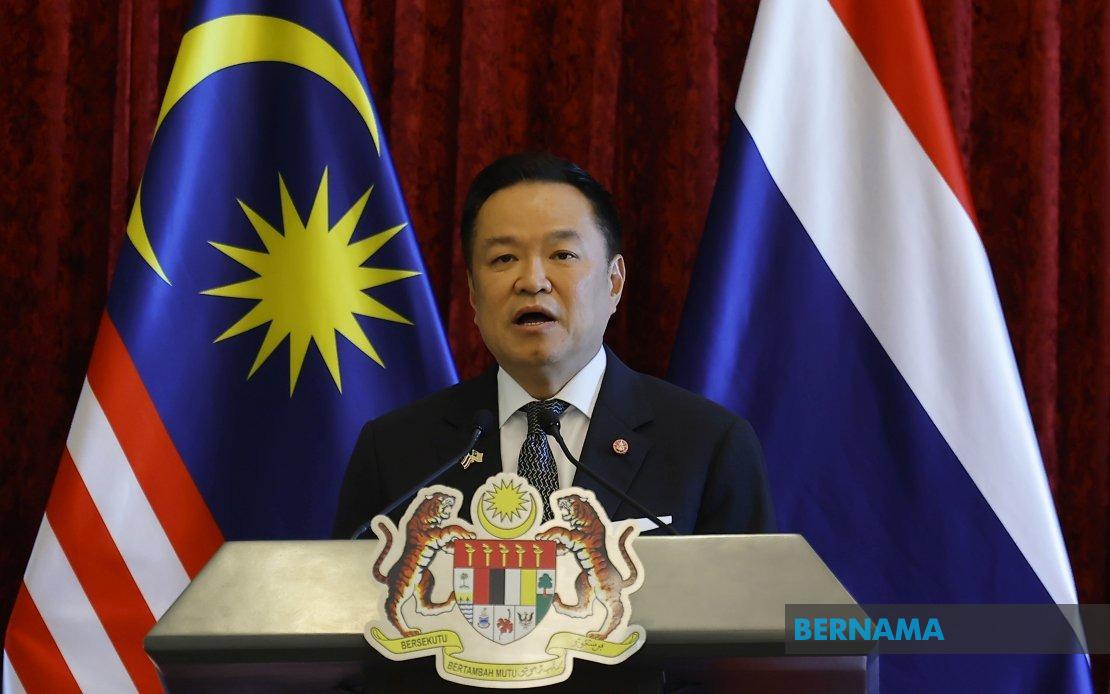
Thailand Prime Minister Anutin Charnvirakul expressed his support for Malaysia's forthcoming Johor state election during an official visit to Putrajaya, offering his best wishes to his Malaysian counterpart Datuk Seri Anwar Ibrahim. The gesture came at the conclusion of a joint press conference marking Anutin's two-day official visit to the country, the first since his reappointment in March 2026, signalling renewed diplomatic engagement between the two neighbouring Southeast Asian nations.
The Johor state election represents a significant political milestone for Malaysia's ruling coalition, with the 16th electoral contest scheduled for polling this Saturday. The contest will determine control of the state assembly, featuring an unusually high field of 172 candidates competing for 56 available seats. This density of candidates reflects intensified political competition in one of Malaysia's most important states, historically a stronghold for various political movements and a bellwether for national political sentiment.
Anwar's Pakatan Harapan coalition has mounted a comprehensive campaign strategy, fielding candidates across all 56 constituencies without leaving any seat uncontested. This blanket approach demonstrates the coalition's commitment to maximising its representation and reflects the competitive nature of Johor politics. The slate combines experienced politicians with fresh faces from the coalition's three component parties—PKR, DAP, and Amanah—attempting to balance institutional knowledge with broader appeal to voters seeking change or continuity depending on local sentiment.
The diplomatic warmth displayed by Anutin's congratulatory remarks underscores Thailand's interest in Malaysia's political stability and the continuation of cooperative relations under Anwar's administration. Bilateral relations between Thailand and Malaysia have historically been complex, encompassing both cooperative frameworks and occasional tensions over border issues and regional competition. Anutin's gracious public statement suggests Bangkok's investment in maintaining cordial ties regardless of electoral outcomes, reflecting broader ASEAN principles of non-interference in member states' internal affairs while maintaining diplomatic channels.
Anwar reciprocated the warm sentiment, characterising his engagement with Anutin as reminiscent of conversations between longstanding friends rather than formal diplomatic protocol. His description of comfort, happiness, and relaxation during their discussions indicates a personal rapport that extends beyond ceremonial exchanges. This interpersonal dimension carries significance in Southeast Asian diplomacy, where personal relationships between leaders often translate into substantive cooperation on shared challenges including maritime security, trade facilitation, and cross-border development initiatives.
The timing of Anutin's visit carries particular strategic importance given its proximity to the Johor election. International visitors at senior levels during election periods typically carry political significance, and Thailand's choice to maintain engagement despite the electoral context demonstrates confidence in Malaysia's democratic processes and presumably in Anwar's government's trajectory. Such visits also provide opportunities for leaders to discuss regional matters affecting both nations, from Myanmar's ongoing political crisis to broader Indo-Pacific strategic concerns.
From a Malaysian perspective, the visit reinforces Anwar's international standing and his administration's capacity to maintain robust diplomatic relations while managing domestic political challenges. Johor's electoral significance extends beyond state-level governance; it influences perceptions of national political momentum and affects federal-state relations. A successful performance in Johor would strengthen Anwar's hand in managing his coalition's diverse factions and provide validation for his governing approach heading into the critical period before the next general election.
The visit also highlights Malaysia's strategic positioning within ASEAN and its broader regional role. Thailand's engagement with Malaysian leadership, symbolised through official visits and bilateral discussions, underscores Malaysia's continued importance as a dialogue partner. For readers in Malaysia, this diplomatic development suggests that the country's political leadership maintains credibility and influence on the regional stage, capable of hosting senior foreign leaders and conducting substantive discussions on matters of mutual concern.
Bilateral cooperation between Thailand and Malaysia encompasses trade, tourism, security, and people-to-people exchanges that affect millions across the border regions. The strengthening of official relations, as evidenced by Anutin's visit and the positive tone of his discussions with Anwar, creates favourable conditions for expanding these cooperative frameworks. This matters particularly for residents of northern Malaysian states who maintain close economic and social ties with Thailand, as improving inter-governmental relations facilitate smoother cross-border transactions and cultural exchanges.
Looking forward, the success of Pakatan Harapan in the Johor election will influence the trajectory of Malaysia's domestic politics and potentially its international positioning. A strong performance would validate Anwar's governance model and coalition management strategy, while also demonstrating public confidence in his administration's direction. These results could carry implications for how Malaysia engages with regional partners like Thailand, as strong domestic mandates typically empower leaders to undertake more ambitious foreign policy initiatives or negotiate from stronger positions on bilateral issues.
The diplomatic engagement exemplified by this visit reflects evolving Southeast Asian politics, where traditional rivalries increasingly coexist with pragmatic cooperation on shared interests. Both leaders' emphasis on warmth and friendship rather than formal distance suggests a maturation of Malaysia-Thailand relations beyond historical suspicions. For Malaysian readers, this translates to potential benefits in cross-border development, trade expansion, and collaborative responses to regional security challenges that transcend national boundaries.

