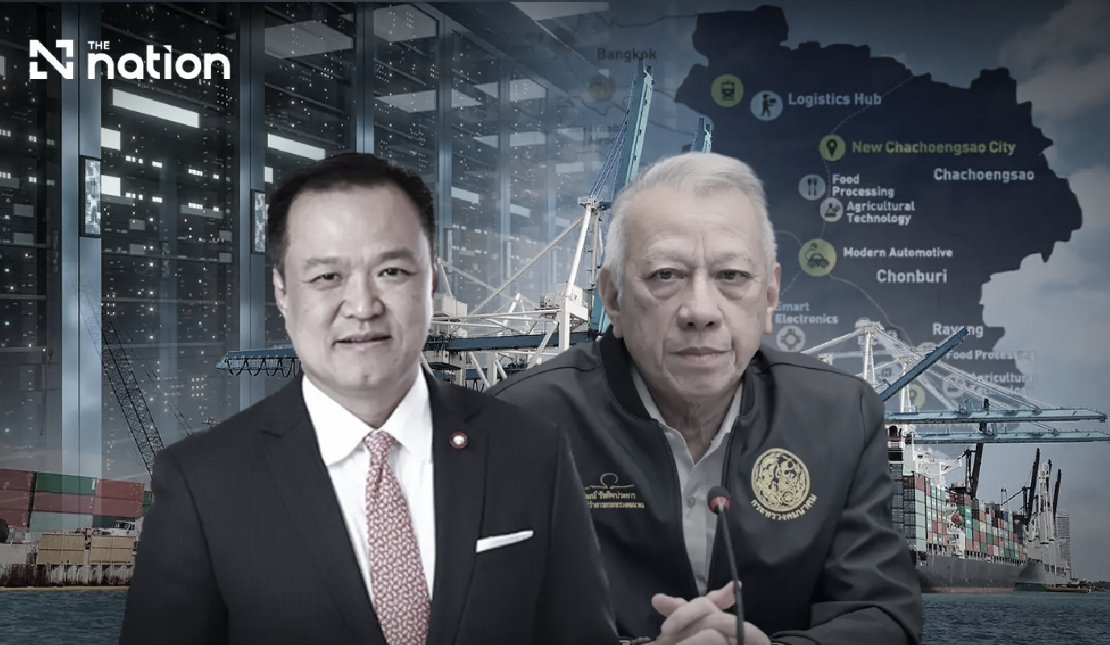
Thailand's Prime Minister Anutin Charnvirakul has reasserted direct control over the Eastern Economic Corridor, marking a significant shift in the kingdom's investment strategy as it seeks to rebrand one of its most ambitious regional development initiatives. The move, formally documented through Prime Minister's Office orders signed on June 15, strips Deputy Prime Minister and Transport Minister Phiphat Ratchakitprakarn of his oversight role and repositions the EEC as a vehicle for attracting foreign capital in sectors beyond traditional manufacturing. Government officials insist the reshuffle reflects strategic recalibration rather than political tension, though the circumstances underscore evolving priorities within the Thai administration.
Anutin's assumption of the EEC portfolio represents more than a routine administrative adjustment; it signals the government's determination to present Thailand as a competitive destination for emerging global supply chains. By positioning himself as the principal architect of the "selling Thailand projects" initiative, the Prime Minister aims to leverage his authority to negotiate directly with foreign investors and coordinate across governmental agencies. This centralization of power reflects the recognised complexity of attracting investment in capital-intensive sectors such as data centres, which require seamless coordination among electricity, water, and telecommunications authorities. The move suggests confidence that prime ministerial involvement will accelerate decision-making and remove bureaucratic obstacles that may have hindered progress under the previous arrangement.
The government's recalibration centres on two primary investment pillars designed to compensate for the constraints facing traditional heavy industry in the region. Thailand's eastern provinces possess substantial agricultural advantages—encompassing livestock production, fisheries, horticulture, and fruit cultivation—that remain underexploited as investment draws. Officials argue that global food security concerns have elevated the strategic importance of these sectors, creating unprecedented opportunities to market the EEC as a crucial hub within international supply chains. This pivot acknowledges that many developed economies now prioritize diversifying food sources away from traditional suppliers, creating openings for Southeast Asian producers willing to invest in quality infrastructure and certification standards.
The food security angle represents a shrewd repositioning that aligns Thailand's natural endowments with genuine geopolitical trends. As supply chain vulnerabilities in agriculture have become apparent across developed economies, governments and multinational corporations increasingly seek alternative production bases. The eastern region's existing agricultural foundations provide a credible foundation upon which to build modern agribusiness ecosystems. By marketing the EEC as a food security solution rather than merely an industrial park, Thai policymakers are attempting to tap into capital flows driven by national resilience strategies rather than cost arbitrage alone. This approach has particular resonance for investors from food-importing nations concerned about long-term supply stability.
The second pillar—development of world-class data centre infrastructure—reflects Thailand's recognition that the digital economy increasingly determines competitive advantage in regional development. Data centres represent a capital-intensive sector capable of generating substantial economic spillovers through employment creation, technology transfer, and electricity grid modernization. However, the sector's demanding requirements for reliable electricity, abundant water, and robust telecommunications networks necessitate coordinated governmental action. The Energy Ministry's planned introduction of a Type 9 electricity user category specifically for data centres demonstrates the government's willingness to implement infrastructure-specific tariff structures designed to support strategic sectors. This tiered approach recognizes that data centres will consume far more power than traditional industries, requiring pricing mechanisms that reflect true resource costs while remaining internationally competitive.
Eliminating the traditional heavy industry focus addresses practical constraints that have become increasingly apparent to government planners. Both electricity and water availability in the eastern region remain constrained, with procurement costs rendering many energy-intensive manufacturing operations financially marginal. Rather than attempting to overcome these physical limitations through massive infrastructure investments, the government has chosen to reorient its strategy toward sectors where Thailand possesses genuine comparative advantage or can rapidly develop it. This pragmatic reassessment reflects lessons learned through the EEC's earlier development phases and international benchmarking against competing regional investment destinations such as Vietnam and Indonesia.
Phiphat's relinquishment of the EEC portfolio occurred without advance notification, according to his own statements to reporters, though government sources characterize the transition as amicable and driven by his preference to avoid the "constant friction" between the EEC Office and the Board of Investment. This explanation carries some credibility given that coordinating multiple agencies around ambitious infrastructure projects inevitably generates turf disputes. However, the characterization also provides diplomatic cover for what appears to be a recentralization of authority. That Anutin specifically questioned Phiphat regarding a proposed Disneyland project in the EEC—citing the absence of feasibility studies and doubts about investment returns—suggests the Prime Minister was dissatisfied with the direction development policy had taken. This implies the reshuffle reflects substantive disagreements over strategic priorities, not merely administrative preference.
The government has explicitly denied that Anutin's action relates to the contentious high-speed rail project linking Don Mueang, Suvarnabhumi, and U-Tapao airports. Phiphat previously took a firm stance against amending the contract to shift from completion-based payment to progress-based financing. The source cited in government statements claims Anutin himself opposes contract modifications and supports Phiphat's cautious approach. Yet the timing of the EEC transfer shortly after this transportation dispute suggests at minimum that the reshuffle addresses governance disagreements extending beyond food security and data centres. Thailand's notorious history of delays in implementing major infrastructure projects lends particular weight to Phiphat's original concerns about contract terms that might incentivize incomplete construction.
For Malaysian and regional investors, the EEC's strategic repositioning carries meaningful implications. Thailand's shift toward food security and digital infrastructure creates both opportunities and competitive pressures for neighbouring economies. Malaysian enterprises operating in agriculture, aquaculture, or data centre development may face intensified Thai competition for regional investment flows and export markets. Conversely, the Anutin administration's explicit focus on coordinating across agencies and reducing bureaucratic friction might facilitate partnerships between Thai and Malaysian firms seeking to develop the eastern region's potential. The centralisation of decision-making authority could accelerate project approvals for both Thai and foreign investors, potentially altering the competitive landscape within Southeast Asia's investment market.
Anutin's assumption of the EEC portfolio also reflects broader patterns within Thai governance whereby prime ministers increasingly accumulate ministerial responsibilities to consolidate power and ensure implementation of signature policies. This centralization tendency appears driven by frustration with traditional bureaucratic structures and concern that distributed authority generates delays. While such concentration may accelerate near-term decision-making, it also concentrates risk, as the success of the EEC's repositioning now depends substantially on Anutin's sustained political survival and commitment. Thailand's fractious political history provides little assurance of continuity should leadership change. Malaysian policymakers and investors tracking Thai developments should monitor whether the EEC's new strategic direction proves durable or merely reflects one leader's priorities.
The government's reframing of the EEC around food security and data centres represents genuine strategic innovation rather than merely defensive repositioning. However, implementation will determine whether the rhetoric translates into actual investment attraction and economic results. Success requires not only coherent policy messaging but also delivery of promised infrastructure improvements, streamlined approvals, and reliable long-term incentive structures. The sector-specific electricity tariff for data centres and the potential development of agricultural processing infrastructure must move from announcement to operational reality. Regional competitors, particularly Vietnam's investment in similar sectors, have demonstrated that strategic positioning alone generates insufficient outcomes without supporting infrastructure and honest governance. Whether Anutin's direct oversight produces the expected implementation advantages remains an open question that investors and policymakers throughout Southeast Asia will carefully observe.